Skip to content
You can now search across every topic, entity and event.What's new
Autonomous Systems: Land & Sea
12AUG

Sweden awards Saab SEK 2.6B C-UAS deal

3 min read
14:17UTC

Sweden's Defence Materiel Administration awarded Saab a SEK 2.6 billion contract under the GUTE II programme for a mobile counter-drone system combining Giraffe 1X radar and Trackfire weapon stations, with deliveries starting in 2027.

TechnologyDeveloping
Key takeaway

Sweden's national counter-drone programme exceeds Germany's and is unavailable until 2027.

Sweden's Defence Materiel Administration awarded Saab a SEK 2.6 billion (approximately EUR 230 million) contract under GUTE II for a mobile counter-drone system combining the Giraffe 1X radar, Trackfire remote weapon stations with 30mm cannon, and electronic warfare effectors. Deliveries begin in 2027. The total programme value of SEK 8.7 billion makes Sweden's domestic counter-drone investment larger than Germany's announced tranche.

The system covers both military formations and civilian infrastructure, including power plants and railways. That dual mandate reflects the Rezekne oil facility explosion and the drone that passed near Estonia's Auvere power station: the threat extends beyond the battlefield into civilian life.

GUTE II's total value exceeds the entire EU AGILE budget by a factor of seven. Sweden is also deploying LVKV 90 cannon to Latvia as an interim measure while GUTE II production ramps, a national emergency response that bypasses NATO coordination. The 2027 delivery timeline means the Baltic gap persists for at least a year; the incursion frequency visible in this briefing, with Britain's drone-spending acceleration accelerating drone traffic through contested corridors, is likely to worsen in that window.

Deep Analysis

In plain English

Sweden just paid Saab the equivalent of around 760 million euros to build a truck-mounted drone-defence system that can detect drones with radar and shoot them down with a cannon. The whole system fits on a vehicle so it can be driven to wherever the threat is. It will not be ready until 2027, which means Sweden and its Baltic neighbours have a gap of at least a year during which the drone threat is real but the new system is not yet deployed. In the meantime, Sweden has sent older anti-aircraft cannon to Latvia as a stopgap.

Deep Analysis
Root Causes

Sweden joined NATO only in March 2024 and has not developed the joint procurement habits of long-standing members; national contracting through FMV was the fastest available pathway.

The urgency of the Baltic drone threat from 2025 onward made the politics of joint procurement untenable: multinational programmes carry longer timelines, more veto points, and workshare disputes that compress the timeline advantage.

Saab's integrated product portfolio (Giraffe radar, Trackfire weapon station, EW effectors) allowed Sweden to source a complete system from a single national prime, removing the interoperability negotiation that cross-border co-development would require.

What could happen next?
  • Consequence

    GUTE II sets a benchmark for mobile integrated C-UAS that other NATO members will study for their own procurement. If deliveries begin on schedule in 2027, Sweden will have the most capable non-US counter-drone system in Europe. The interim LVKV 90 deployment to Latvia is a temporary bilateral measure that will not substitute for a shared Baltic detection and engagement architecture.

First Reported In

Update #10 · NATO shoots down drone over Estonia

Saab· 29 May 2026
Read original
Different Perspectives
Conservative opposition
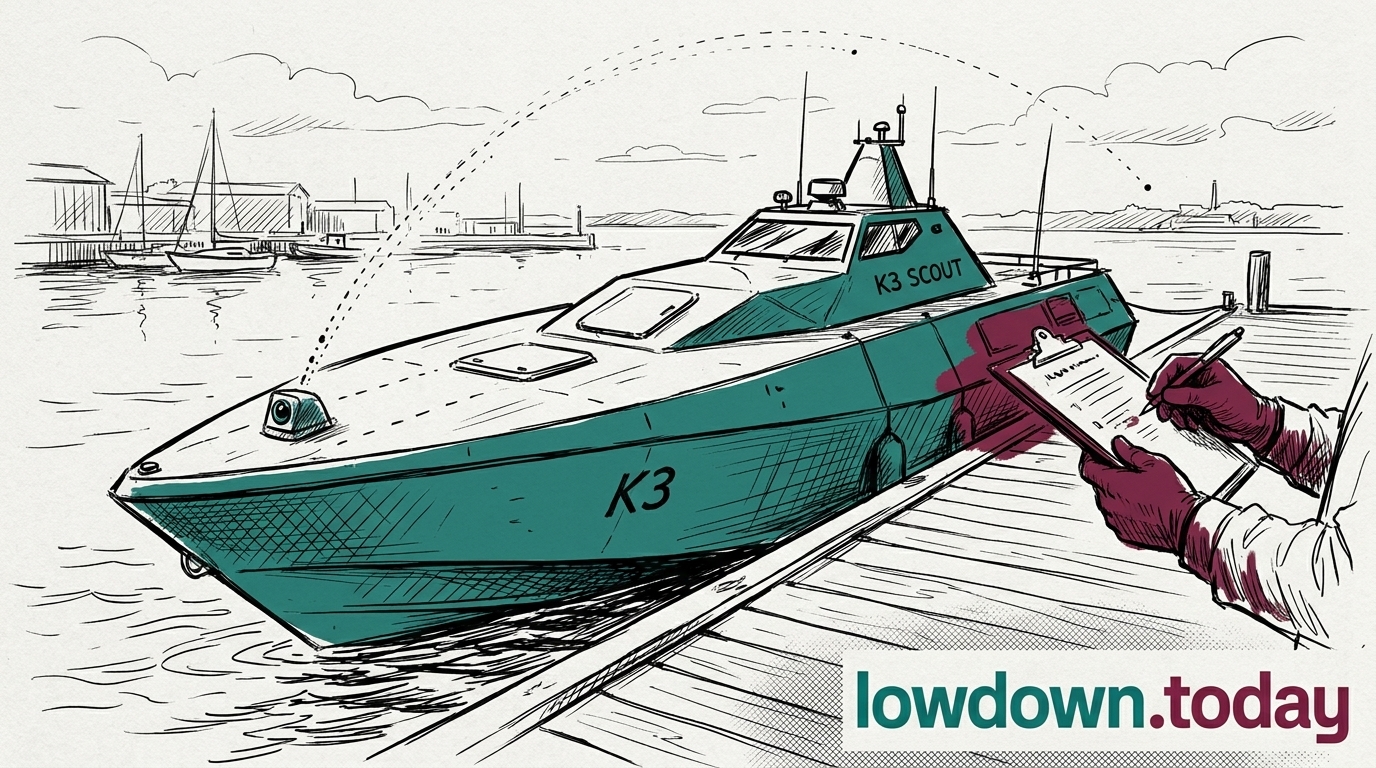
The Conservative opposition called on the Government on 9 August to 'urgently audit' equipment for hidden Chinese components, after the Telegraph's K3 SCOUT report. No named MP has been quoted on the record; the call came at party level, alongside the Ministry of Defence's own 10 August statement that no data had been compromised.
Netherlands Ministry of Defence
The Netherlands Ministry of Defence authorised Dutch Naval Design on 4 August to design 12-metre anti-submarine warfare uncrewed vessels for the Dutch-Belgian frigate programme, and to buy an adapted Compact FLASH dipping sonar from Thales Underwater Systems France. The order commits money and a named supplier while Britain's own certification body remains at the market-engagement stage.
Kraken Technology Group
Kraken Technology Group is a UK maritime-defence company based in Portsmouth that builds the K3 SCOUT, and crossed a $1bn valuation in July on a single-sourced $175m raise. The camera components reached the fleet under a third party's written security assurance, which the Platform Authority, which does not yet exist, was never positioned to check.
Navy Commercial
Navy Commercial
Navy Commercial at Whale Island published two notices on 5 August: 074032-2026, asking industry how to build a Platform Authority to certify uncrewed vessels, and 074351-2026, a GBP10m multi-role USV testbed for the Defence Chief Technology Officer. Responses on the Platform Authority close 19 August, ten days after the cameras were found transmitting to China.
Ministry of Defence
Ministry of Defence
The Ministry of Defence said on 10 August that a routine cyber vulnerability assessment found the camera fault, and a thorough investigation found no evidence that MoD data or systems had been accessed, compromised or transmitted externally. It stripped the cameras of internet connectivity but did not say whether it acted against the supplier.
Thales
Thales
Thales converted its 6 July engaging accord with Exail into a definitive combination agreement on 30-31 July, but the tender offer for Exail's remaining shares now closes by early 2028, later than July's timetable implied. Thales integrates its new undersea prime while still bidding against Kongsberg and DRASS's 2027 target for the AUKUS Pillar II contest.
