Skip to content
Welcome, thoughtbot's Giant Robots listeners!Start here
Autonomous Systems: Land & Sea
12AUG

DIU ranks Gauntlet II drone winners

3 min read
14:17UTC

The Pentagon's contest for cheap attack drones named its winners and about 60,000 drones of orders, while the first round's deliveries ran about 60 per cent complete.

TechnologyDeveloping
Key takeaway

Gauntlet II named its winners while Gauntlet I suppliers had delivered only about 60 per cent of orders.

The Defense Innovation Unit (DIU), the Pentagon's office for buying commercial technology, ranked the winners of Gauntlet II on 18 September⁠1. Gauntlet II is the second round of the Pentagon's fly-off contest to pick suppliers of cheap attack drones. DIU named five vendors in each of two categories, deep strike and close-quarters work, and officials put orders at about 60,000 drones. The round had been cut to 19 finalists in July.

Neros, the only firm on both lists, announced a 14,000-drone order worth more than US$100m on 30 September⁠2. In an earlier Pentagon attack-drone buy, only 43 per cent of the Archer drones Neros shipped cleared acceptance.

The first round's record sits underneath the new orders. Vendors had delivered 13,440 of the 22,320 drones ordered in Gauntlet I by 25 August, about 60 per cent, according to Inside Unmanned Systems as relayed by DroneXL⁠3. Only three vendors delivered in full, one of them Ukrainian Defense Drones. The roughly 8,880 drones still undelivered from Gauntlet I are being moved to the firms that ship.

AeroVironment, which reported record full-year revenue of US$1.98bn in June, shows the same gap from the supplier's side. On 9 September it said its funded backlog, the value of signed and funded orders not yet delivered, reached a record US$1.5bn at 1 August, up 37 per cent on a year earlier⁠4. First-quarter revenue rose 6 per cent, to US$480.5m.

Deep Analysis

In plain English

The Pentagon runs contests called Gauntlets to choose which companies will supply cheap attack drones. Firms fly their drones in tests, and the best performers win orders. The second contest has named ten winners, and the military plans to buy tens of thousands of drones from them. Companies that won the first contest have struggled to build and deliver drones fast enough, so the Pentagon is moving orders to the few firms that have delivered on time.

Deep Analysis
Root Causes

Most of the ten Gauntlet II winners are young firms with limited factory capacity. A contest can pick the best design in weeks, but building thousands of drones a month needs parts, staff and floor space that most entrants lack.

The programme's own rules sharpen the pressure. Moving undelivered units to vendors that ship punishes delay quickly, and it also hands extra volume to firms that already have the most capacity.

What could happen next?
  • Risk

    Reallocation to on-time vendors may leave US small attack-drone supply concentrated on Neros.

  • Consequence

    Gauntlet 2.5 and Gauntlet 3 give firms that failed to place a fresh chance within months.

First Reported In

Update #18 · Four EU states skip tenders on drone defence

DefenseScoop· 1 Oct 2026
Read original →
Different Perspectives
Conservative opposition
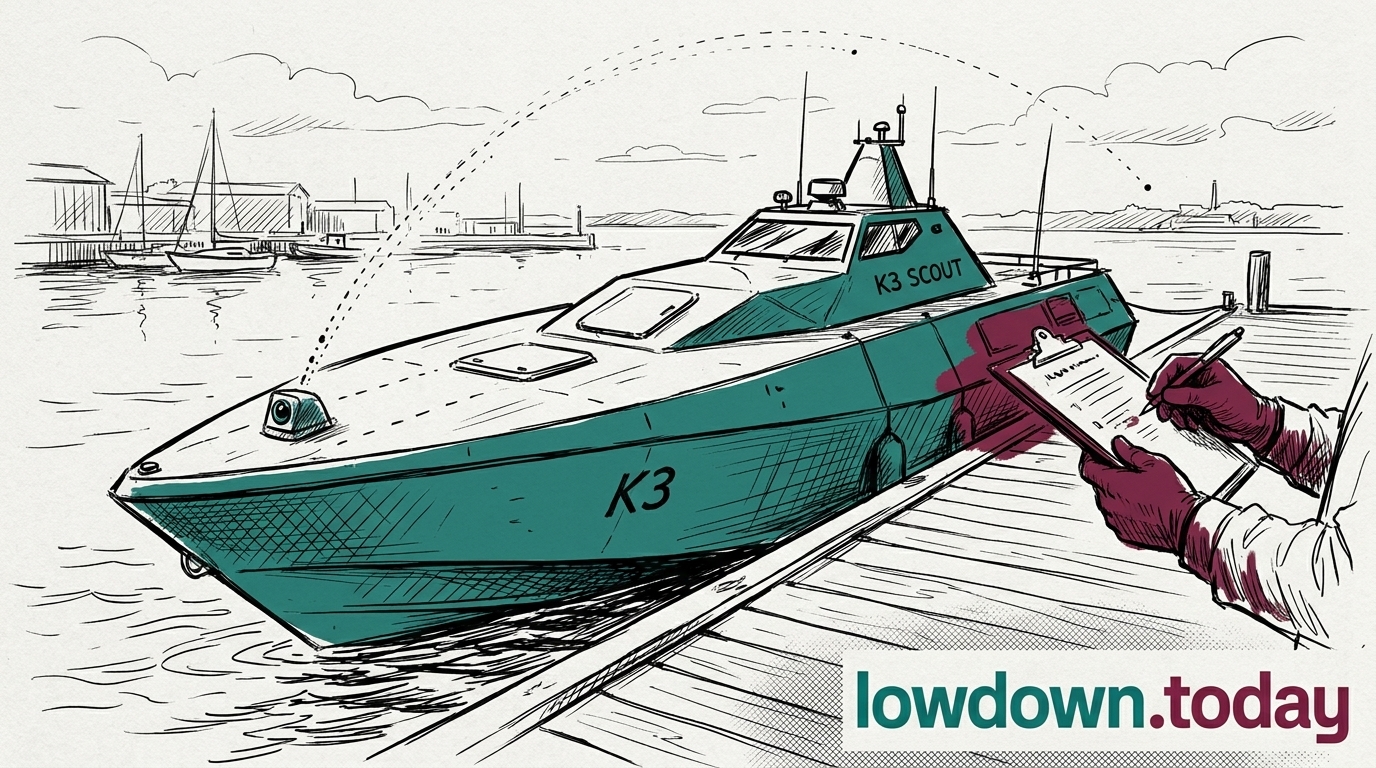
The Conservative opposition called on the Government on 9 August to 'urgently audit' equipment for hidden Chinese components, after the Telegraph's K3 SCOUT report. No named MP has been quoted on the record; the call came at party level, alongside the Ministry of Defence's own 10 August statement that no data had been compromised.
Kraken Technology Group
Kraken Technology Group is a UK maritime-defence company based in Portsmouth that builds the K3 SCOUT, and crossed a $1bn valuation in July on a single-sourced $175m raise. The camera components reached the fleet under a third party's written security assurance, which the Platform Authority, which does not yet exist, was never positioned to check.
Navy Commercial
Navy Commercial
Navy Commercial at Whale Island published two notices on 5 August: 074032-2026, asking industry how to build a Platform Authority to certify uncrewed vessels, and 074351-2026, a GBP10m multi-role USV testbed for the Defence Chief Technology Officer. Responses on the Platform Authority close 19 August, ten days after the cameras were found transmitting to China.
HUMAIN
HUMAIN
HUMAIN and Applied Intuition stated a 2030 target for thousands of autonomous trucks on Saudi logistics corridors. The announcement disclosed no order, fleet baseline or contract value.
Saildrone
Saildrone
Saildrone and Lockheed Martin demonstrated two JAGM launches from a Surveyor-class vessel at RIMPAC. The accepted record identifies no requirement, customer or production configuration behind the demonstration.
Taiwan Legislative Yuan
Taiwan's Legislative Yuan passed the Act at third reading with a small suicide uncrewed boat on the named development list. The NT$240 billion ceiling covers all unmanned domains, and the Act was not promulgated by 4 September.
