Skip to content
Welcome, thoughtbot's Giant Robots listeners!Start here
AI: Jobs, Power & Money
16APR

The AI layoffs nobody is counting

4 min read
13:29UTC

A March ResumeBuilder survey found 59% of managers overstate AI in layoffs; Stanford puts the real loss at a million hires never made. Two numbers, opposite errors.

EconomicDeveloping
Key takeaway

AI's labour effect is over-attributed in press releases and under-measured in official data; the true channel is hires never made.

59% of hiring managers say they deliberately overstated artificial intelligence as the reason for their layoffs, according to a ResumeBuilder survey of 1,000 managers published in March⁠1. Only 9% said AI had actually replaced roles at their organisations. ResumeBuilder is a US job-search and CV platform; the survey asked managers directly why they had cut staff and whether AI was the genuine cause. The question turned live again this week, as the Office for National Statistics reported UK unemployment at 4.9% and the European Parliament stripped a worker AI-literacy right.

The 59% reads, on its own, as proof the job losses are exaggerated. Oxford Economics, a UK forecasting firm, puts genuine AI-driven cuts at around 4.5% of US layoffs in the first 11 months of 2025, roughly 55,000 positions against about 245,000 lost to ordinary cost pressure. Firms credit the machine for decisions the budget had already made. Sam Altman of OpenAI has acknowledged the practice, the same week his company moved toward a September listing above one trillion dollars.

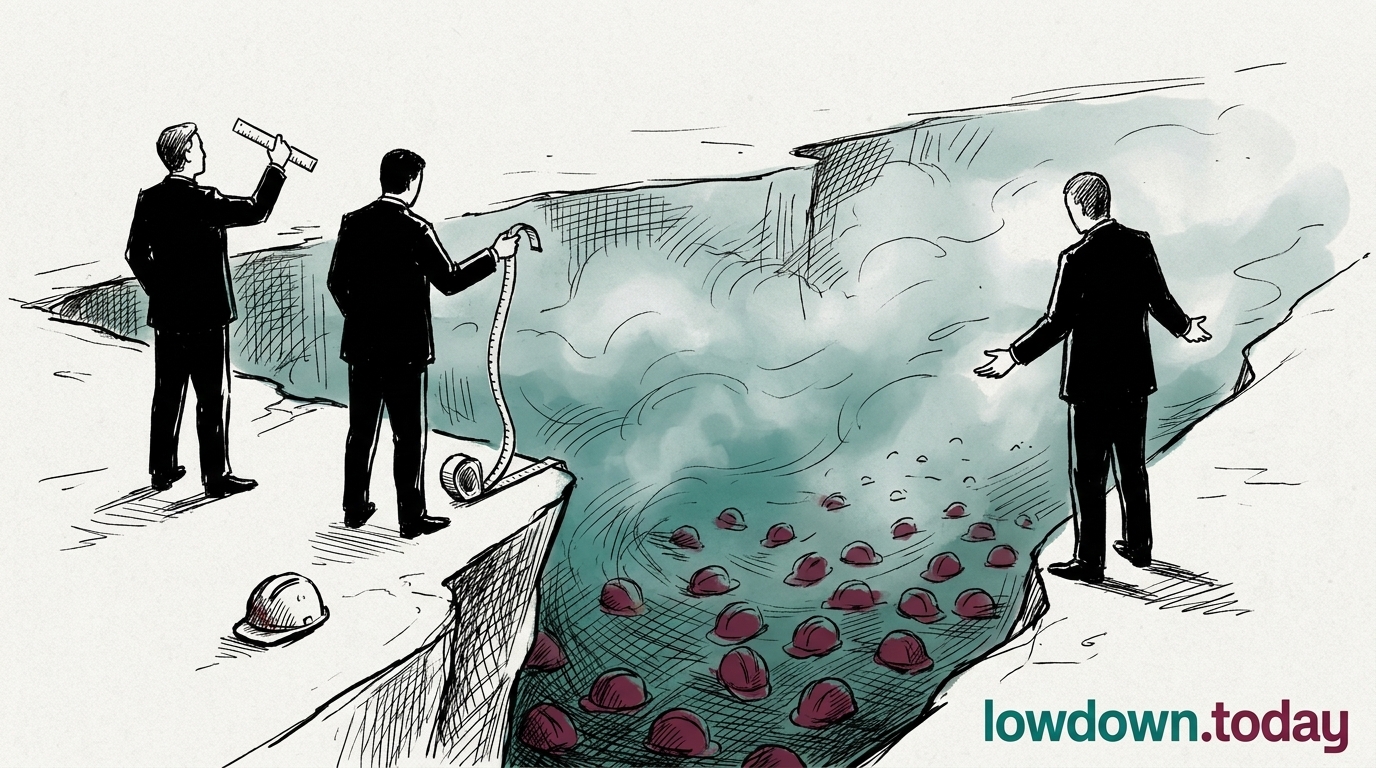
The bigger number runs the other way. The Stanford Digital Economy Lab, Stanford University's economics research unit under Erik Brynjolfsson, calculates that AI is preventing roughly 950,000 to one million US hires a year. Set that against about 145,000 declared AI layoffs since 2023, per the outplacement firm Challenger, Gray & Christmas through May. Most of the loss never reaches a redundancy notice; it shows up as the requisition never opened and the graduate never called back, so a graduate entering the workforce this year faces a far tighter market than one who arrived in 2023. MIT Sloan economist Paul Osterman told Fortune in May that AI attribution often dresses up cuts that were planned anyway, and the New York Federal Reserve has found displacement signals that predate ChatGPT entirely.


Deep Analysis

In plain English

Companies have been announcing layoffs and blaming artificial intelligence, but a new survey shows most of them are exaggerating. ResumeBuilder asked 1,000 hiring managers: 59% admitted they deliberately overstated AI's role in cutting jobs, and only 9% said AI had actually replaced anyone at their company. Oxford Economics researchers found that genuine AI-driven cuts made up about 4.5% of US layoffs in 2025; roughly 55,000 jobs out of more than a million. Stanford researchers found a separate but bigger effect: AI is causing companies to post fewer new jobs than they otherwise would; perhaps 950,000 to 1 million fewer vacancies per year in the US. That second effect does not show up in layoff counts at all, which is why the official numbers feel much smaller than the anxious headlines suggest.

Deep Analysis
Root Causes

The measurement gap has three structural causes.

First, no US or UK government agency yet publishes an AI-attribution layer in official labour statistics. The ONS, BLS, and Eurostat all collect layoff data without requiring employers to identify the automation driver. This is not an oversight; there is no agreed methodology for distinguishing AI-driven from ordinary workforce reduction.

Second, Securities and Exchange Commission disclosure rules create an incentive misalignment. Firms that attribute layoffs to AI signal innovation to equity markets; firms that attribute them to cost pressure signal management failure. The ResumeBuilder finding (59% deliberate exaggeration) is the logical consequence of this incentive structure.

Third, the Stanford JOLTS analysis measures hire suppression; roles that were never posted; which is by definition invisible to layoff trackers. The 34:1 ratio between suppressed hires and declared AI layoffs is not a paradox; it reflects two separate mechanisms operating simultaneously.

What could happen next?
  • Consequence

    Without an official AI-attribution layer in BLS or ONS data, policymakers cannot distinguish cyclical from structural unemployment, risking under-investment in targeted retraining programmes.

    Medium term · Assessed
  • Risk

    SEC disclosure practice that rewards AI attribution creates a self-reinforcing narrative: even companies not using AI to cut jobs gain investor approval by saying they are, making the measurement problem worse each quarter.

    Short term · Assessed
  • Opportunity

    The ResumeBuilder survey data, if replicated at scale by an academic institution, would give plaintiffs' employment lawyers evidence to challenge AI-attributed layoffs as pretextual, potentially triggering WARN Act liability for firms that used the excuse to avoid notice obligations.

    Medium term · Reported
First Reported In

Update #14 · The AI layoffs nobody is counting

Metaintro· 20 Jun 2026
Read original →
Causes and effects
This Event
The AI layoffs nobody is counting
Policy is being calibrated to a declared-layoff figure that is too high on attribution and too low on scale at the same time.
Different Perspectives
Competition and Consumer Commission of Singapore
The regulator found on 27 November that businesses can still choose and switch between cloud providers and AI models. It named dominant firms blocking rival AI agents as a risk, but answered with eight voluntary principles rather than rules.
La Poste
La Poste
France's state-owned postal group signed its first AI accord with four union confederations on 19 November, setting up a joint committee to oversee AI use. The announcement gives the unions a say, but no job security and no training hours for its 227,000 staff.
Nascent Information Technology Employees Senate (NITES)
The IT workers' union asked India's central government on 26 November for a mandatory national policy on AI layoffs, with every automated job cut logged in public. It expects to meet Labour Ministry officials; no government response has been reported.
China State Council
China State Council
Beijing's cabinet told local governments to pace AI in labour-intensive industries and to screen large AI projects for job losses. It keeps backing AI but wants the replacement of workers slowed, and it set no numeric targets.
SAP
SAP
SAP answered Bloomberg's report of at least 10,000 planned job cuts by telling CNBC that nothing is settled. In Germany a cut on that scale goes through works councils, and its 2024 round of about 10,000 ended mostly in voluntary departures.
Nvidia's board of directors
The board reinstated Jensen Huang on 22 November after input from senior levels of the US government, while its committee of independent directors keeps investigating. Its confidence rests, by its own account, on Washington's input, and the company says it will keep cooperating with government inquiries.

Written with AI from Lowdown's published reporting. Not individually reviewed by an editor. Editorial standards.
