Skip to content
Welcome, thoughtbot's Giant Robots listeners!Start here
AI: Jobs, Power & Money
16APR

SAP freezes research hiring for a year

2 min read
13:29UTC

Christian Klein told investors on 23 July that SAP's research organisation will not grow for twelve months, and named AI agents as the reason. No layoffs were announced.

EconomicDeveloping
Key takeaway

SAP will not grow research headcount for a year, and Klein named AI agents as the cause.

SAP told investors on Thursday 23 July that its research headcount will not grow for the next twelve months. Chief executive Christian Klein named AI agents as the reason, on a results call reporting quarterly revenue up 9% at €9.9 billion⁠1. SAP, based in Walldorf, is Europe's largest enterprise software company, and its current cloud backlog now stands at €22.9 billion, up 27%.

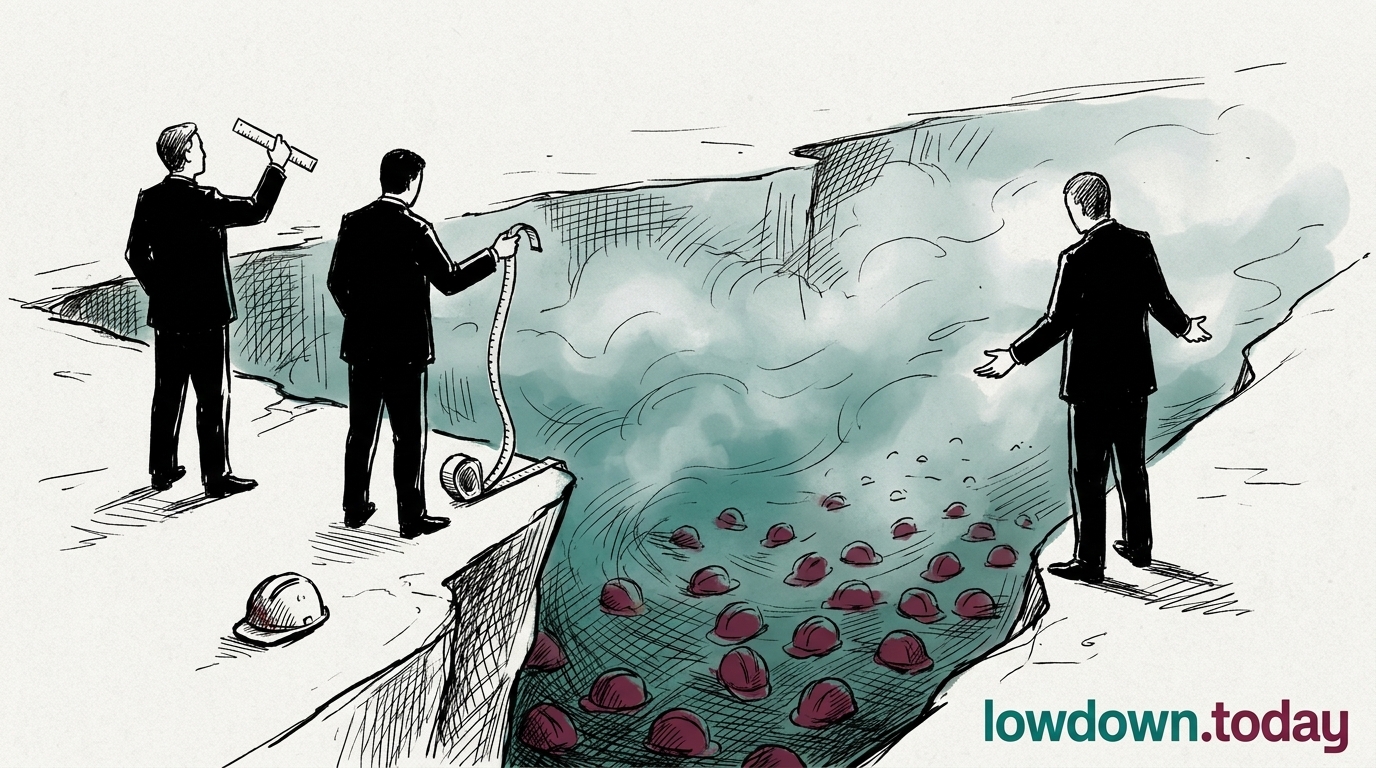
No redundancies were announced on that call. Klein was describing the hiring door rather than the exit, and for anyone counting AI's effect on employment the distinction decides whether the effect gets counted at all. Work by the Stanford Digital Economy Lab put suppressed hires, meaning requisitions that are never opened, at roughly 34 for every declared AI layoff. A vacancy that never exists triggers no redundancy notice and no unemployment claim. The Federal Reserve has said it cannot see that channel in aggregate data.

Klein tied the gap between rising research and development cost and flat research headcount to two things: token consumption in AI-assisted coding, and the salaries specialist AI hires command. SAP will ship 50 Joule assistants and more than 400 agents in its Autonomous Suite before the year ends. Holding headcount flat while that workload arrives is stated company policy, on the record, rather than an inference drawn by an economist reading the statistics afterwards.


Deep Analysis

In plain English

SAP is a German company that makes business software used by large corporations worldwide. Its chief executive, Christian Klein, told investors on 23 July that the company will not add any new research staff for a year, and said AI tools called agents are the reason. This does not mean SAP is firing people. It means the roughly 30,000 people who currently do that research work will do it without new colleagues joining them, even as the company's revenue keeps growing. For someone applying for a research or engineering job at a big software company, freezes like this shrink the number of open roles without ever appearing in an official layoff count.

Deep Analysis
Root Causes

SAP's freeze depends on a specific legal mechanism: German co-determination law requires works council consultation and a social plan before compulsory redundancies, but a hiring freeze enacted through natural attrition triggers neither obligation. Klein can hold headcount flat for twelve months without the disclosure, negotiation, or severance costs a formal cut would require.

A second structural condition is SAP's shift toward Joule, its AI agent platform, which converts recurring product-support and testing work into machine-executable tasks. That conversion reduces demand for junior research engineers specifically, a category that under normal growth would have been the primary source of headcount increase.

What could happen next?
  • Meaning

    SAP's freeze is structured through attrition specifically to avoid the works council consultation duty that a formal redundancy programme would trigger under German law.

  • Precedent

    Other German co-determination employers may adopt the same attrition-based freeze pattern to manage AI-linked headcount reduction without a formal social plan.

First Reported In

Update #18 · SAP freezes R&D headcount as others deny AI

SAP News Center· 27 Jul 2026
Read original →
Different Perspectives
Competition and Consumer Commission of Singapore
The regulator found on 27 November that businesses can still choose and switch between cloud providers and AI models. It named dominant firms blocking rival AI agents as a risk, but answered with eight voluntary principles rather than rules.
La Poste
La Poste
France's state-owned postal group signed its first AI accord with four union confederations on 19 November, setting up a joint committee to oversee AI use. The announcement gives the unions a say, but no job security and no training hours for its 227,000 staff.
Nascent Information Technology Employees Senate (NITES)
The IT workers' union asked India's central government on 26 November for a mandatory national policy on AI layoffs, with every automated job cut logged in public. It expects to meet Labour Ministry officials; no government response has been reported.
China State Council
China State Council
Beijing's cabinet told local governments to pace AI in labour-intensive industries and to screen large AI projects for job losses. It keeps backing AI but wants the replacement of workers slowed, and it set no numeric targets.
SAP
SAP
SAP answered Bloomberg's report of at least 10,000 planned job cuts by telling CNBC that nothing is settled. In Germany a cut on that scale goes through works councils, and its 2024 round of about 10,000 ended mostly in voluntary departures.
Nvidia's board of directors
The board reinstated Jensen Huang on 22 November after input from senior levels of the US government, while its committee of independent directors keeps investigating. Its confidence rests, by its own account, on Washington's input, and the company says it will keep cooperating with government inquiries.

Written with AI from Lowdown's published reporting. Not individually reviewed by an editor. Editorial standards.
