Skip to content
Welcome, thoughtbot's Giant Robots listeners!Start here
AI: Jobs, Power & Money
16APR

MIT economist: AI layoffs are a cover story

3 min read
13:29UTC

MIT Sloan's Paul Osterman told Fortune that AI attribution in layoffs is largely a cover for cuts firms had already planned, citing a 20-year pattern of technology excuses.

EconomicDeveloping
Key takeaway

Whether AI layoff labels overstate or understate the real displacement is genuinely contested.

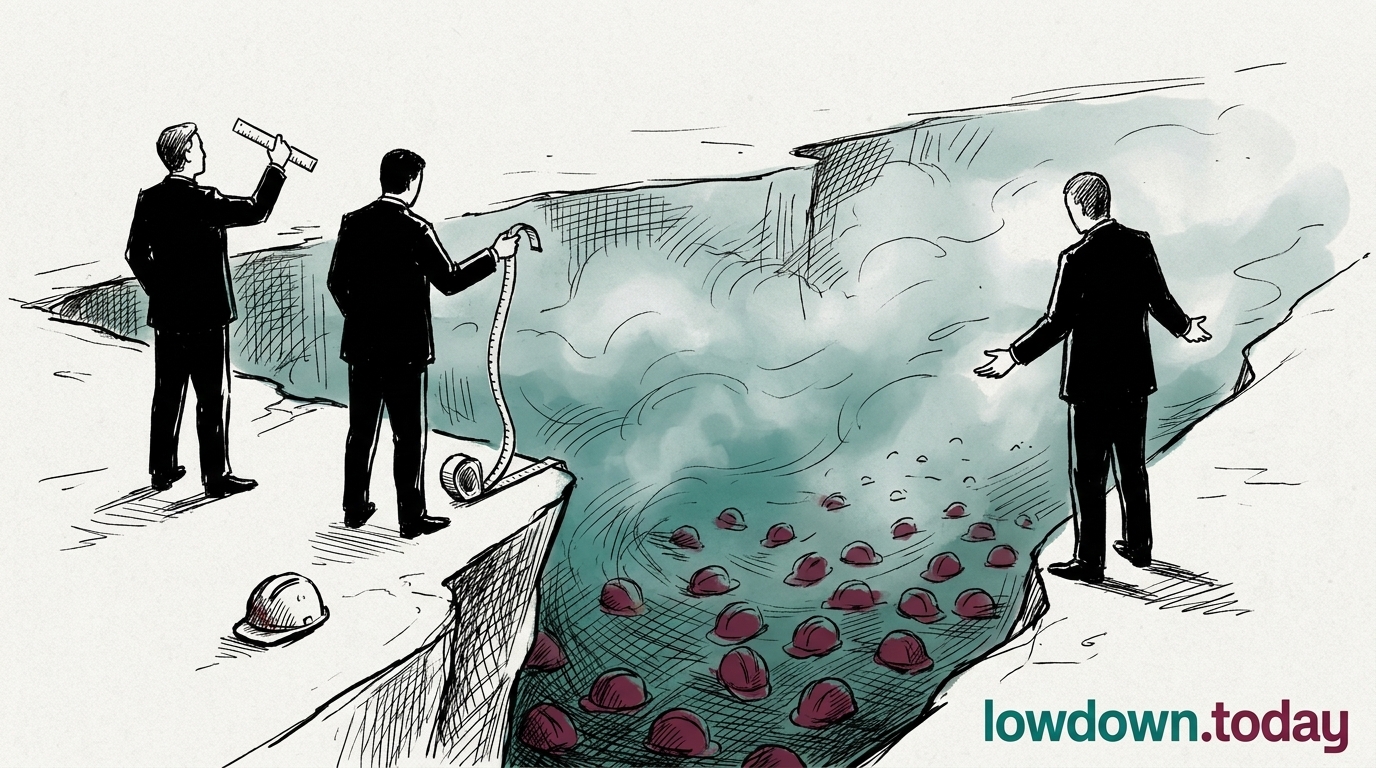
Paul Osterman, a labour economist at the MIT Sloan School of Management, told Fortune that AI attribution in layoff announcements is largely a cover story for cuts firms had already planned⁠1. "They've been saying that for 20 years," he said of bosses reaching for a technology excuse⁠2. Harvard Business Review research supports him: only 2% of layoffs at AI-citing companies followed an actual AI deployment.

Two points cut the other way. The declared AI share of stated layoff reasons jumped from under 8% in 2025 to 40% in May, faster than a gradual rebranding of routine cuts would move. And Stanford's Digital Economy Lab put the real AI labour impact at roughly 34 times Challenger's declared count, derived from a collapsed hiring rate in the Job Openings and Labor Turnover Survey (JOLTS) rather than from announced firings. The same lab documented the under-25 employment pattern that the youth figures now confirm.

Osterman's point is that the stated reason is unreliable, which can mean the named number overstates real AI displacement or that firms underreport it to avoid scrutiny. Stanford's reading treats the record 38,579 as a floor, the visible edge of a larger effect running through hires never made. Both can hold: the pattern of cutting on record revenue, repeated by Dell, HP Inc and CrowdStrike in late May, shows firms shedding staff for reasons the single stated cause does not fully capture. The argument is over whether the headline AI figure is too high or too low, not over whether the displacement is happening.


Deep Analysis

In plain English

Paul Osterman, a professor at MIT's business school who studies how labour markets work, told Fortune Magazine that when companies say they are cutting jobs because of AI, they are often using AI as an excuse for cuts they were already planning for other reasons. He described this as a 20-year pattern where technology gets blamed for restructuring that has deeper commercial or financial causes. Separate research from Harvard Business Review found that only 2% of companies that cited AI as the reason for layoffs had actually deployed an AI system before making the cuts. This does not mean AI is not affecting employment. Separate research from Stanford found that a large number of jobs are not being created because of AI, even if fewer jobs are being explicitly cut. Both dynamics can exist at the same time.

First Reported In

Update #12 · Jobs report says fine, layoff report says no

Fortune· 8 Jun 2026
Read original →
Different Perspectives
Competition and Consumer Commission of Singapore
The regulator found on 27 November that businesses can still choose and switch between cloud providers and AI models. It named dominant firms blocking rival AI agents as a risk, but answered with eight voluntary principles rather than rules.
La Poste
La Poste
France's state-owned postal group signed its first AI accord with four union confederations on 19 November, setting up a joint committee to oversee AI use. The announcement gives the unions a say, but no job security and no training hours for its 227,000 staff.
Nascent Information Technology Employees Senate (NITES)
The IT workers' union asked India's central government on 26 November for a mandatory national policy on AI layoffs, with every automated job cut logged in public. It expects to meet Labour Ministry officials; no government response has been reported.
China State Council
China State Council
Beijing's cabinet told local governments to pace AI in labour-intensive industries and to screen large AI projects for job losses. It keeps backing AI but wants the replacement of workers slowed, and it set no numeric targets.
SAP
SAP
SAP answered Bloomberg's report of at least 10,000 planned job cuts by telling CNBC that nothing is settled. In Germany a cut on that scale goes through works councils, and its 2024 round of about 10,000 ended mostly in voluntary departures.
Nvidia's board of directors
The board reinstated Jensen Huang on 22 November after input from senior levels of the US government, while its committee of independent directors keeps investigating. Its confidence rests, by its own account, on Washington's input, and the company says it will keep cooperating with government inquiries.

Written with AI from Lowdown's published reporting. Not individually reviewed by an editor. Editorial standards.
