Skip to content
Briefings are running a touch slower this week while we rebuild the foundations.See roadmap
AI: Jobs, Power & Money
16APR

Two federal studies split on AI jobs

4 min read
13:29UTC

The New York Fed found minimal sign AI is cutting hiring and said the decline in exposed roles began before ChatGPT shipped, 30 days after Stanford put the figure at 34 prevented hires per declared layoff.

EconomicDeveloping
Key takeaway

Until a federal agency designates one canonical measure, any AI-jobs law sits on contested foundations.

The Federal Reserve Bank of New York published an occupation-level study of job-posting data on 14 May 2026 reporting minimal evidence that artificial intelligence (AI) has directly cut labour demand since ChatGPT shipped in December 2022. 1 The paper, by NY Fed economists on the bank's Liberty Street Economics blog, found the relative fall in postings for AI-exposed roles began before that launch, and that junior and senior roles declined at similar rates. 2

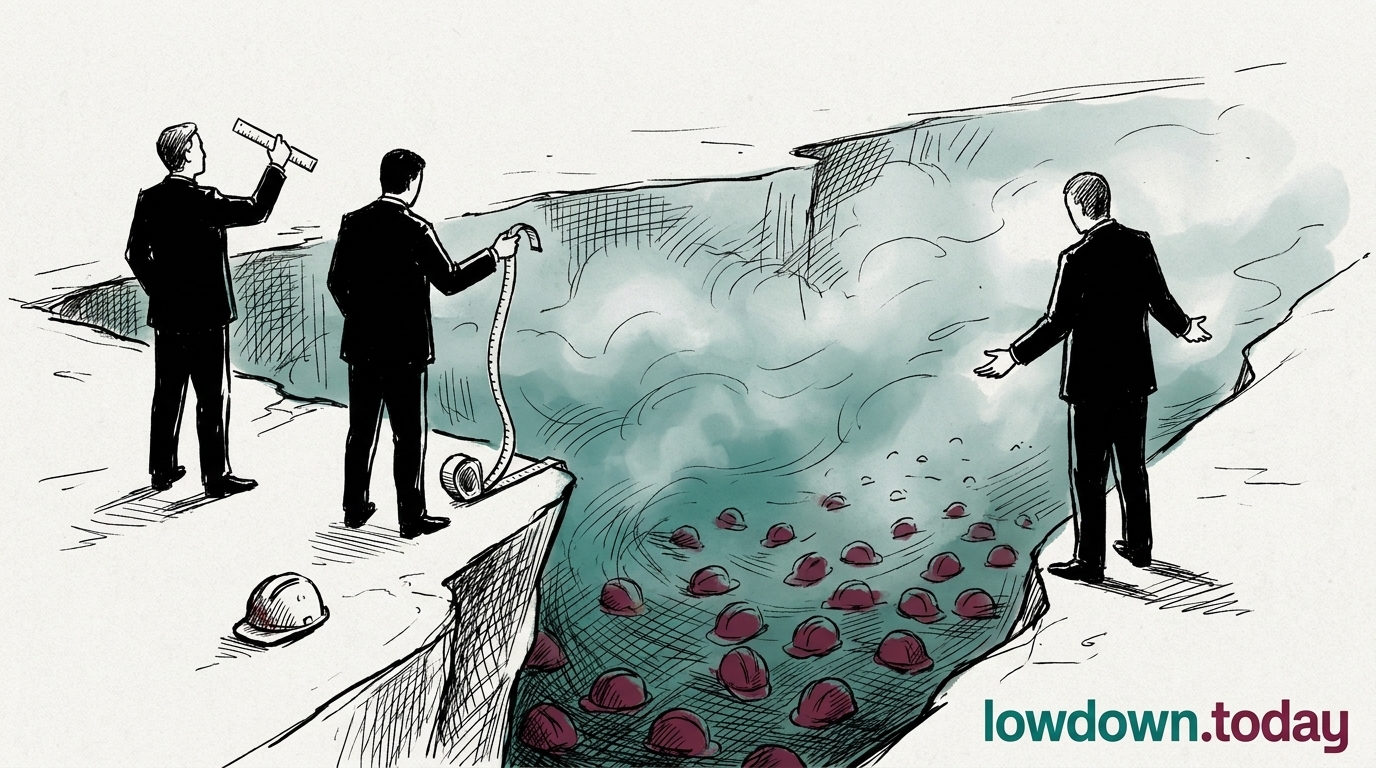
That reading sits directly against the Stanford Digital Economy Lab, which 30 days earlier read the aggregate hiring rate and attributed roughly one million prevented US hires a year to AI, a figure 34 times the declared layoff count . Stanford concentrated the damage on the under-25s; the NY Fed found no such age cliff. A worker entering the market is now told by two credible institutions, a month apart, both that the entry-level cliff is real and that it does not exist.

Each team reached its answer by choosing a different dataset, not by disputing the underlying numbers. Stanford reads JOLTS (the Job Openings and Labor Turnover Survey, a monthly federal count of openings, hires and separations) and infers AI causation from a collapsing hiring rate. The NY Fed reads occupation-level postings and finds the decline predates the technology, which removes the timing evidence Stanford's causal story rests on. Less than 10% of workers sit in high-exposure occupations and 40% sit in jobs with no measured exposure at all, so most of the workforce is nowhere near the frontier the headlines describe. 3

There is no official answer to arbitrate between them. The Bureau of Labor Statistics (BLS) has published nothing on the question , and the Federal Reserve Board has already shown three federal surveys putting AI adoption at 18%, 41% and 78% for the same period . A government that cannot agree how many firms use AI has now been handed two opposite readings of whether it is costing jobs. Every layoff below has to be weighed against that vacuum.

Deep Analysis

In plain English

When people ask whether AI is taking jobs, two things can be measured: how many workers have been laid off and blamed AI (explicit layoffs), and whether companies are hiring fewer people than they used to (hiring suppression). The Federal Reserve Bank of New York, a branch of the US central bank, studied job adverts by occupation and found that roles exposed to AI had fewer postings than before, but the decline started before ChatGPT launched in December 2022. That timing is important: if hiring was already falling before AI tools became widely available, it suggests other causes (automation, economic cycles) may be driving the trend. Stanford University's Digital Economy Lab looked at a different dataset called JOLTS (Job Openings and Labor Turnover Survey), which the Bureau of Labor Statistics, the US government agency responsible for employment figures, publishes each month. Stanford calculated that the hiring rate is so depressed that AI is effectively blocking about one million new hires a year, even without explicit layoff announcements. Both studies are published by respected institutions and both could be correct about different things. The NY Fed says post-2022 AI is not the cause; Stanford says someone or something is blocking a million hires a year. The Bureau of Labor Statistics, which should be the official referee, has still published nothing on the question. Until it does, the policy debate about protecting workers from AI displacement has no agreed factual baseline.

Deep Analysis
Root Causes

The divergence traces to a structural gap in US federal labour statistics. The Bureau of Labor Statistics runs JOLTS as an aggregate survey, not an occupation-level or cause-attributed series.

Stanford's team applied a valid econometric technique to aggregate data and produced a displacement estimate; the NY Fed applied a different valid technique to occupation-level microdata and produced a contradictory one. Neither is wrong on its own terms; both reflect the absence of a mandated, cause-attributed federal AI workplace series.

The Federal Reserve Board's own survey-reconciliation paper, showing federal instruments returning 18%, 41% and 78% AI adoption for the same period , documents that the measurement infrastructure itself has not been calibrated. Any policy built on either study inherits that infrastructure failure as a design constraint. The BLS's April 2026 skip of its scheduled GenAI workplace paper left that calibration gap open at the moment it most mattered.

What could happen next?
  • Risk

    Policy interventions designed on the NY Fed baseline (minimal displacement) will undershoot if Stanford's hiring-suppression figure is correct; the measurement gap creates a systemic underresponse risk.

  • Precedent

    The BLS absence from this measurement debate sets a precedent where regional Fed banks and private universities set the de facto federal evidence base for major labour policy questions.

First Reported In

Update #10 · Rival studies split on AI's hit to jobs

Federal Reserve Bank of New York· 24 May 2026
Read original
Different Perspectives
TSMC and Taiwan chip supply chain
Nvidia's 17% headcount growth to 42,000 on $81.6 billion in quarterly revenue depends on TSMC's CoWoS advanced packaging capacity constraining H100 and B200 supply, sustaining margins above 70%. The AI build-out's sole headcount-growth story runs through a Taiwan supply chain that has no parallel in downstream software.
Displaced tech workers globally
CrowdStrike's SEC disclosure puts AI attribution on a material regulatory record for the first time, but Oracle's Massachusetts WARN clock expired unfiled after up to 14 workers were logged as remote despite office proximity. The legal apparatus cannot enforce what it cannot see: hybrid reclassification, GCC transfers, and hires never made.
UK workforce and policymakers
ONS recorded UK vacancies at 705,000, below the pre-pandemic baseline for the first time, as payrolled employment fell 210,000 year on year with real wage growth at 0.1%. The Bank of England's AI worst case assumed 500,000 additional unemployed from a baseline above 730,000; the UK is already below that floor, and ONS still publishes no AI-exposure breakdown.
India IT workforce and graduates
NASSCOM's FY2026 data shows net sector growth of 140,000, but entry-level hiring fell 20-25% as the growth concentrated in in-house GCC offices requiring mid-career specialists. Indian graduates who previously entered through TCS, Infosys and Wipro fresher programmes find that channel closing at both ends: outsourcers cutting and GCCs not hiring at the junior level.
IG Metall and European trade unions
European labour bodies see the market reward pattern, cuts on record revenue, as investor preference for short-term margin extraction over validated AI productivity. They note the EU Digital Omnibus provisional deal has dropped binding employer AI-literacy obligations at the precise moment the ILO-NASK index has quantified that 3.3% of global workers are in the highest AI exposure category.
Federal Reserve Board
Governor Cook told Stanford's SIEPR on 27 May that speculative-grade software bond spreads have widened on AI-disruption concern, moving AI displacement from a labour observation into the Fed's financial-stability mandate. The Fed cannot resolve structural labour transformation through rate policy, so Cook routed the concern through the one channel the Fed does control.
