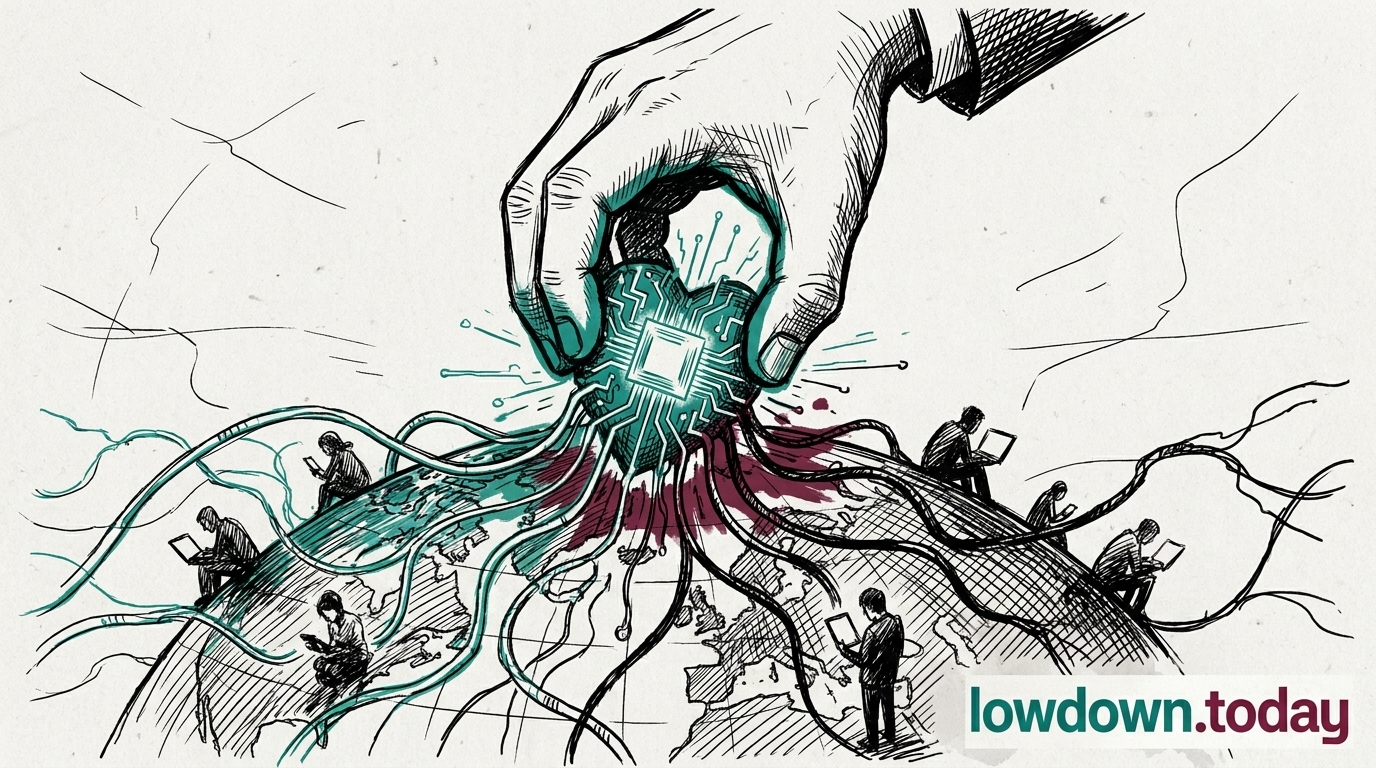
OpenAI filed a confidential draft prospectus with US regulators around 22 May and confirmed it publicly on 9 June, aiming for a public listing, an initial public offering, as early as September with Goldman Sachs, Morgan Stanley and JPMorgan underwriting 1. OpenAI is the San Francisco company behind ChatGPT and the primary demand driver for global AI infrastructure spending; an IPO would be the first time it opens its accounts to public investors.
The figures reported around the filing describe a company taking in roughly $2bn a month, about $24bn annualised, against a projected operating loss near $14bn for 2026, with no positive cash flow expected until about 2030. The public-listing target sits above $1 trillion, against an $852bn valuation set by a roughly $122bn fundraising round in March, with Amazon, Nvidia and SoftBank among the backers. These are reported figures attached to a confidential filing, not numbers drawn from a public prospectus, so each should be read as projected pending the S-1.
If the reported numbers hold, the arithmetic sets the terms. A $14bn loss against $24bn of revenue runs close to 58 cents lost for every dollar earned, which makes the shortfall the running cost of staying open rather than a one-off. A $1 trillion target prices the 2030 breakeven as near-certain, leaving thin margin if training costs climb or enterprise demand softens.
The loop closes on its own product. The same model whose jailbreak triggered the Anthropic suspension, GPT-5.5, remains on sale under OpenAI even as the lab chases a public listing at a loss-making run-rate . The engine behind much of the displacement this desk has tracked all year does not yet pay for itself, and OpenAI is asking the public to carry the gap until it might.