Skip to content
You can now search across every topic, entity and event.What's new
2026 FIFA World Cup
25JUL

Twelve host cities silent at the HRW deadline

3 min read
11:57UTC

Human Rights Watch's 11 May deadline passed with 12 of 16 World Cup host city committees publishing no rights action plan; FIFA's position is that all 16 have submitted plans internally, a distinction HRW disputes as transparency.

SportDeveloping
Key takeaway

Internal submission satisfies FIFA's framework; the public reads no plan for twelve of sixteen cities.

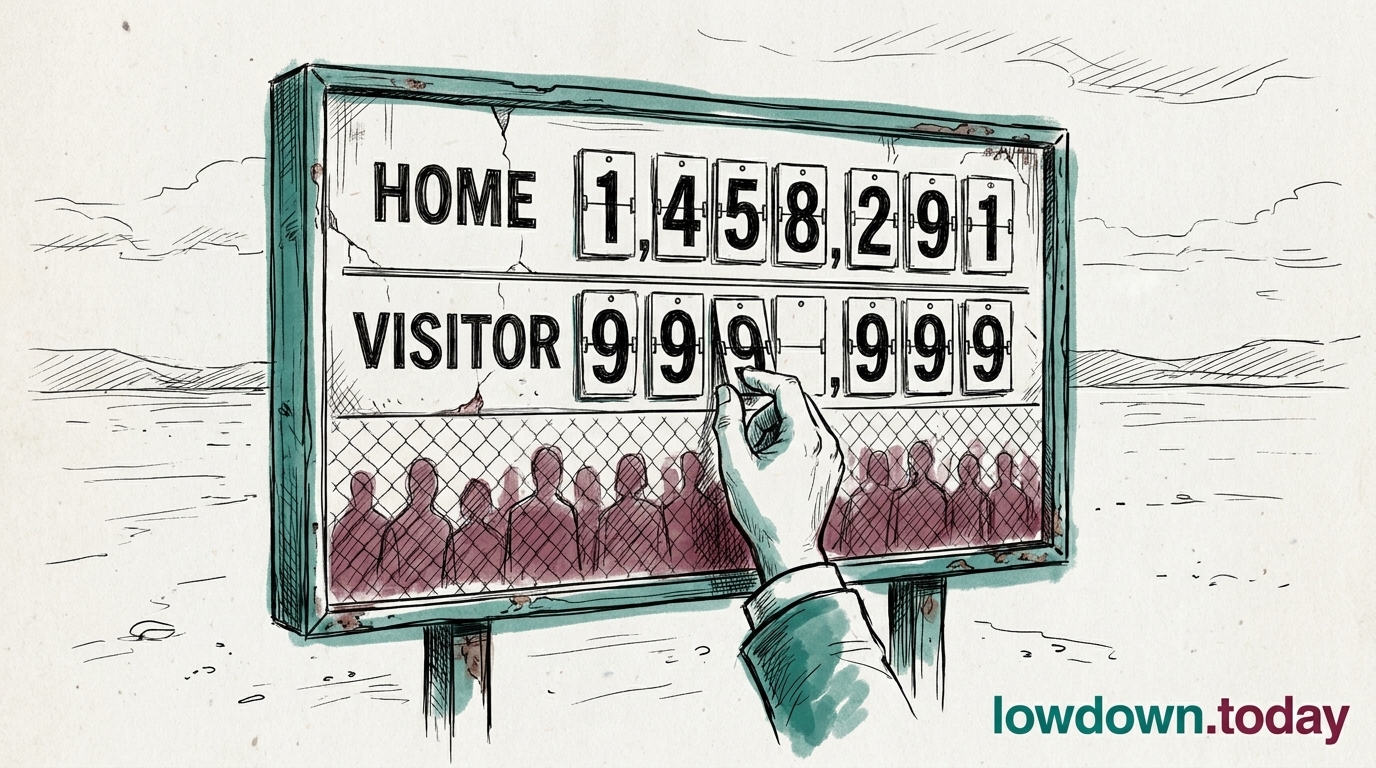
Today is the deadline Human Rights Watch (HRW, the New York-based monitoring organisation) set for the sixteen US, Canadian and Mexican host city committees to publish Human Rights Action Plans . Four have published: Atlanta, Dallas, Houston and Vancouver. Twelve have not: Boston, New York and New Jersey, Kansas City, Miami, Philadelphia, Los Angeles, Seattle, Toronto, San Francisco, Mexico City, Guadalajara and Monterrey. 31 days from kickoff, 75% of the host roster has published nothing. Yet FIFA's position to NPR on 29 April was that all sixteen have submitted plans to FIFA; transparency, not absence, is the gap HRW is naming. 1

HRW set 11 May; FIFA's own Human Rights Framework requires plans "before the tournament", which means 11 June. The 11 May date is a pressure point HRW chose to put a month of political space in front of the opener, not a contractual obligation any city has missed. Toronto and Boston have signalled May publication without committing to a date. HRW had not published a deadline-passed statement at the time the 27 April "Climate of Fear" report named ICE-related arrests of journalists in Atlanta and during March 2026 raids .

FIFA's Human Rights Framework was drafted in 2017 with Russia and Qatar in mind; it deliberately distinguishes between FIFA's own compliance and host-city public disclosure, leaving the latter to local political discretion. That is why FIFA can claim full framework compliance because internal submission to FIFA counts. A fan from any of the twelve unpublished cities cannot read what protections their city committee has promised, and the architecture is functioning as designed.


Deep Analysis

In plain English

FIFA asked each of the 16 cities hosting World Cup matches to write a plan explaining how they would protect human rights during the tournament. Human Rights Watch set an 11 May deadline for cities to publish those plans publicly. Today is 11 May, and 12 of the 16 cities have published nothing. FIFA says all 16 have sent their plans to FIFA's offices privately. Human Rights Watch says that does not count as transparency. Fans have no way to read what protections their city has promised.

Deep Analysis
Root Causes

FIFA's 2017 Human Rights Framework defines compliance as submission to FIFA, not public disclosure. The design choice was deliberate: in the Qatar context, requiring public disclosure of host-government commitments would have created a sovereign-rights conflict FIFA could not win. The framework was drafted to be satisfiable without transparency.

For US host cities in 2026, the absence of publication reflects a different dynamic: cities with active ICE collaboration agreements (Dallas, Houston, Miami) cannot publish rights plans without acknowledging the tension between those agreements and their roles as World Cup hosts.

Atlanta, Dallas, and Houston are among the four cities that did publish, suggesting that publication is not politically impossible; the published plans may nonetheless simply describe the status quo rather than committing to change.

What could happen next?
  • Consequence

    With 31 days to kickoff, the 12 cities without published plans are unlikely to reverse course before the tournament; any publication now would draw attention to what was absent during the HRW window.

    Immediate · 0.8
  • Risk

    An ICE enforcement incident at or near a World Cup venue in one of the 12 unpublished cities would generate a documented absence of prior commitment, strengthening legal and reputational claims against both the city and FIFA.

    Short term · 0.65
  • Precedent

    FIFA's 'submitted not published' defence, used in Russia 2018 and now in 2026, establishes a consistent precedent: the framework provides FIFA with a compliance shield regardless of public transparency, which will define the framework's utility for future human rights advocacy.

    Long term · 0.85
First Reported In

Update #10 · Tehran names the players

Human Rights Watch· 11 May 2026
Read original
Different Perspectives
Real Madrid
Real Madrid
Operating internally on the basis Rodri joins, according to David Ornstein's reporting, despite no talks having taken place with Manchester City. The gap between internal planning and actual negotiation is itself notable.
Manchester City
Manchester City
Unwilling to sell Rodri, with manager Enzo Maresca stating he returns to the club after back surgery. No club-to-club talks with Real Madrid are taking place, contradicting the framing of a deal in motion.
CONMEBOL
CONMEBOL
Backs the move to a 64-team 2030 tournament co-hosted across South America. Has not engaged publicly with FIFPRO's workload or heat-threshold objections drawn from this tournament's data.
FIFA
FIFA
Points to its 30 June technical and officiating reviews as the authoritative account of the tournament's football, including Collina's rejection of bias claims. Has not publicly responded to the renewed compensation call or disputed FIFPRO's heat-threshold figures.
FIFPRO
FIFPRO
Measures a four-degree gap between its own 28C postponement threshold and FIFA's 32C cooling-break trigger, breached in 19% of matches played. Cites a 70-83 match workload projection to oppose the 64-team 2030 format.
Human Rights Watch
Human Rights Watch
Documents 54 immigration-custody deaths before kickoff and two since, and revives the compensation duty FIFA's own advisers identified after Qatar 2022 and never acted on. Treats the pattern as unresolved FIFA liability, not a closed file.


