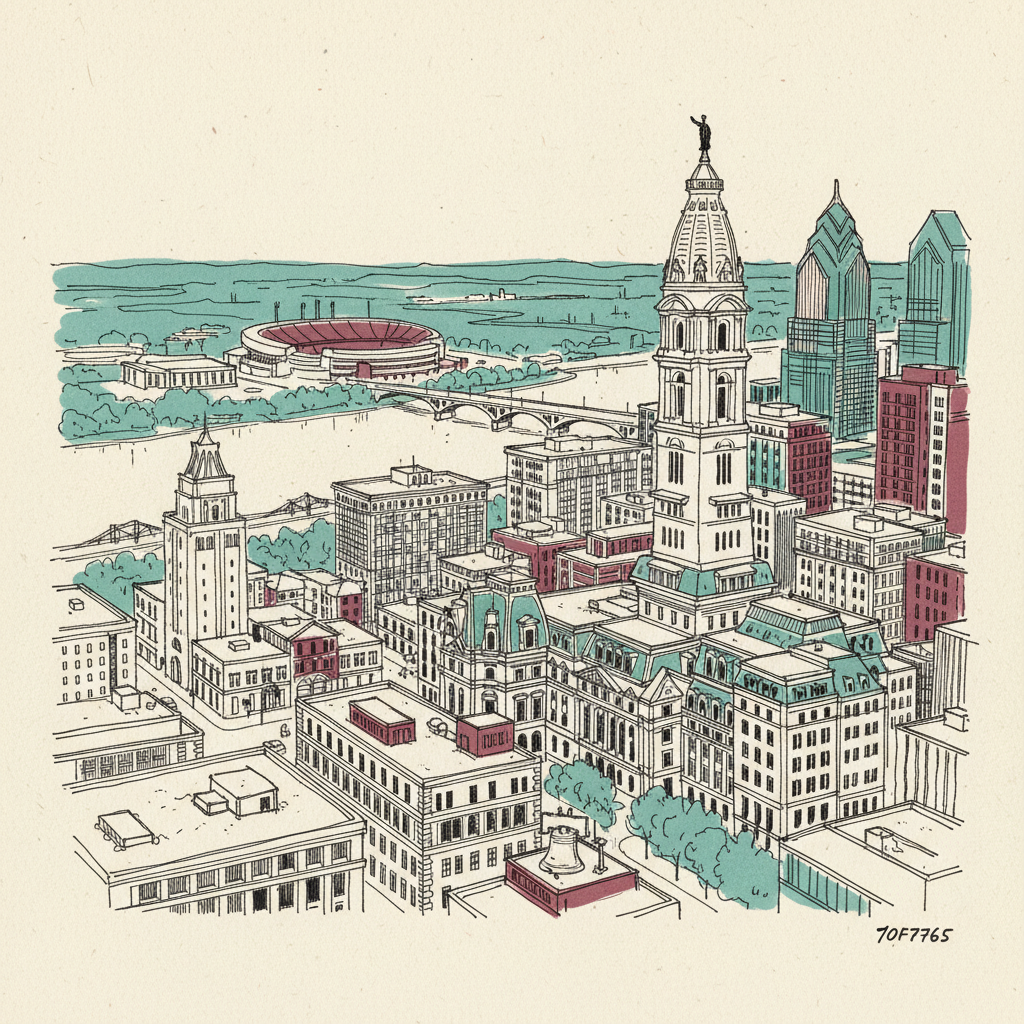
Philadelphia
Pennsylvania's largest city and a 2026 World Cup host venue at Lincoln Financial Field.
Philadelphia's Lincoln Financial Field produced the first weather suspension in World Cup history on 22 June, when lightning halted France's 3-0 win over Iraq for two hours and 15 minutes.
Last refreshed: 28 July 2026 · Appears in 3 active topics
Why hasn't Philadelphia published a World Cup human rights action plan?
Timeline for Philadelphia
Mentioned in: Guatemala passes Mexico on measles cases
Pandemics and BiosecurityMentioned in: US distillate deficit widens to 11%
European Oil MarketsMentioned in: A real measles exposure at the airport
Pandemics and BiosecurityMentioned in: US measles nears a 34-year record
Pandemics and BiosecurityMentioned in: Sky signs £1.6bn deal to buy ITV
Media's AI PivotBackground
Philadelphia is Pennsylvania's largest city and the sixth-largest in the United States, with a strong football (soccer) tradition through the Philadelphia Union and the city's historic immigrant communities WHO brought the sport from Europe. Lincoln Financial Field, which also hosts the NFL's Philadelphia Eagles, was one of sixteen venues for the 2026 FIFA World Cup.
The city's tournament run drew Brazil, France and Scotland's group-stage matches among others, and produced football's first-ever weather-related suspension when lightning halted a France v Iraq fixture in June. Philadelphia entered the tournament, like twelve of its fellow host cities, without a published Human Rights Watch action plan.
Its roofless stadium halts a match
France beat Iraq 3-0 in Philadelphia on 22 June, but the match stopped for two hours and 15 minutes after lightning hit within the stadium's mandatory evacuation zone, the first weather suspension in World Cup history. Mbappe scored twice on his 100th France CAP either side of the delay.
The stoppage exposed a vulnerability specific to Philadelphia's own arena: Lincoln Financial Field, home to the NFL's Eagles, was built without a roof, leaving players and fans exposed just as the 48-TEAM calendar had shifted fixtures into the stretch of summer when the city sees its heaviest afternoon storms.
Philadelphia missed its rights deadline
Philadelphia was among twelve of the sixteen World Cup host cities that had published no human rights action plan by Human Rights Watch's self-imposed 11 May Deadline, entering the tournament without the public framework only Atlanta, Dallas, Houston and Vancouver produced.
The city hosted matches regardless, including a near-90% hotel-occupancy peak on 4 July, its highest since tracking began in 2007, a commercial payoff that arrived without the rights documentation campaigners had asked every host city to publish.
Is Philadelphia's measles case linked to the World Cup?
Has Philadelphia published a World Cup human rights plan?
What is Philadelphia famous for historically?
What happened at the France vs Iraq World Cup match in Philadelphia?


