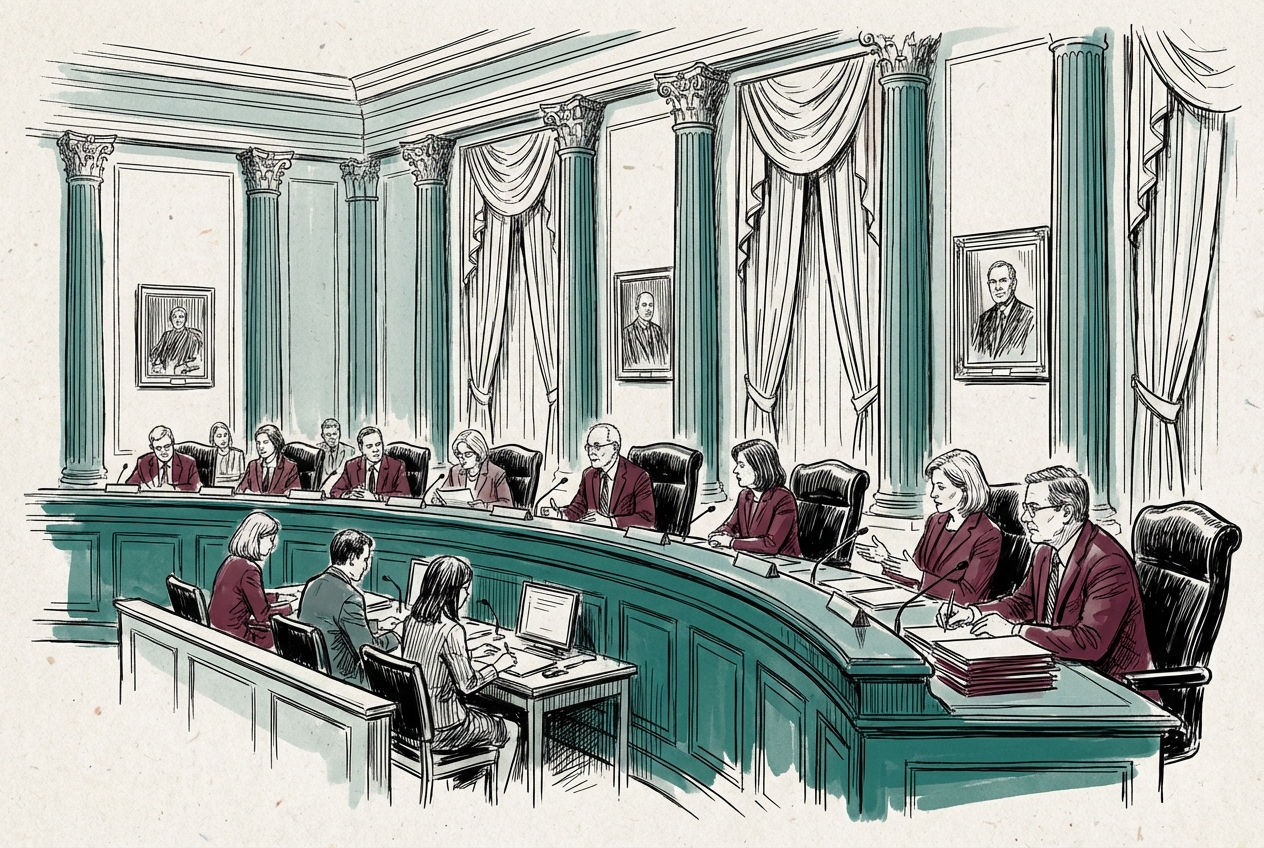
The committee controls $29 billion of Iran war spending but cannot authorise the war. What can it actually do?
Timeline for Senate Appropriations Committee
Mentioned in: Pentagon pauses Iran bombing after Caine warning
Iran Conflict 2026Questioned Hegseth on the $37.5 billion figure
Iran Conflict 2026: Hegseth prices the war at $37.5bnMentioned in: Senate 50-47: Cassidy unlocks the floor
Iran Conflict 2026Senate 50-47 discharges Kaine Iran resolution to floor
Iran Conflict 2026Mentioned in: AUMF unfiled, blackout hits 1,728 hours
Iran Conflict 2026Background
The Senate Appropriations Committee is the body that translates White House budget requests into binding federal spending law. For NASA, it is the single most consequential legislative body: no matter what the House Science Committee authorises or the President requests, the final dollar figure depends on the Appropriations Committee's markup. When the FY2027 proposal to cut NASA to $18.8 billion emerged, the committee's chair, SEN. Susan Collins, expressed bipartisan concern, signalling resistance.
The committee has 30 members split between twelve subcommittees, one of which covers Commerce, Justice and Science and is chaired by Jerry Moran, giving him direct authority over NASA's appropriation. The subcommittee has repeatedly rejected White House cuts to NASA's Science budget, funding the agency at $24.4 billion in the previous cycle against an identical $18.8 billion request; in April 2026 Moran called a repeat FY2027 cut to $18.8 billion "a mistake", signalling the panel would again hold funding near FY2026 levels.
The FY2027 fight is particularly acute because Artemis is entering a critical capital phase, with the Lunar Gateway, advanced spacesuits, and Artemis III surface hardware all requiring sustained multi-year investment. A cut to $18.8 billion would force programme delays or cancellations at the precise moment Artemis II is demonstrating crewed deep-space capability.
On 12 May 2026, the Senate Appropriations Committee became the venue for the war's most significant constitutional moment. Appearing on $29 billion of Iran war spending, Defence Secretary Pete Hegseth testified under oath that Donald Trump holds 'all the authorities he needs under Article 2' and that 'we don't need' an AUMF. Senator Lisa Murkowski asked the opening question; her threatened AUMF was rendered procedurally moot by Hegseth's answer.
The exchange exposed a structural distinction that has run beneath the Iran war since 28 February 2026: the Appropriations Committee controls spending on the conflict but has no authority to force a formal authorisation for it. That power belongs to the Senate Armed Services Committee (SASC) and the House Armed Services Committee (HASC), neither of which has produced a binding instrument. The Appropriations Committee can theoretically attach a rider blocking war funds, but doing so risks a veto and has not been tested. The reaction to Hegseth's testimony was described as intense bipartisan frustration (WaPo); the war has now consumed $29 billion under no signed presidential instrument, a streak of 75 consecutive days.
On 21 July, Hegseth returned to the committee to give the war's first official cost figure, $37.5 billion, with no accounting basis for whether it was obligated, appropriated or incremental spending. The committee was already weighing OMB director Russell Vought's 24 June letter to Speaker Mike Johnson requesting $87.6 billion, of which $67 billion is the Defence component covering Iran. Ranking member Patty Murray said the panel would not "rubber-stamp a request to bankroll this war", noting the department received over $1 trillion last year and is asking $1.3 trillion for the current fiscal year; Dick Durbin said Hegseth and General Caine "can't explain how this money is going to be spent".