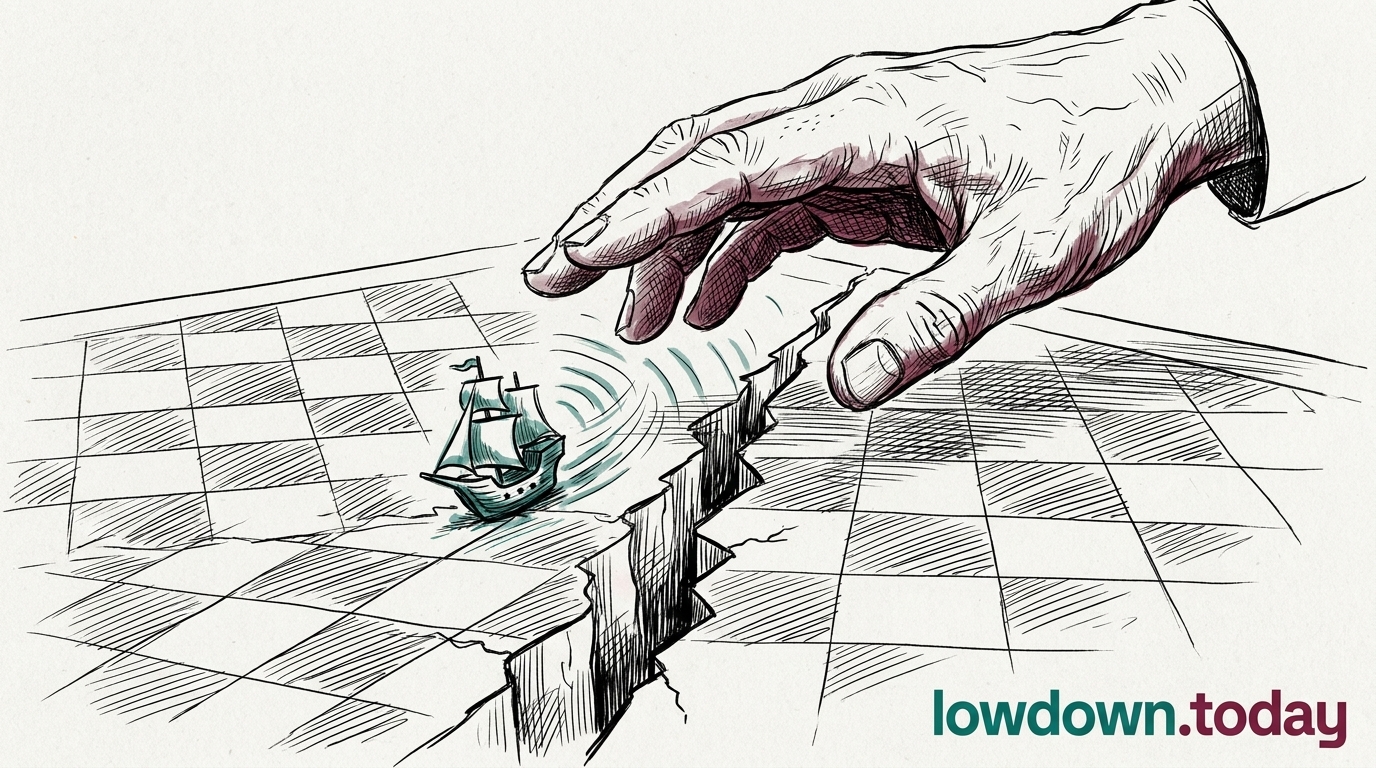
Pete Hegseth, the US Secretary of War, told the Senate Appropriations Committee on Tuesday 21 July that the Iran campaign has cost $37.5 billion so far, the first official figure Washington has attached to this war1. He gave no accounting basis for it. Not obligated, not appropriated, not incremental: the number arrived bare, under questioning, with Joint Chiefs Chairman General Dan Caine sitting beside him.
The request the committee was examining had been on the table since 24 June. Russell Vought, director of the Office of Management and Budget (OMB), wrote to Speaker Mike Johnson that day asking for $87.6 billion, of which $67 billion is the Defence component covering Iran2. An OMB letter is a request rather than a bill, and Congress has to draft and pass the appropriation itself. No markup or vote date has been set.
Reporting on the request describes $32.7 billion of it, roughly half, as direct war operations3. No public itemisation of the remainder holds together as a breakdown, and the figures circulating for the individual lines do not reconcile against the total. Ranking member Patty Murray said the committee would not "rubber-stamp a request to bankroll this war", noting the department received over $1 trillion last year and is asking $1.3 trillion for the current fiscal year4. Dick Durbin said the two witnesses "can't explain how this money is going to be spent"5.
Washington has looked elsewhere for the money before. Donald Trump floated a 20% toll on Hormuz shipping in mid-July, then dropped it inside a day in favour of Gulf states investing billions in the United States in exchange for naval protection. Neither idea produced a dollar, and both left the bill where it started, with an appropriations committee that has now said aloud it cannot tell what it would be funding.
The timing sharpens the ask. Washington is being pressed to pay for naval protection of one chokepoint in the same week a second one closed to Saudi traffic at the cost of a transmitter.



