ReArm Europe
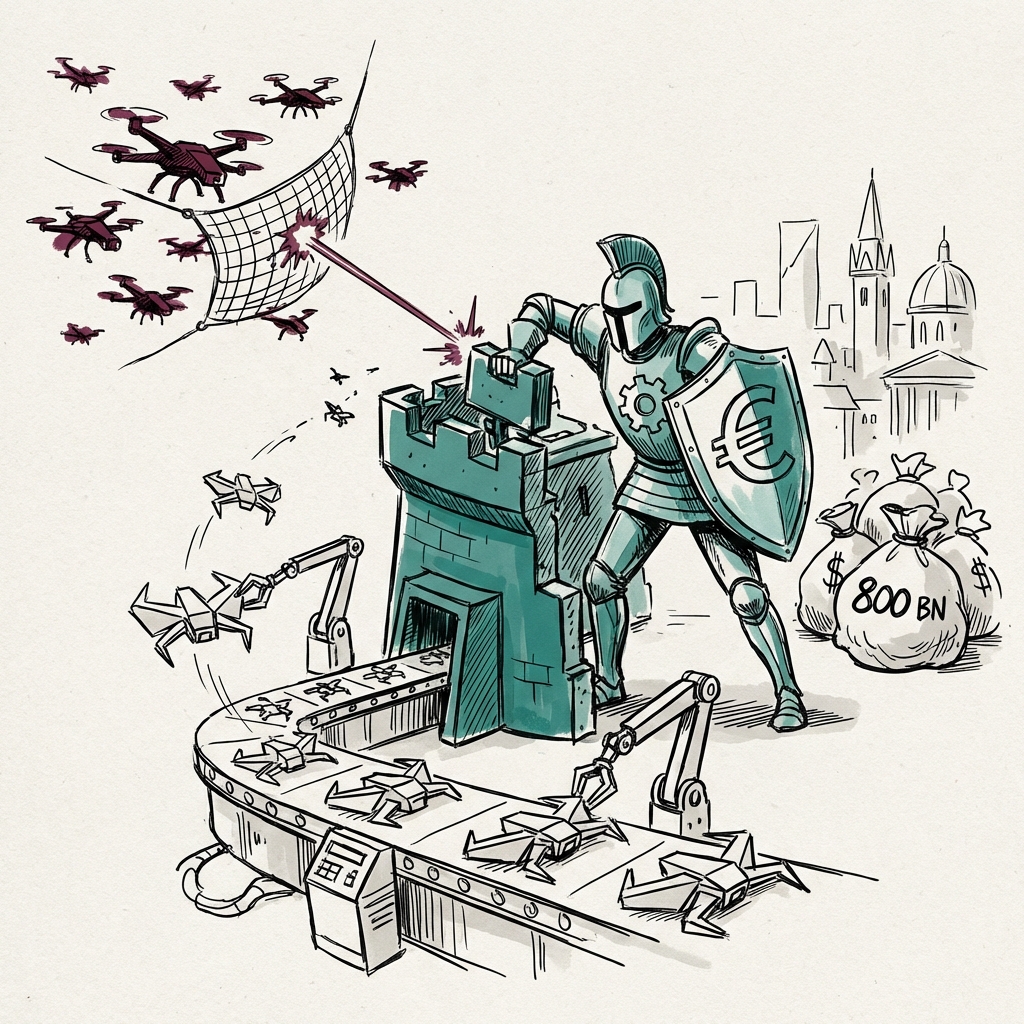
EU €800 billion Defence Investment Plan; driving European counter-drone procurement and domestic manufacturing.
Last refreshed: 22 May 2026 · Appears in 1 active topic
Which European defence companies are best positioned for the ReArm Europe procurement wave?
Timeline for ReArm Europe
Mentioned in: Germany cannot inject at this price
European Energy MarketsMentioned in: ACER builds enforcement stack in 48 hours
European Energy MarketsMentioned in: Equinor locks in five-year retail strip
European Energy MarketsMentioned in: Chemicals 62-68% as the new running floor
European Energy MarketsMentioned in: Golden Pass routes Qatari LNG via Texas
European Energy MarketsBackground
ReArm Europe (formally the ReArm Europe/Readiness 2030 plan) is the European Commission's €800 billion defence investment initiative, announced in March 2025 and accelerating through 2026. The plan allows member states to deviate from fiscal deficit rules to fund defence spending and creates a €150 billion joint borrowing facility (SAFE) for common procurement. It represents the largest structural shift in European defence funding since the Cold War.
The Readiness 2030 pillar addresses capability gaps identified in the Russo-Ukrainian War, including counter-drone systems, electronic warfare, and loitering munitions. European defence manufacturers WHO establish local production before the procurement wave peaks will have a structural advantage in national preference requirements.
ReArm Europe is the primary driver of European counter-drone procurement budgets. DroneShield's decision to open a European headquarters in Amsterdam and scale EU manufacturing capacity to $2.4 billion annually is explicitly tied to anticipating procurement demand under ReArm Europe. The UK's UKDI programme (£400 million annually) runs in parallel but outside EU structures.
ReArm Europe's defence-spending surge has indirect energy market effects: the fiscal escape clause that suspends deficit rules for defence spending also creates new budget headroom for Energy infrastructure investments where member states frame them as security-critical. Germany's 12 GW hydrogen-ready gas-plant tender sits at the intersection of energy security and industrial readiness that ReArm Europe's authors anticipated.
What is ReArm Europe defence plan?
ReArm Europe drone procurement impact?
What is the ReArm Europe plan and how much is it worth?
Which defence sectors does ReArm Europe prioritise?
How does ReArm Europe affect European defence company investment decisions?
Is the UK included in the ReArm Europe programme?

