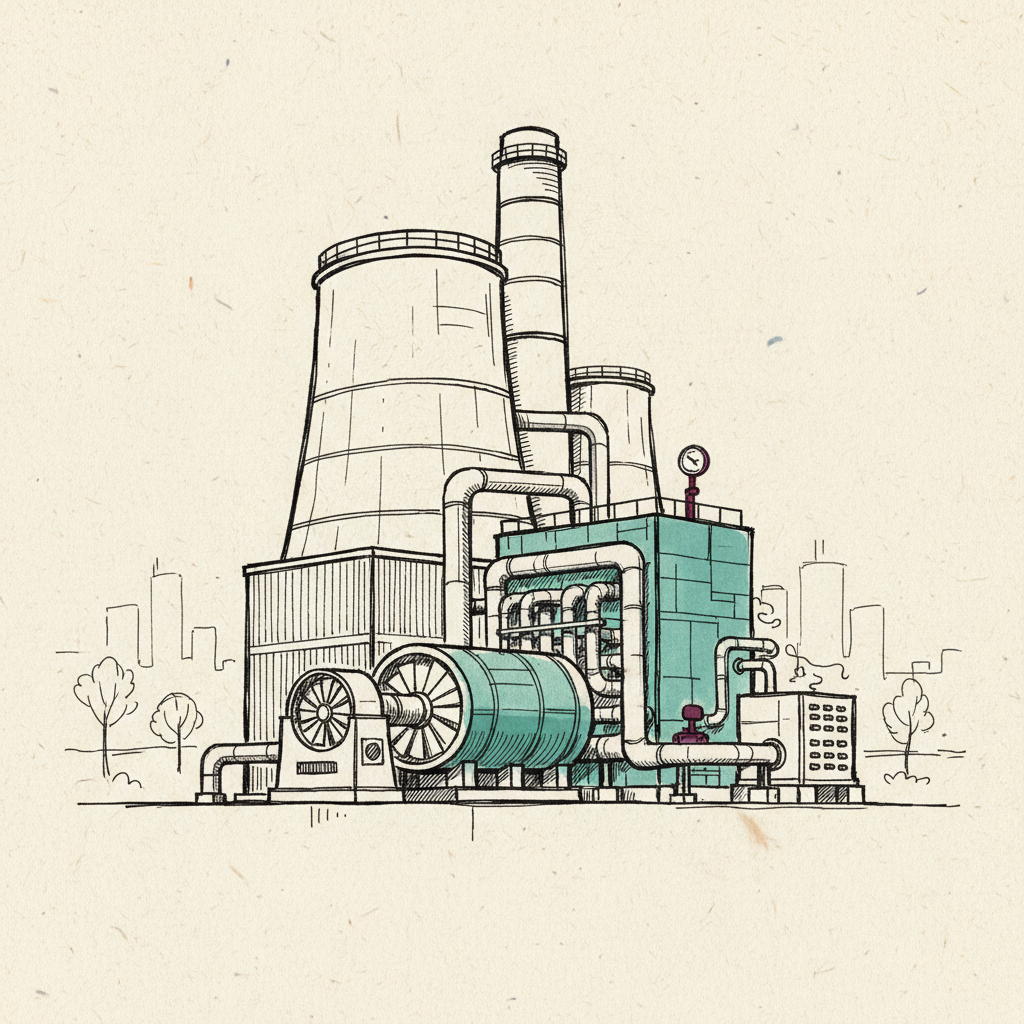
CCGT
gas-fired power plant combining two turbine cycles for 55-62% efficiency; the European marginal price-setter.
Germany's clean spark spread hit its cycle worst on 27 July 2026, the clearest sign yet that CCGT plants are being pushed out of the merit order by weather and calendar effects, not by fuel cost alone.
Last refreshed: 31 July 2026 · Appears in 1 active topic
Why did German CCGT plants stop injecting gas into storage in May 2026?
Timeline for CCGT
Mentioned in: German gas plants ignore cheaper fuel
European Energy MarketsGerman spark spread hits cycle worst
European Energy MarketsMentioned in: Friday's German spark briefly broke even
European Energy MarketsMentioned in: Spark stays negative, French edge erodes
European Energy MarketsMentioned in: German caverns restart a day after stall
European Energy MarketsBackground
A combined-cycle gas turbine plant burns natural gas in a turbine, then recovers exhaust heat to drive a second steam turbine, lifting thermal efficiency to 55-62% against 35-40% for simple-cycle gas turbines. CCGTs reach full output in 30-60 minutes, faster than coal or nuclear but slower than open-cycle peaking plant, and were the dominant new-build thermal technology in European power systems through the 2000s and 2010s.
In merit-order terms CCGT sits mid-stack, undercut by nuclear, hydro and renewables on marginal cost but cheaper to run than open-cycle or oil-fired plant; on high-demand, low-wind days the last CCGT running is often the price-setting marginal unit. Running margin is set by the clean spark spread, the gap between the power price and combined gas-and-carbon cost, which can flip from strongly negative to strongly positive within days as weather and carbon prices move.
Energy-transition planning gives CCGT a dual role: dispatchable backbone for intermittent renewables in the near term, and a candidate for hydrogen co-firing once green hydrogen costs fall. Germany runs two separate hydrogen-ready gas programmes toward that end: StromVKG's 9 GW of 2026 capacity-payment auctions, and the older Kraftwerksstrategie, a distinct 10 GW plan targeted at 2032.
Weather displaces CCGT from the stack
German CCGT margins inverted to between minus €15 and minus €21/MWh on 20 July, with fuel cost of €118-124 outrunning €103.16 of day-ahead power revenue. A four-hour zero-priced solar block did most of the damage; only a small slice traced to Hormuz-driven gas costs, putting roughly 13% of the swing down to fuel and more than 87% to weather and the calendar.
The spread briefly broke even on 24 July before the clean spark hit its cycle worst on 27 July, with plants still running at a loss even as fuel costs eased, evidence that dispatch economics, not the gas price alone, decide whether CCGT clears the merit order on any given day.
Berlin funds loss-making backup capacity
Germany's Cabinet approved the StromVKG capacity-payment law on 8 June 2026, targeting new CCGT-class back-up generation worth up to €3bn a year from 2031. The law exists because CCGT plants were losing €8-9/MWh that same week, proof that dispatchable gas capacity will not get built on merchant economics alone when clean spark spreads run negative.
The bill reached a public hearing on 24 June, with a first 4.5 GW tranche of its 9 GW 2026 programme due to auction from 1 September. Germany's Greens pushed a hydrogen-conversion condition on winning contracts, which would steer subsidised CCGT-class capacity toward eventual hydrogen co-firing rather than locking in unconditional gas-only plant through the 2030s.