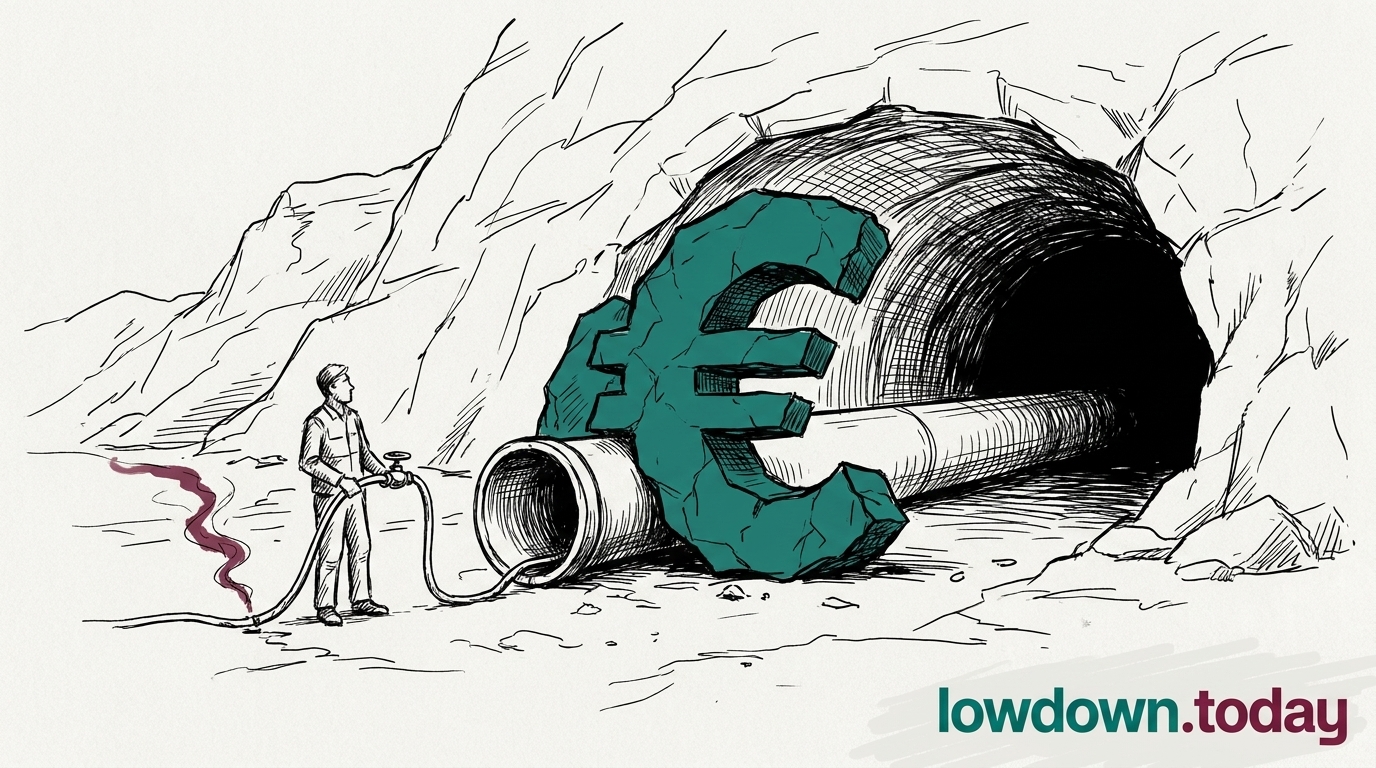
BASF, Ineos, Covestro, Lanxess and Evonik are operating European plants at 62-68% capacity utilisation against an 80% profitability threshold1. Industry leaders now frame the cost disadvantage as structural rather than cyclical, removing the demand-recovery story from forward TTF. European chemical exports fell from 23% to 14% of world trade between 2018 and Q1 2026; Wacker Chemie and Air Liquide are reported to be entering the same closure posture as BASF Ludwigshafen.
The Verbund freezes BASF flagged as a contingent option in Q1 and Yara International's 25% European fertiliser curtailment are no longer scenarios; they are the running posture. BASF's Ludwigshafen Verbund site is the integrated production model that monetises waste heat across the chain, and freezing a single Verbund step propagates through every downstream unit and breaks the operating economics. European industrial gas at three to four times US Henry Hub levels and twice Chinese reference levels passes a cost differential a buyer cannot absorb at integrated chemical scale.
At €50+ TTF, further chemicals curtailment arrives as a floor under prices rather than a ceiling on them: each tranche of plant closure removes summer offtake visibility that storage refill economics need to fund carry, compounding the 0.17 pp/day injection deficit on the gas side. Storage trajectory and chemicals utilisation now run as the same trade. Subsidy logic does not solve it: the trade-share collapse from 23% to 14% is the argument against gas-price subsidy as a recovery instrument; subsidising power for Ludwigshafen does not bring back lost Asian customer relationships, and European Business Magazine's reporting frames the EU industrial floor as priced into 2026-30 plant rationalisation rather than into a 2026 demand return.




