Primorsk
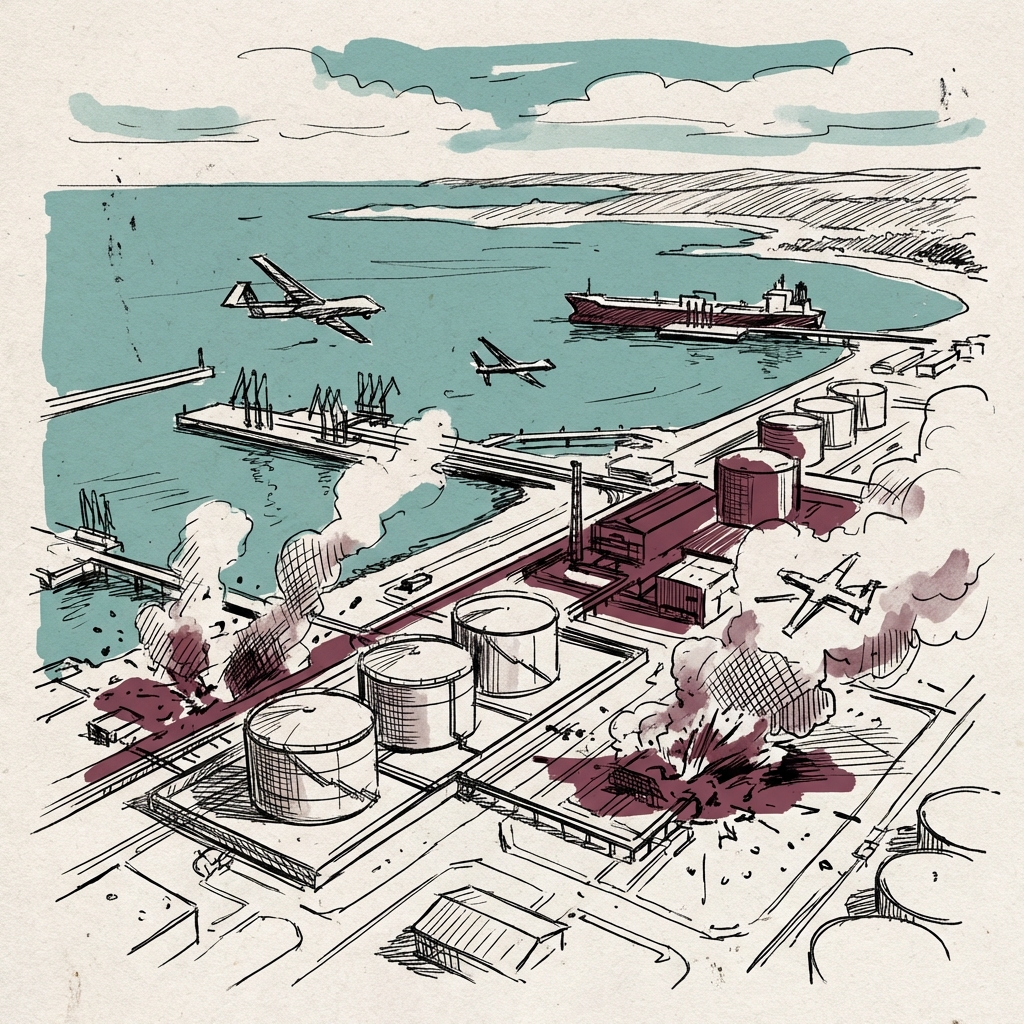
Baltic oil export terminal in Leningrad Oblast; struck repeatedly by Ukrainian drones in March 2026.
Primorsk is Russia's second-largest Baltic oil export terminal. Its own loading-basis discount to Brent held near $20 a barrel on 7 July, roughly double the destination-delivered discount Indian buyers pay.
Last refreshed: 3 August 2026 · Appears in 2 active topics
With Primorsk berths halved and the Samara corridor struck, how much of Russia's oil export chain is still functioning?
Timeline for Primorsk
Mentioned in: Urals into India narrows to $1-2
European Oil MarketsMentioned in: Ukraine's strikes move to the Azov
Russia-Ukraine War 2026Urals discount splits by delivery basis
European Oil MarketsMentioned in: Baltic Aframax bid eases off the spike
European Oil MarketsMentioned in: Cuba carve-out strands nine SDN cargoes
European Oil MarketsBackground
Primorsk is Russia's second-largest Baltic oil export terminal, on The Gulf of Finland in Leningrad Oblast, loading crude and refined products bound largely for Asian and European buyers via the shadow tanker fleet.
Between 22 and 31 March 2026 Ukrainian drones struck Primorsk and neighbouring Ust-Luga repeatedly, part of a campaign that helped drive a 43% single-week collapse in Russia's seaborne crude exports, the steepest recorded. By early April Primorsk's active berths had fallen from ten to four and combined Baltic throughput sat at a year-low of 115,000 tonnes a day.
The terminal is now a fixed node in the Russian sanctions-evasion chain: shadow-fleet tankers loading Primorsk crude fall under the G7 price cap and the US Treasury's general licence regime, and OFAC's GL 134C (18 May 2026) specifically authorised completion of in-transit cargoes that had loaded there before 17 April. Swedish authorities have separately detained tanker crews bound for or from Primorsk over falsified port declarations.
Primorsk's loading discount stays near twenty
Primorsk sets the loading-basis half of the Urals discount, distinct from the destination-delivered price an Indian refiner pays. On 7 July the crude leaving Primorsk carried a discount to Dated Brent of roughly $20 a barrel, about double the delivered-India read, because freight and insurance for the tanker voyage sit on top of the loading price rather than inside it.
By 29 July the delivered-India discount had narrowed sharply to $1-2 a barrel, attributed to stronger Indian buyer appetite amid Hormuz risk, but no fresh loading-point figure at Primorsk accompanied that read; the wire reporting covered only the destination leg. The loading-point figure for that week at Primorsk remains unconfirmed rather than narrowed, leaving the $20 basis recorded on 7 July as the last verified read.
Reference
What does Primorsk export?
Where is Primorsk?
Why is the Urals discount bigger at Primorsk than in India?
How does OFAC GL 134C affect Russian oil exports from Primorsk?
Has Ukraine attacked Russian oil infrastructure in 2026?
What is the Primorsk oil terminal in Russia?
What is the Sea Owl I tanker?
How much did Russian oil exports fall after Primorsk strikes?
Was Primorsk oil terminal attacked?

