A paper in Science, published Thursday 14 May (DOI 10.1126/Science.aed6802), found that the abrupt withdrawal of USAID funding correlated with a significant and sustained increase in violence across Africa's most aid-dependent regions, including northern Nigeria, Tigray and northern Ivory Coast1. The authors caveat the finding as evidence of sudden disruption rather than of foreign aid's long-run effect on conflict. Ituri is not named in the paper's geographic scope, but the Djugu and Irumu territories where the outbreak is concentrated sit inside the same conflict geography. Al Jazeera reports recent armed-group attacks in Ituri killed at least 69 people in the weeks preceding the outbreak's surface2. The outbreak environment shares the structural conditions the paper measures even without DRC-specific data, while the parallel Idaho H5N1 picture compresses the same federal apparatus from the other side.
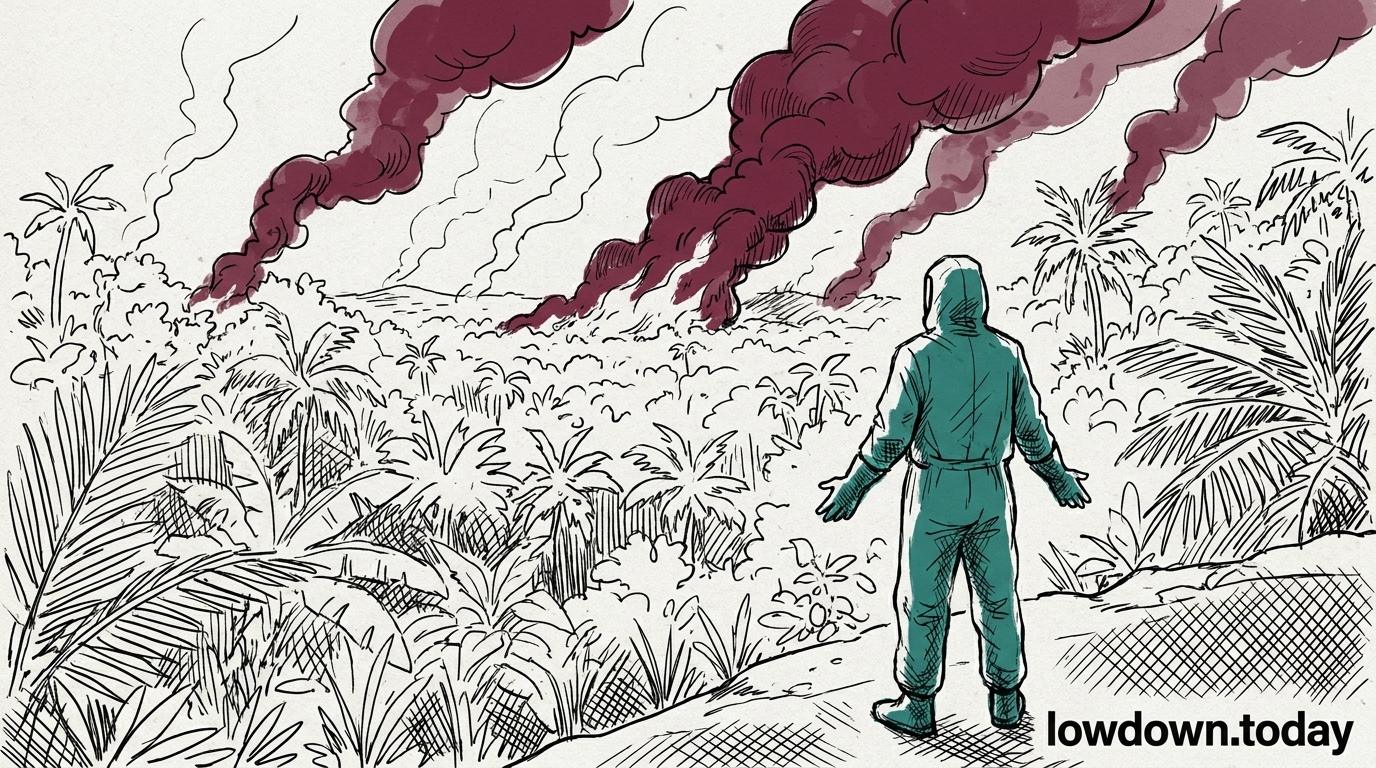
Science links USAID cut to violence
A Science paper published on Thursday 14 May found USAID's abrupt funding withdrawal correlated with a sustained violence increase across Africa's most aid-dependent regions; authors caveat as evidence of disruption, not of aid's long-run effect.
Conflict-zone overlap means Ituri shares the structural conditions the Science paper measures, even without DRC data.
Deep Analysis
A team of researchers published a study in Science on the same day INRB confirmed the Bundibugyo species. They found that when the US cut its foreign aid suddenly in 2025, violence went up significantly in the African regions that depended most heavily on that aid, including parts of Nigeria, Ethiopia, and Ivory Coast. Their study did not cover Ituri. But Djugu and Irumu territories, where the outbreak is concentrated, share the same conditions: armed groups, collapsed governance, heavy prior dependence on USAID-funded community health workers. Al Jazeera reported that armed-group attacks in Ituri killed at least 69 people in the weeks before the Ebola outbreak became visible. Violence and epidemic disease in fragile states tend to reinforce each other: the fighting drives people away from health facilities, and a disease outbreak drives health workers away from conflict areas.
- Risk
If the Science paper's mechanism applies to Ituri, USAID withdrawal may have reduced the community monitoring infrastructure that normally provides early haemorrhagic fever signals, directly contributing to the weeks of undetected transmission that Imperial College assessed.
Update #3 · WHO calls Ebola PHEIC, no treatment exists




