Can Iran restore domestic fuel supply after three strikes, the latest by CENTCOM, hit Mahshahr?
Timeline for Mahshahr Petrochemical Complex
Mentioned in: Fourth night of strikes hits Abadan
Iran Conflict 2026Mentioned in: Trump turns his threat on Netanyahu
Iran Conflict 2026Israel hits Iran after Trump said no
Iran Conflict 2026Israel claims 85% of Iran's chemicals
Iran Conflict 2026Israel Strikes Iran's Largest Domestic Fuel Facility
Iran Conflict 2026Background
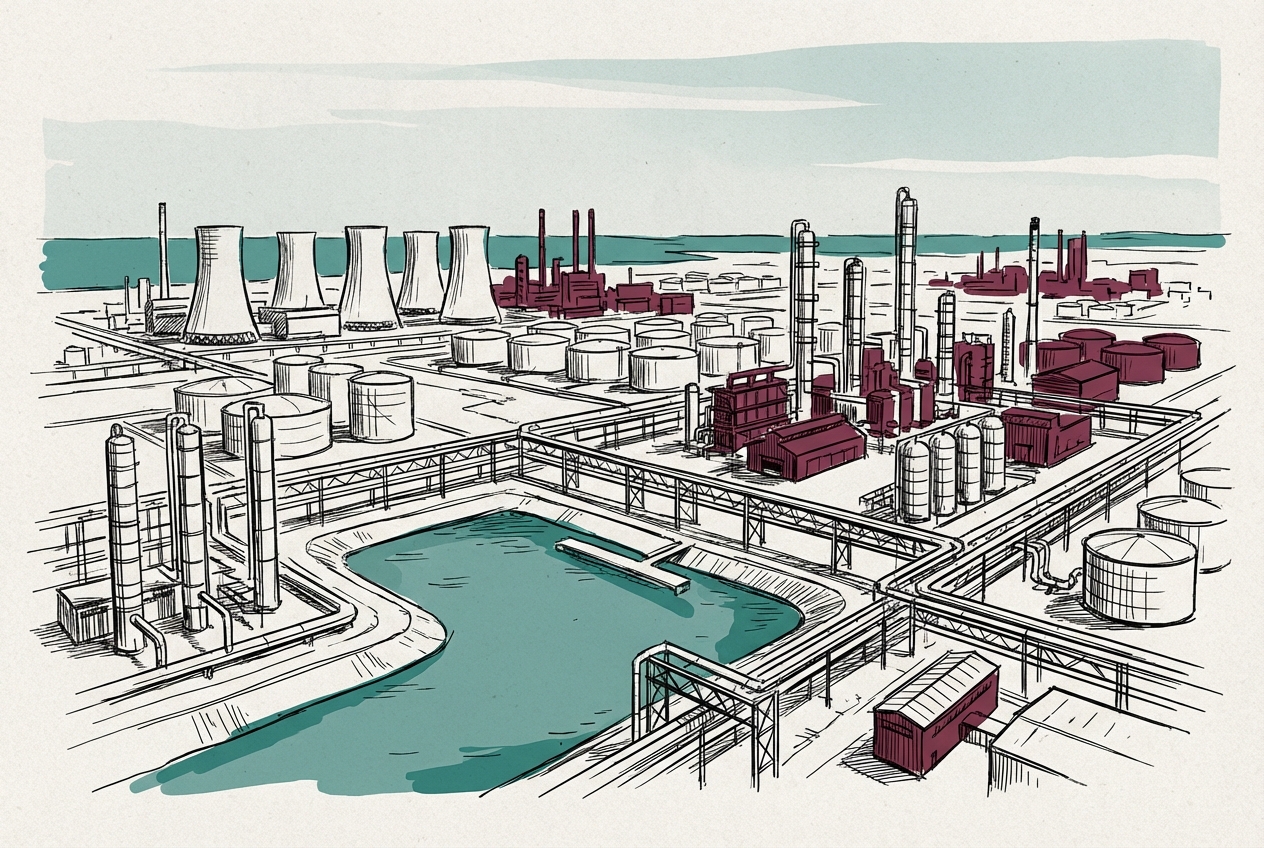
The Mahshahr Petrochemical Complex sits on The Persian Gulf coast in Khuzestan province, south-western Iran, roughly 150 km south-west of Ahvaz. It supplies an estimated 70% of Iran's domestic gasoline production and feeds a network of downstream plants across the province. Output also supports plastics and petrochemical exports through the nearby Imam Khomeini Port.
The complex has been struck three times during the 2026 war. The Israel Defence Forces hit it first on 5 April 2026, a deliberate shift in targeting logic away from export infrastructure towards civilian fuel supply; on 6 April the IDF struck the neighbouring South Pars/Asaluyeh complex, with Israeli Defence Minister Katz claiming the combined strikes had taken 85% of Iran's petrochemical export capacity offline, though Independent verification remained constrained by a US-ordered satellite blackout over Iran. The IDF struck Mahshahr a second time on 8 June 2026, alongside surface-to-surface missile launch sites, as retaliation for Iran's 7 June Ramat David salvo; Iranian officials and Magen David Adom both reported minimal-to-no casualties. On 13-14 July 2026 CENTCOM struck Mahshahr a third time, this time as the US military rather than Israel, in a fourth consecutive night of strikes that also hit Bandar Abbas, Sirik, the Abadan refinery, Qeshm Island and Kish Island. Striking the source of 70% of a country's domestic gasoline capacity three times in three months, by two different militaries, signals a sustained campaign to impose civilian economic pain rather than limit targeting to strategic military assets.
How many times has the Mahshahr petrochemical complex been struck?
Did US forces strike the Mahshahr complex in July 2026?
Did Trump ask Israel not to retaliate before the June 2026 Iran strikes?
Why did Israel strike the Mahshahr complex again on 8 June 2026?
Will the IDF Mahshahr strike cause fuel shortages in Iran?
Where is the Mahshahr petrochemical complex located in Iran?
How much of Iran's gasoline comes from the Mahshahr complex?
What is the Mahshahr petrochemical complex and why did Israel strike it?


