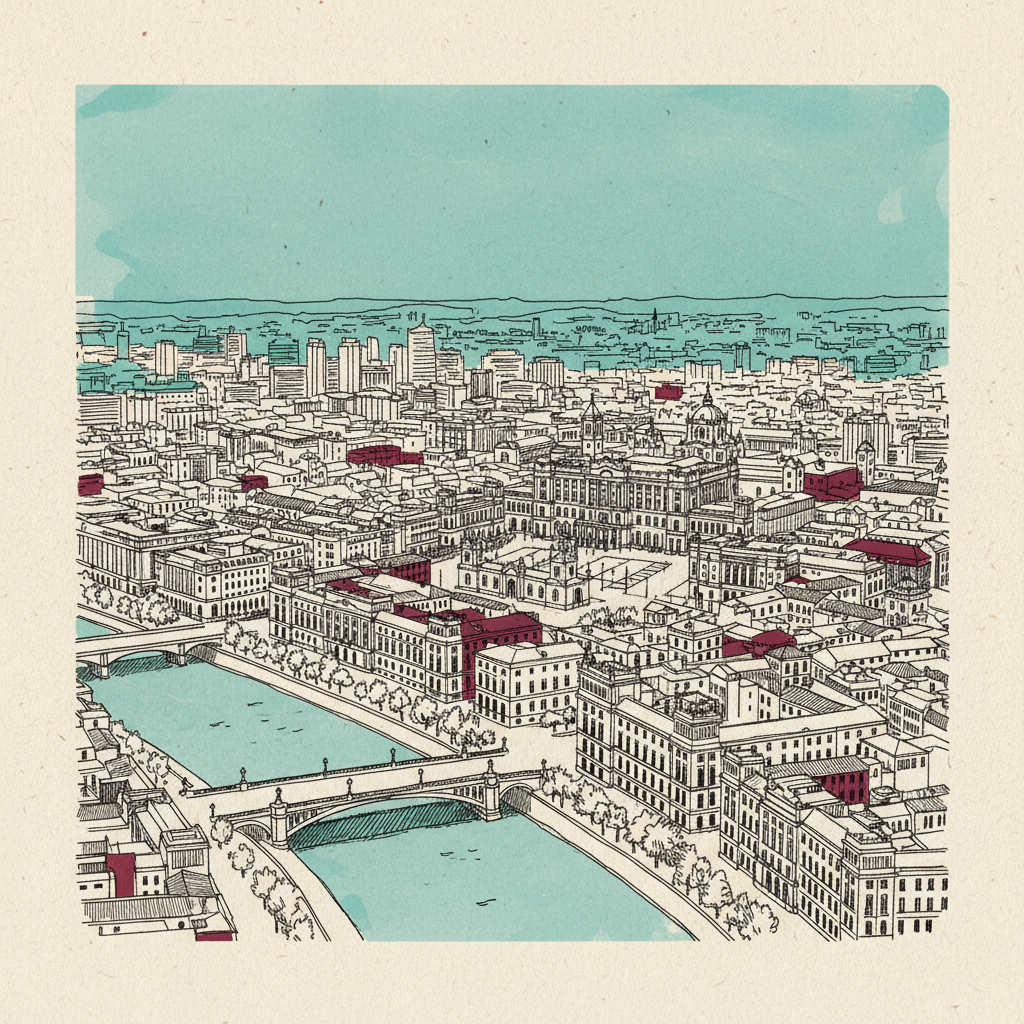
Madrid
Spanish capital; seat of a government managing housing-market pressure, STR enforcement, and NATO base politics.
Madrid remains bound by national housing law that keeps failing in Parliament: deputies refused on 2 October to validate two rent decrees, while Navarra uses foral civil-law powers the capital lacks to set its own short-let rules.
Last refreshed: 3 October 2026 · Appears in 2 active topics
Will Madrid's rent-freeze push survive its coalition's internal split over landlord tax breaks?
Timeline for Madrid
Mentioned in: Cape Town eyes commercial rates for lets
Nomads & CommunitiesMentioned in: EU grades data centres from A to G
Data Centres: Boom and BacklashMentioned in: Cuba's dollar rises as the euro falls
Cuba DispatchMentioned in: OCDH puts Cuban extreme poverty at 94%
Cuba DispatchBackground
Madrid is Spain's capital and the seat of its national government, Parliament and highest courts. Its institutions decide policies with national effect, including housing and short-let regulation, and the city is also capital of the Community of Madrid.
Madrid does not hold the foral civil-law competence retained by Spain's historic foral communities. On 21 May 2026 the Supreme Court held that short-let registration belongs to the autonomous communities, while civil lease law stays reserved to the foral communities. That limits Madrid's ability to follow the separate legal route Navarra used.
The city also hosts the Observatorio Cubano de Derechos Humanos, a civil-society monitor of repression in Cuba. Its presence makes Madrid a base for Cuban human-rights reporting and advocacy.
Madrid lacks its own letting powers
Navarra published its own short-let law in the official gazette on 28 July under foral civil-law powers that Madrid does not hold, and the same day Spain's national housing decree slipped to September. The capital therefore depends on national legislation, which suffered another defeat on 2 October when deputies refused to validate two rent decrees.
Madrid's courts keep a continuing role in enforcement. On 23 March the High Court of Justice of Madrid refused to suspend a €64m fine imposed on Airbnb over unlicensed listings and false registration numbers, so the largest platform penalty in Spain stays live while the platform's appeal proceeds.
Madrid rebuffed a wartime base request
In March 2026 the Spanish government in Madrid refused the United States access to its bases during the Iran campaign. Washington ordered the Treasury to cut off Spain, Iran publicly praised the decision, and Spain deployed an air-defence frigate to back the refusal.
The standoff resurfaced on 24 April, when a leaked Pentagon memo suggested removing Spaniards from senior NATO jobs and dropping US backing for the Falkland Islands as punishment. A Pentagon spokesman declined to deny it, and the leak landed as EU leaders met in Cyprus, pulling the dispute onto the European stage.
Its resident monitor tallies Cuban repression
The Madrid-based Observatorio Cubano de Derechos Humanos published on 4 August an itemised breakdown of the 1,949 acts of repression it had logged across Cuba in the first half of 2026: 91 targeted Independent journalists and 50 were retaliation against relatives of political prisoners. Havana dismisses the group as a Miami-linked advocacy outfit rather than a neutral monitor.
The half-year total, published from Madrid on 7 July, included 299 actions in June alone, 257 of them arbitrary detentions. The count has risen every month this year, giving the city's best-known Cuba rights monitor a steadily worsening dataset.
Madrid faces national housing constraints
What happened with the €64 million Airbnb fine in Madrid?
Did Spain's Congress extend the rent freeze in 2026?
Reference
What is Madrid's role in Cuban human rights monitoring?
What is Spain's role in European gas supply?
What is the Iberian electricity price cap mechanism?
Why does Spain have such large LNG import capacity?
Are the main Cuban human rights monitoring groups based in Madrid?
When was Spain's World Cup-winning squad received in Madrid?
Why are Spanish electricity prices so low compared to the rest of Europe in 2026?
Why did the US sanction Spain during the Iran conflict in 2026?
Who leads Spain's government from Madrid?
Are Madrid rents still rising as fast as they were in early 2026?
What is Spain's Plan Estatal de Vivienda?


