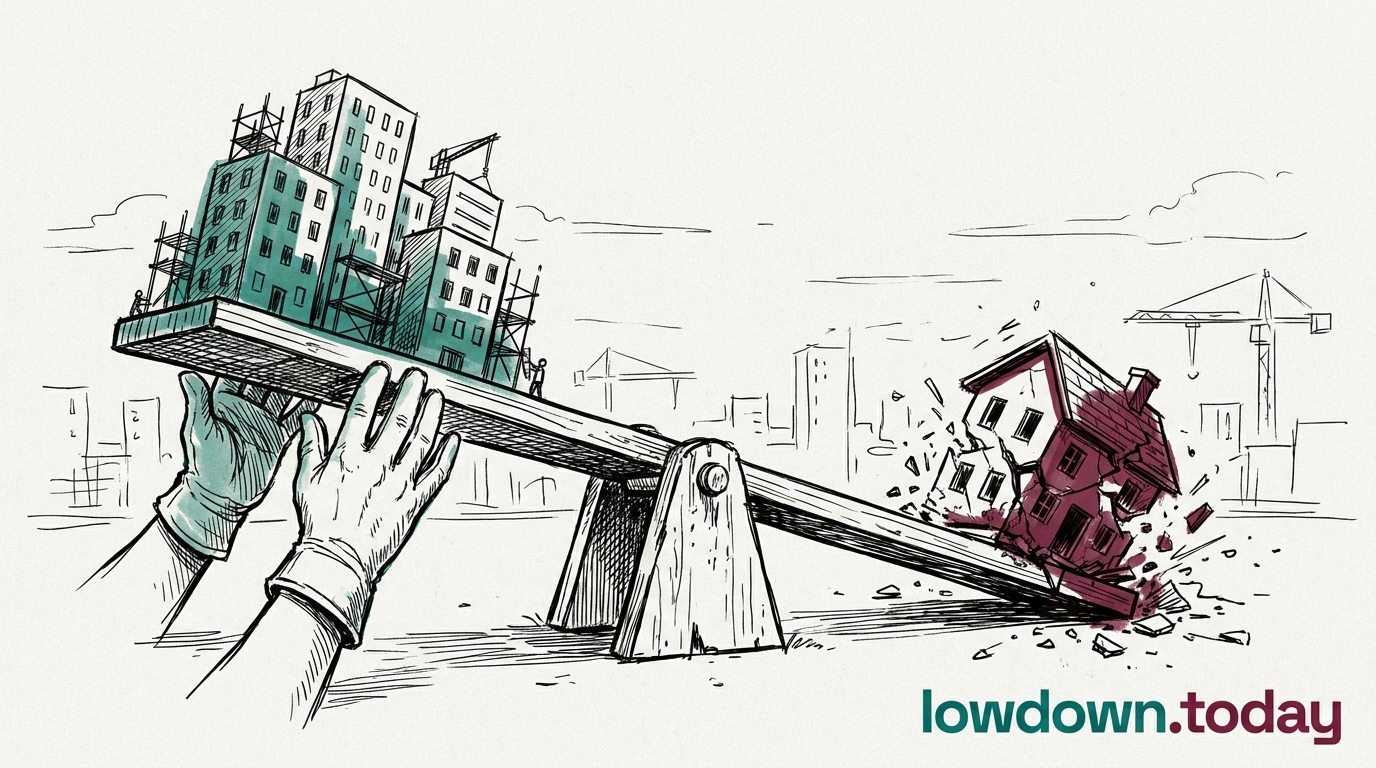
Spain's Council of Ministers approved Real Decreto 326/2026 on Wednesday 22 April 2026, establishing the Plan Estatal de Vivienda 2026-2030 with EUR 7,000 million of total funding. The decree was published in the BOE (Boletín Oficial del Estado, the Spanish state gazette) the following day under reference BOE-A-2026-8872 1.
The split is 60/40: EUR 4,200m from the central state, EUR 2,800m from CCAA (comunidades autónomas, the regional governments). Within that envelope, an emancipación line of EUR 2,500m funds first-home support for under-35s, EUR 1,100m of ICO (Instituto de Crédito Oficial, the state lending bank) loan guarantees back residential rehabilitation, and EUR 1,300m is earmarked for industrialised housing under PERTE, Spain's flagship industrial-policy programme. Articles 20, 29 and 39 cap rents inside the subsidised programmes themselves.
The preamble names two prior instruments: EU Regulation 2024/1028, the bloc-wide short-term-rental registration framework that takes full effect on 20 May 2026, and Royal Decree 1312/2024, Spain's national STR registration act in force since 2 July 2025 2. Read alongside the upheld EUR 64m Airbnb fine in Madrid , the decree describes a deliberate two-front posture: supply-side money on one side, platform enforcement on the other.
The plan rests on Article 149.1.13 of the 1978 Constitution, which gives the regional governments primary competence on housing policy and forces any national plan through co-financing rather than direct build. The operational test is now whether PP-governed CCAA in Madrid, Andalusia and Galicia sign on. Without their match, the EUR 4,200m of state money does not clear the bar, and the supply-side arm of the pincer arrives without builds attached.