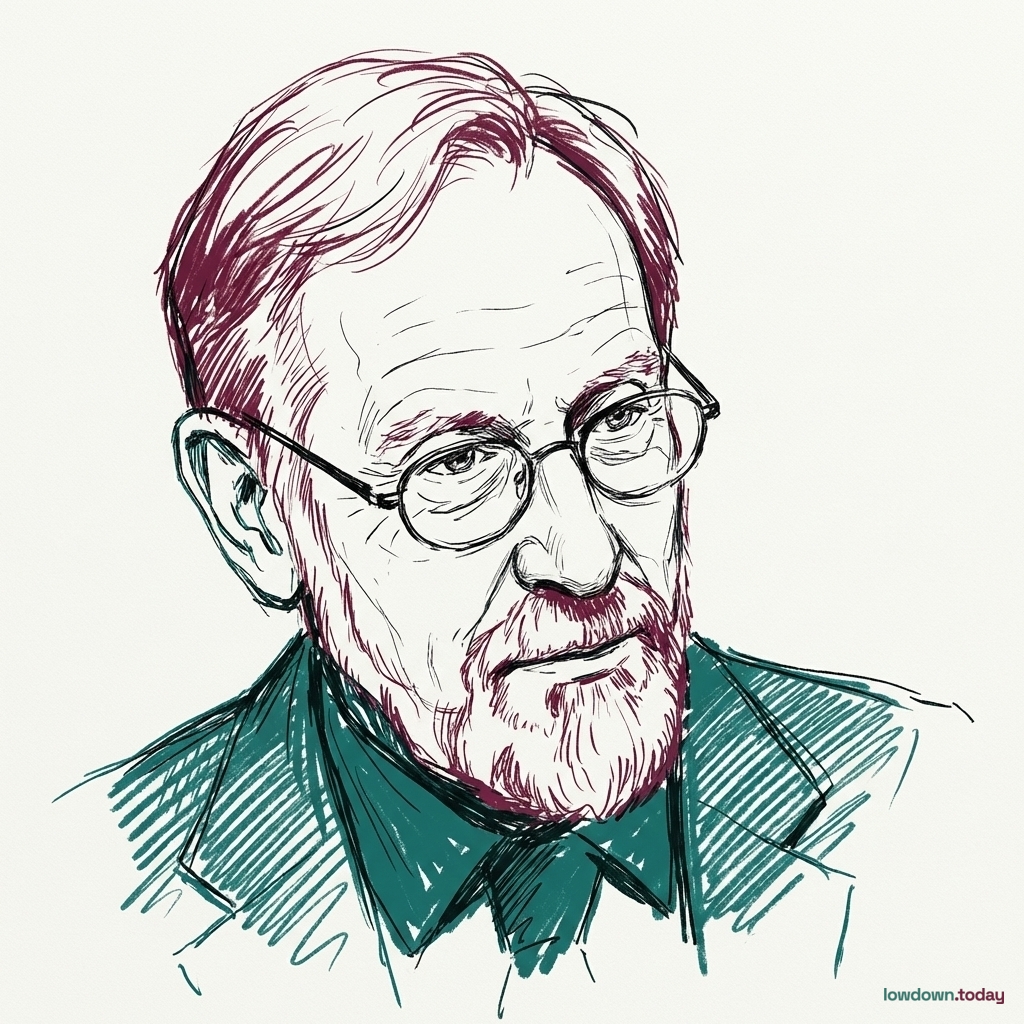
Julian Cooper
British professor WHO quantified Russia's defence spending at Soviet-era levels for SIPRI.
Julian Cooper's reading of Moscow's 2026 budget found 16.8 trillion roubles going to the Army and security services, 38 to 40% of federal spending and a share unseen since Soviet times; Moscow's 2027 draft, reported on 30 September, raises defence to 17.1 trillion.
Last refreshed: 12 October 2026 · Appears in 1 active topic
Is Russia spending a larger share of its economy on war than the Soviet Union?
Timeline for Julian Cooper
Mentioned in: Russia plans record 17.1tn for defence
Russia-Ukraine War 2026Mentioned in: Russia loses 179 soldiers per square km
Russia-Ukraine War 2026Mentioned in: Putin asks Trump for parade-day truce
Russia-Ukraine War 2026Mentioned in: NWF liquid share heads for $12.5bn
Russia-Ukraine War 2026Mentioned in: Reshetnikov tells Meduza Russia's reserves exhausted
Russia-Ukraine War 2026Background
Julian Cooper is a British economist and one of the leading Western authorities on Soviet and Russian defence economics. He spent decades at the University of Birmingham's Centre for Russian and East European Studies and contributes analysis to the Stockholm International Peace Research Institute (SIPRI).
His method is to read Moscow's budget documents line by line, including the classified share of military spending that Russia does not itemise, and reconstruct what the state actually allocates to the Army, weapons procurement and security services. Governments, think tanks and journalists cite the results because Russia publishes less each year.
His 2026 estimate is the benchmark for Russia's war economy. It put defence and security at 38 to 40% of federal spending, at a time when the National Wealth Fund was shedding 400 billion roubles in two months. Any argument about how long Russia can afford the war starts from his numbers.
Cooper's count set the Soviet benchmark
Cooper's reading of Russia's 2026 federal budget, published by SIPRI in March, became the reference figure for how much of the Russian state the war consumes. He put defence and security at 16.8 trillion roubles, 38 to 40% of all federal spending, a share not seen since the Soviet era, with the deficit at 3.78 trillion roubles.
Later Russian figures kept the pressure he described. By 30 September Russia had cut its 2026 oil and gas revenue forecast to 7,584bn roubles, 1,335bn short of plan, and reported a January to September deficit of 5.19tn roubles, yet Reuters reported a 2027 draft giving defence a record 17.1tn roubles. In cash terms the 2027 plan sits above his 2026 estimate.
Who is Julian Cooper?
What did Julian Cooper find about Russia's 2026 defence budget?
How does Russia's 2026 military spending compare to the Soviet Union?
Is 84% of Russia's defence budget really classified?
What is SIPRI's analysis of Russia's war economy?


