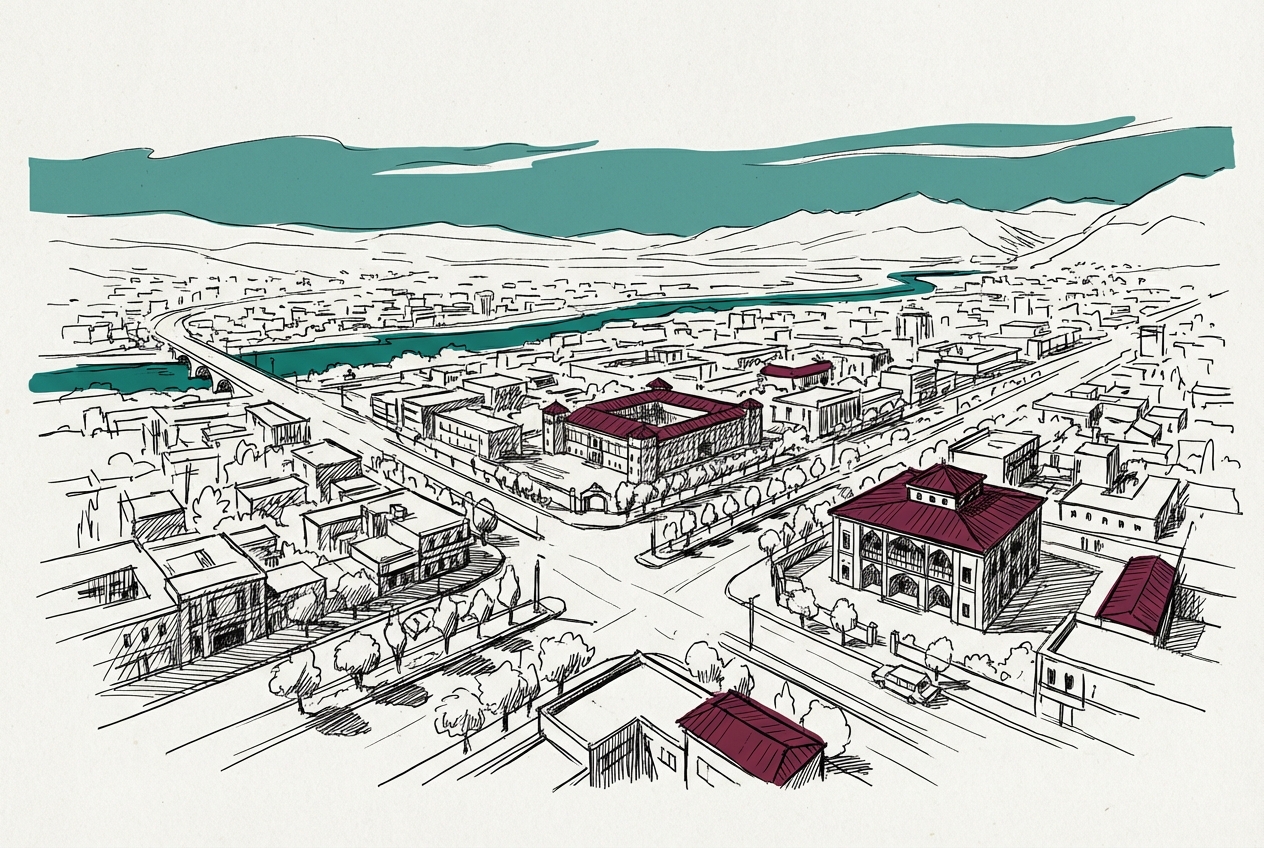
Ilam
Iranian province on the Iraqi border, among the hardest-hit Kurdish regions in the 2026 conflict.
Last refreshed: 22 July 2026 · Appears in 1 active topic
Why did Iran arrest 300 Kurdish detainees in Ilam during a war it claimed was winning?
Timeline for Ilam
Mentioned in: Iran's grid strains, fuel queues grow
Iran Conflict 2026Mentioned in: Hengaw documents Bevara, Mamousi in Iran arrests
Iran Conflict 2026Mentioned in: Four Kurdish arrests in northwest Iran
Iran Conflict 2026Hengaw: 6,900 dead in first month
Iran Conflict 2026Counted 595 civilian dead among 5,900 killed in Hengaw's sixth war report
Iran Conflict 2026: 5,900 dead across Iran in three weeksBackground
Ilam is a predominantly Kurdish Shia province in western Iran, sharing a long border with Iraq. It is one of Iran's least populous and most economically marginalised provinces, historically shaped by the Iran-Iraq War of the 1980s, which devastated its towns. The border region has long been a corridor for cross-border trade, smuggling, and intermittent Kurdish militant movement.
Ilam Province became a documented wartime detention zone in early 2026. Hengaw reported at least 1,700 wartime arrests across five Iranian border provinces in the first month of the conflict, with more than 300 Kurdish detainees across Ilam, Kermanshah, Kurdistan, West Azerbaijan, and Tehran, a report that received almost no international coverage. Earlier Hengaw data identified Ilam as one of four Kurdish-majority provinces where at least 1,480 military personnel were killed across more than 240 targeted bases. Domestic reporting later in the summer also placed Ilam among provinces experiencing recurring power and water outages tied to rising peak demand; the Persian-calendar conversions behind that reporting were internally inconsistent, so no reliable date attaches to it.
Ilam's wartime significance lies in a tension the regime has not resolved: the province is majority Shia yet majority Kurdish, making its population simultaneously a presumed loyalist bloc and a surveillance target. The documented surge in Kurdish arrests suggests the state treated ethnic identity as a threat indicator regardless of sectarian affiliation, a posture that risks alienating a border population whose cooperation matters for territorial control.
What is Ilam province in Iran?
How many people were arrested in Ilam during the Iran war 2026?
How did the Iran-Iraq conflict 2026 affect Kurdish border provinces?
What is the difference between Ilam and Kurdistan province in the Iran war?
Is Ilam a Kurdish or Shia province?
Why is Ilam province significant in the Iran conflict?
