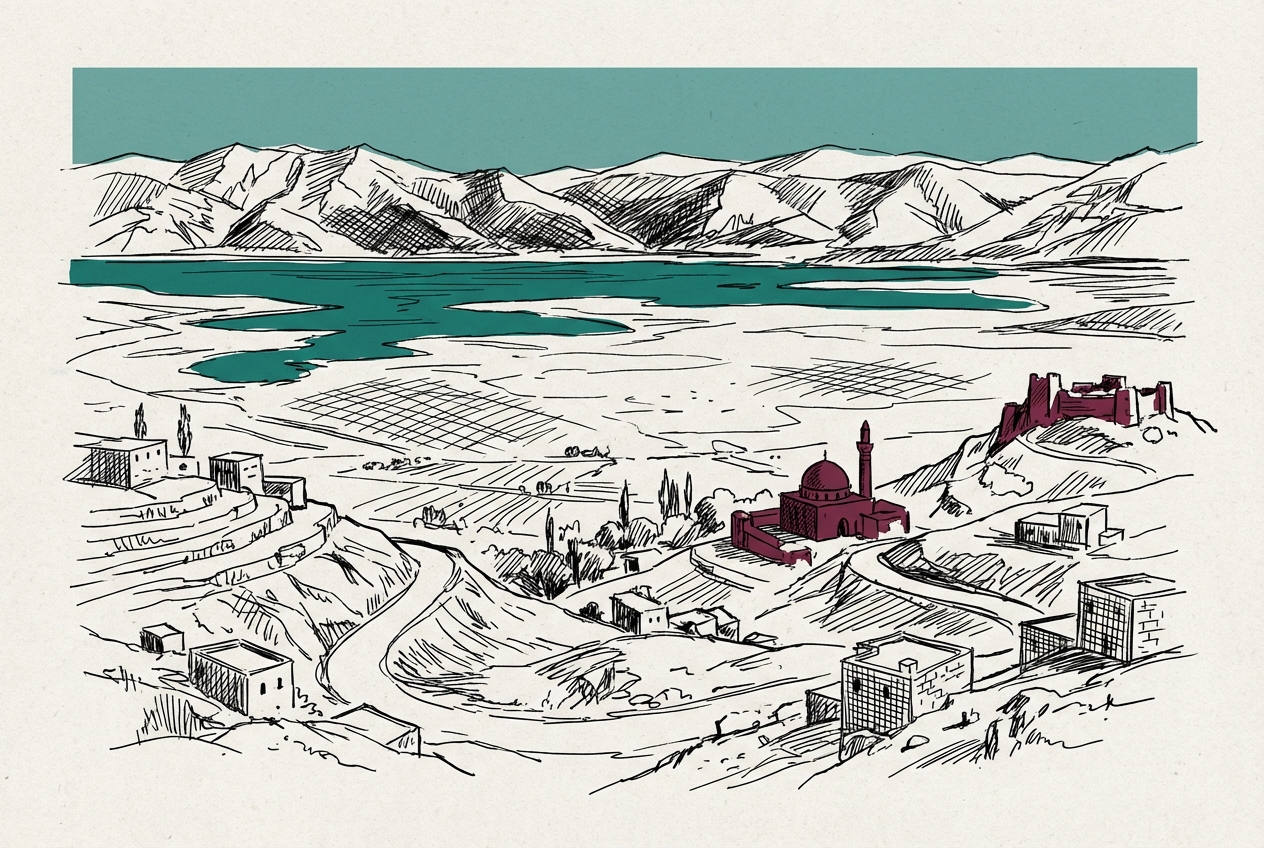
West Azerbaijan
Iranian border province where Kurdish detainees were arrested during wartime crackdown.
Last refreshed: 22 May 2026 · Appears in 1 active topic
Why did Iran's wartime arrests concentrate on Kurdish border provinces like West Azerbaijan?
Timeline for West Azerbaijan
Naqadeh executes two Kurdish PDKI prisoners
Iran Conflict 2026Naqadeh dual, two Iraqis, a Turk at risk
Iran Conflict 2026Mentioned in: Hengaw documents Bevara, Mamousi in Iran arrests
Iran Conflict 2026Mentioned in: Four Kurdish arrests in northwest Iran
Iran Conflict 2026Mentioned in: Hengaw counts 6,900 dead; Iran's toll frozen
Iran Conflict 2026Background
West Azerbaijan has emerged as the focal point of Iran's wartime judicial register against Kurdish political prisoners. Naqadeh Central Prison, in Naqadeh city in the province's south, is where Ramin Zaleh and Karim Maroufpour — both linked to the Democratic Party of Iranian Kurdistan — were executed at dawn on 21 May 2026, without prior notice to their families. Maroufpour was 29; Hengaw recorded Zaleh's trial lasted only a few minutes.
The Naqadeh executions sit within a broader West Azerbaijan arrest cluster documented by Hengaw across May 2026: Kurdish singer Seyed Ali Qoreishi in Bukan, Shahram Pasupish in Piranshahr, and English teacher Forouzan Eslami in Urmia were among those arrested in the two weeks preceding the executions. Piranshahr and Bukan are both in West Azerbaijan province. Sabah Bevara was violently arrested in Piranshahr on 17 May as part of the same documented sweep.
The structural pattern is a province-level judicial register operating under wartime emergency conditions: accelerated trials, secret executions, family notification withheld. Amnesty International placed Iran's total 2026 executions above 200 in mid-May, against 2,159 in all of 2025. West Azerbaijan's Kurdish-majority population, its border proximity to Türkiye and Iraq, and the concentration of PDKI networks in the region make it a primary target in that acceleration.
What is West Azerbaijan?
Were Kurds arrested in West Azerbaijan during the Iran war?
How many soldiers were killed in Kurdish provinces of Iran?
What is the difference between West Azerbaijan and Kurdistan province in Iran?
Where is Naqadeh prison and what is it?
Are executions happening in West Azerbaijan during the Iran conflict?
Why is West Azerbaijan significant in the Iran conflict?
What has Hengaw documented in West Azerbaijan?

