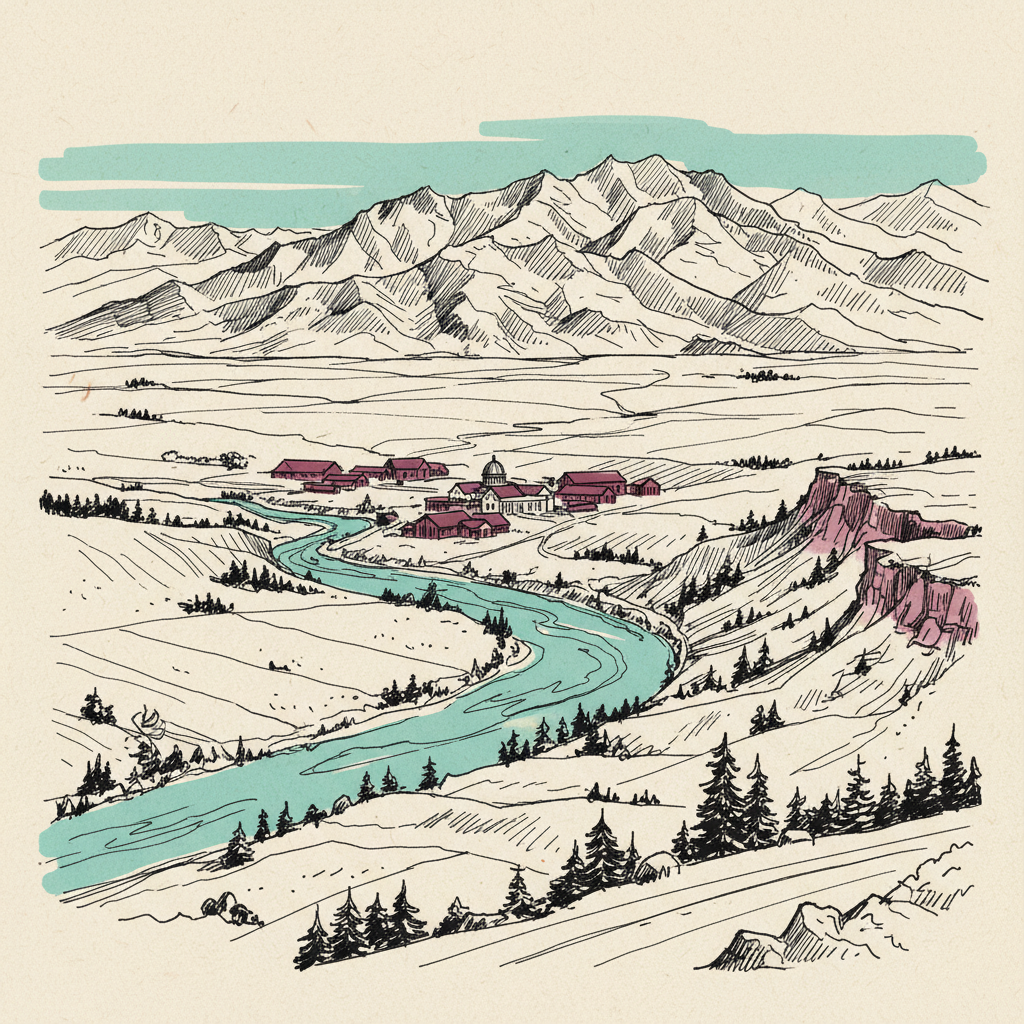
Idaho
Conservative western US state with a Republican-controlled government and sparse, largely rural population.
On 1 April, the US Department of Justice sued Idaho after its Republican secretary of state withdrew from a voter-data agreement, making the state a test case for federal pressure on election administration.
Last refreshed: 24 September 2026 · Appears in 2 active topics
Can the Trump DOJ force a Republican state to hand over voter data?
Timeline for Idaho
Opened in-person early voting
US Midterms 2026: Virginia and Idaho open early votingMaintained active H5N1 dairy-herd infections despite reduced federal reporting frequency
Pandemics and Biosecurity: CDC cuts bird-flu reports to monthlyMentioned in: USAID outbreak unit gone by PHEIC
Pandemics and BiosecurityMentioned in: Thinnest US health bench faces PHEIC
Pandemics and BiosecurityMentioned in: Uganda runs 2022 Sudan Ebola playbook
Pandemics and BiosecurityBackground
Idaho is a northwestern US state with a sparse, largely rural population and a Conservative political culture. Its Republican-controlled government makes the state a useful case for disputes where party alignment does not settle the question of state authority.
Agriculture is central to Idaho's public profile and economic life. The dairy outbreak reported in May 2026 showed how a local livestock sector can place the state within a national public-health and food-system story.
Idaho's significance lies in the combination of rural scale, Conservative government and state-run election administration. Those features make its actions relevant when federal policy reaches into records, farming or other areas administered locally.
Idaho resists federal voter demands
On 1 April, the Department of Justice sued Idaho after Secretary of State Phil McGrane withdrew from a voter-data sharing agreement. McGrane had first agreed to provide The Information, then reversed his position in February because he found no clear legal duty to comply.
For Idaho, the dispute puts state control of election records against a federal demand from an administration led by its own party. The case matters beyond a single filing because a Republican-run state is framing the refusal as an institutional boundary, rather than a partisan objection to the White House.
Idaho faced a dairy outbreak
On 1 May, Idaho confirmed its first H5N1-positive dairy herd as the US Department of Agriculture ended mandatory interstate testing for dairy cattle. The detection ended a five-month gap in reported US dairy cases and made Idaho the immediate focus of renewed surveillance concerns.
By 12 May, quarantines covered 59 herds in four South Central Idaho counties, up from one confirmed herd twelve days earlier. The rapid rise made Idaho the second-highest state in the reported national total and tied its dairy sector to the wider debate over diminishing federal surveillance.
Why did Idaho refuse to give voter data to the DOJ?
Is Idaho a Republican state?
Does Idaho have any data centres?




