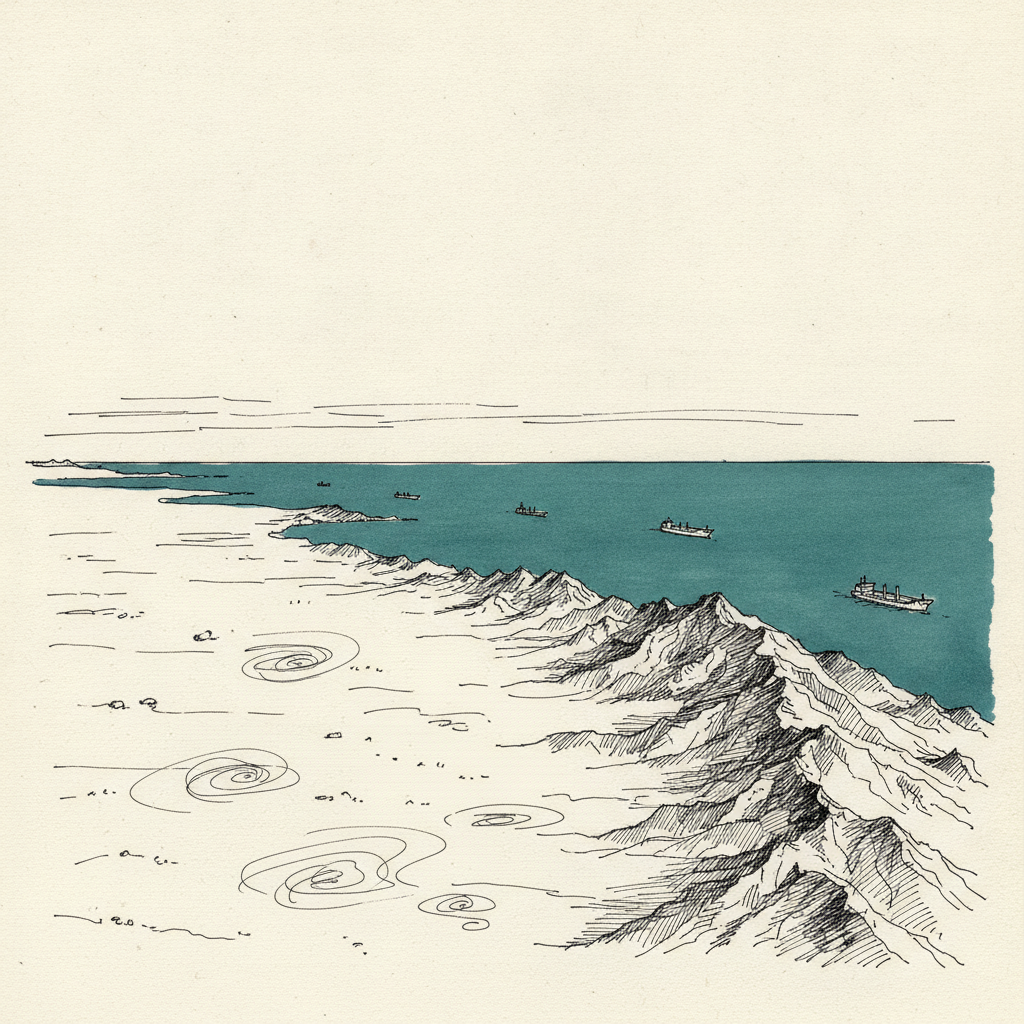
Gulf of Suez
Northern Arm of the Red Sea, leading to the Suez Canal.
On 29 October 2026 the IRGC Navy said three tankers hit mines leaving Hormuz. The test case for such a claim is The Gulf of Suez, where mines damaged 19 merchant ships in one summer in the 1980s.
Last refreshed: 29 October 2026
What does the 1984 Gulf of Suez mining teach about Hormuz mine claims?
Timeline for Gulf of Suez
Mentioned in: IRGC Navy says mines hit three tankers
Iran Conflict 2026Mentioned in: Seven VLCCs at Chabahar, three at Hormuz
Iran Conflict 2026Mentioned in: Iran threatens to mine the Persian Gulf
Iran Conflict 2026Background
The Gulf of Suez is the north-western Arm of the Red Sea, about 314 kilometres long and 19 to 32 kilometres wide, between mainland Egypt and the Sinai Peninsula. It ends at the city of Suez and the entrance to the Suez Canal, and it holds oil fields including El Morgan and Belayim.
In summer 1984 mines damaged 19 merchant ships in the Red Sea and The Gulf. A group calling itself Islamic Jihad claimed the mining, a claim analysts ruled out. A CIA assessment judged the mines most likely laid by the Libyan ro-ro ship Ghat, though it called the evidence not conclusive. US, Soviet, western European and regional navies swept the waters.
That sweep is the precedent for multinational mine clearance in a Gulf War. On 22 March 2026 Iran's Defence Council threatened to mine all access routes in The Persian Gulf if its coasts or islands were attacked.
Where is the Gulf of Suez?
What happened in the 1984 Red Sea mining?
How long is the Gulf of Suez?
Written with AI from Lowdown's published reporting. Not individually reviewed by an editor. Updated 29 October 2026. Editorial standards.