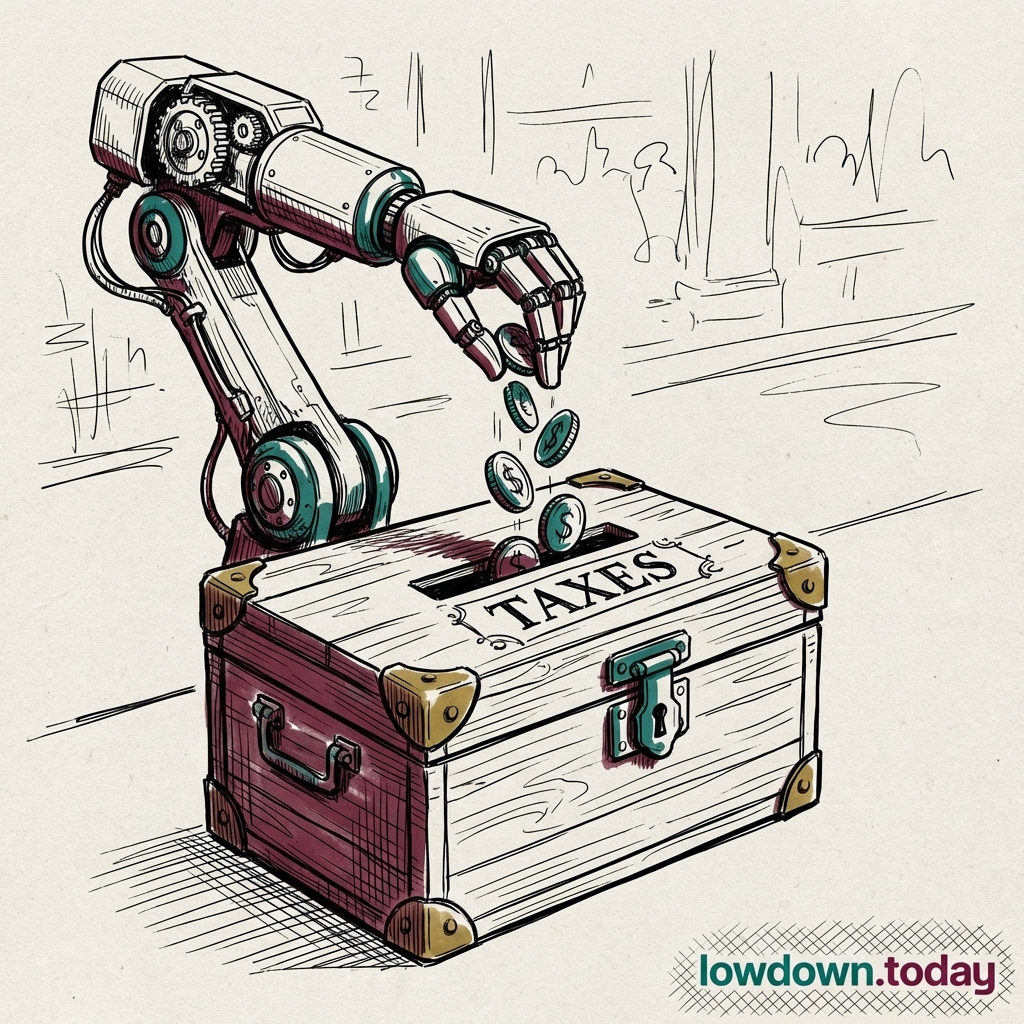
Robot Tax
A proposed levy on corporations that replace human workers with AI or automation, designed to recoup lost payroll taxes and fund retraining programmes.
Last refreshed: 14 August 2026
Can taxing each AI-replaced position save the federal revenue base, or will it just push automation offshore?
Timeline for robot tax
Mentioned in: Democrats kill the Sanders AI moratorium
AI: Jobs, Power & MoneyMentioned in: Sanders and AOC target AI data centres
AI: Jobs, Power & MoneyMentioned in: Sanders drafts robot tax on AI layoffs
AI: Jobs, Power & MoneyMentioned in: AEI: AI is an equaliser, not a destroyer
AI: Jobs, Power & MoneyMentioned in: AI threatens 75% of US tax revenue
AI: Jobs, Power & MoneyBackground
A robot tax is a proposed levy on companies that substitute human workers with automation or artificial intelligence, structured to recoup lost payroll taxes and fund retraining. The concept predates the current AI wave; Bill Gates advocated a version in 2017 and South Korea briefly reduced tax incentives for automation investment. Sanders' 2026 proposal is the first to reach the US legislative process.
Bernie Sanders proposed a per-position levy on corporations replacing workers with AI, the first concrete US legislative attempt to tax automation displacement directly. The AEI published an immediate rebuttal arguing AI functions as a skill equaliser, not a destroyer. Brookings Institution research underpins the urgency: roughly three-quarters of US federal revenue depends on Labour taxation that AI threatens to compress.
The debate hinges on whether AI primarily displaces workers or narrows skill gaps. Anthropic research found exposure falls hardest on educated, higher-paid women, complicating the equaliser narrative. SAG-AFTRA's Tilly Tax offers a parallel approach: pricing synthetic performers at parity with humans rather than taxing displacement after the fact.
What is a robot tax?
Has any country implemented a robot tax?
What is the difference between a robot tax and the Tilly Tax?
Why does Bernie Sanders want to tax AI?
What happens to tax revenue if AI replaces workers?
Does Bernie Sanders' robot tax have a chance of passing Congress?

