Skip to content
Welcome, thoughtbot's Giant Robots listeners!Start here
US Midterms 2026
14JUN

Moore and Wess win Alabama runoffs

2 min read
11:52UTC

Barry Moore won Alabama's Republican congressional primary runoff on 16 June, defeating Navy SEAL Jared Hudson; attorney Everett Wess took the Democratic runoff with 72%. The contests close one chapter of the post-Callais map fight.

PoliticsDeveloping
Key takeaway

Alabama's redistricting fight has moved from courtrooms to candidates as the runoffs name the autumn field.

Barry Moore won Alabama's Republican congressional primary runoff on 16 June, defeating Navy SEAL Jared Hudson. In the Democratic runoff, attorney Everett Wess took 72% over Dakarai Larriett⁠1. The 16 June results named a Republican and a Democratic nominee where, a month earlier, Alabama had only litigation.

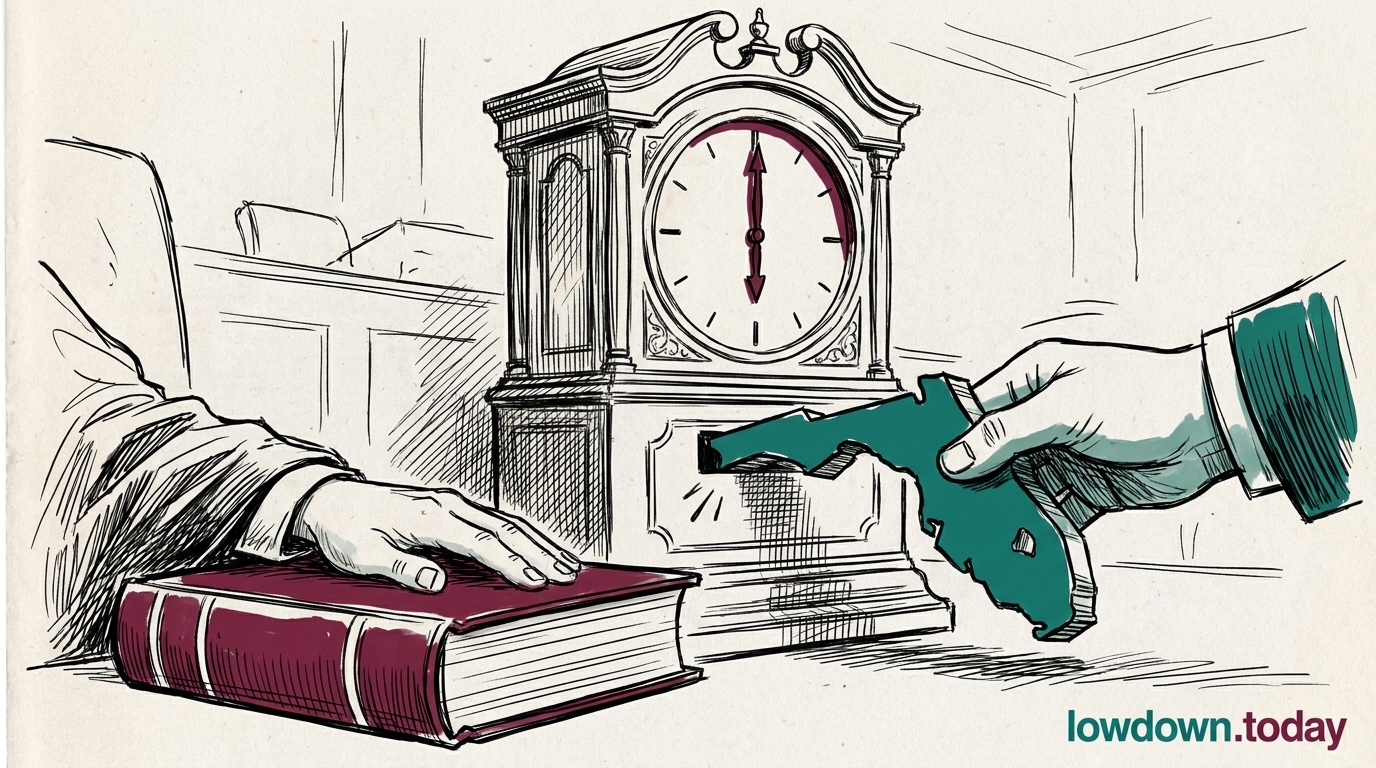
The contests sit inside the churn that followed Louisiana v. Callais, the Supreme Court ruling that ended the Voting Rights Act requirement to draw majority-minority districts, those drawn so a racial or ethnic minority can elect its preferred candidate. After Callais took effect, the Court vacated the order protecting Alabama's majority-Black district and the state voided four primaries held on 19 May. the Supreme Court then stayed the lower-court injunction a week after it issued, confirming the legal framework under which these June runoffs proceeded.

Callais produced a calendar, the calendar produced these 16 June runoffs, and the runoffs produced nominees. The redrawn districts hold their re-do on 11 August, so the Alabama contest now shifts from which lines are lawful to which candidates the new lines elect.


Deep Analysis

In plain English

In May 2026, the Supreme Court ruled in Louisiana v. Callais that states no longer have to draw congressional districts specifically designed to give Black voters a majority. Alabama had been under court orders to draw such a district. When that legal requirement was removed, Alabama's governor declared that the May 2026 congressional primaries, which were already completed, were legally void because they were held under the old map. So Alabama has been holding replacement elections. On 16 June, Republican Barry Moore won a runoff for one seat, and Democrat Everett Wess won 72% in the Democratic runoff for the same area. But the story does not end there: new primaries are scheduled for 11 August under the redrawn district lines that no longer include the Court-ordered majority-Black district. The same candidates may face a different electorate in August.

Deep Analysis
Root Causes

The 16 June Alabama runoffs produced by a two-stage redistricting disruption. Louisiana v. Callais on 29 April 2026 removed the VRA Section 2 mandate for majority-minority districts nationally. Alabama responded specifically: the US Supreme Court vacated the lower-court majority-Black district order on 11 May, clearing the post-Callais map, and Governor Ivey declared the 19 May primaries void under those lines.

Barry Moore's 16 June Republican runoff win is therefore not a normal primary result. Moore won a seat in a district whose boundaries were being redrawn during the campaign; he will need to compete again in an 11 August special primary under the revised lines. The 16 June runoff selected the nominee under the pre-Callais contested map; the 11 August primary will determine who runs under the operative post-Callais map.

Everett Wess's 72% Democratic runoff win reflects the self-selecting nature of Alabama Democratic primaries in a Deep South state: the Democratic base in a minority-heavy district concentrated strongly behind the attorney with the cleaner primary exit.

What could happen next?
  • Consequence

    Barry Moore must compete in a second primary on 11 August under redrawn lines; the double-primary sequence could drain resources and create voter confusion about which result governs the general election nominee.

  • Precedent

    The Alabama void-and-re-run sequence is the first application of post-Callais primary mechanics; how courts and the state elections board treat conflicting results from the June and August primaries will establish the procedural precedent for other Callais-affected states.

First Reported In

Update #10 · Wave or grind: the measure splits

Ballotpedia· 21 Jun 2026
Read original →
Different Perspectives
Missouri voters
Missouri voters
Missouri voters rejected Proposition A by 61.83% to 38.17% at 95% reporting, repealing the 2025 map that split Kansas City. Trump carried the state, yet its 2022 lines now stay for future elections too.
Senate Leadership Fund (SLF)
SLF reported about $43.9m of independent expenditures from 27 October to 1 November, almost all against Democrats, including $12.37m against Sherrod Brown. Seven of its ten targets won; Dan Osborn lost in Nebraska and two are uncalled.
Richard Hudson, chair of the National Republican Congressional Committee
Hudson, who runs House Republicans' campaign arm, conceded North Carolina's 9th District to Richard Ojeda before any AP call. Democrats lead 10 of the state's 14 House districts on the unofficial feed.
Department of Justice (DOJ)
DOJ lost before Judge David O. Carter on 28 October and a 9th Circuit panel on 30 October on its demand to set aside 20,000 California ballots, and says it will appeal the Alaska dismissal. No court has set a ballot aside.
Senator Dan S. Sullivan
Sullivan, who trails Mary Peltola 48.2% to 47.9% on first choices, told CNN he would accept the result. DOJ's suit to stop Alaska certifying anyone but him was dismissed on 1 November.
Scott Colom's campaign
Colom's campaign estimates that about 15,000 affidavit ballots remain to be counted in a race he leads by roughly 65 to 100 votes. Those ballots count only if voters confirm their ID or eligibility by 5pm on 10 November.

Written with AI from Lowdown's published reporting. Not individually reviewed by an editor. Editorial standards.