Skip to content
Briefings are running a touch slower this week while we rebuild the foundations.See roadmap
US Midterms 2026
6JUN

Four states queue maps after Callais ruling

3 min read
12:16UTC

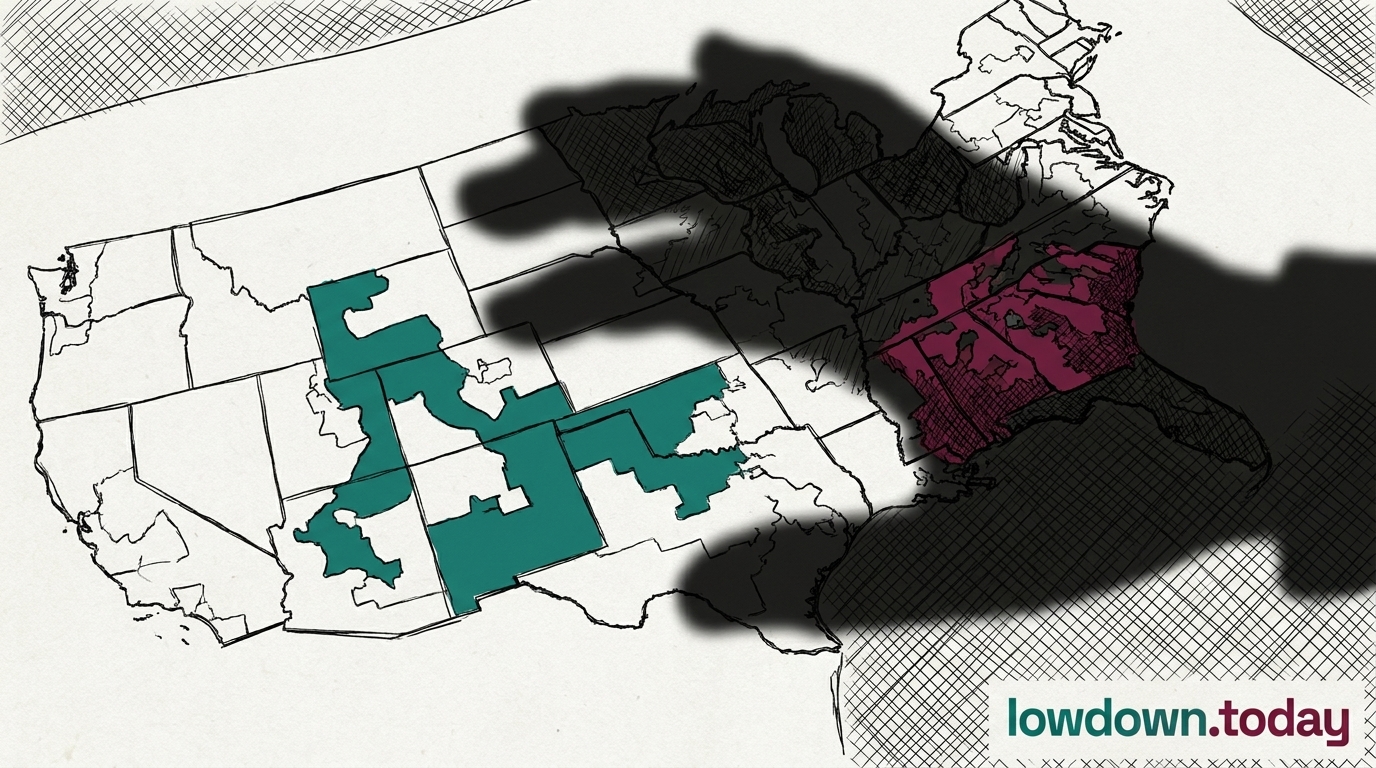
Tennessee Governor Bill Lee called an extraordinary session within twenty-four hours of Callais; South Carolina, Mississippi and Alabama followed within five days.

PoliticsDeveloping
Key takeaway

Five states joined the redistricting queue inside a week of Callais; the Democratic answer is structurally slower.

Tennessee Governor Bill Lee called an extraordinary legislative session within twenty-four hours of Louisiana v. Callais coming down on 29 April. 1 The target is TN-9, the Memphis seat held by Steve Cohen, the state's lone Democratic congressman. South Carolina legislative leaders confirmed on Tuesday 5 May that staff were drawing new maps. Mississippi Governor Tate Reeves issued a similar call the same day. Alabama has been flagged by the Council on Foreign Relations and the Brennan Center for Justice as the next likely state to act.

President Donald Trump phoned Lee after Callais to encourage the move; the operational tempo runs through state executives, not the White House. The net redistricting tally now sits at twelve to fifteen potential Republican gains across Texas, Florida, Louisiana, Tennessee, South Carolina, Alabama and Mississippi, before any compensating Democratic action.

Red-state legislatures move on executive timetables, sometimes within twenty-four hours of a court ruling. The Democratic equivalents face referendum hurdles, redistricting commissions, or supermajority blocks: Maryland's mid-decade bill died on 14 April when Bill Ferguson declined to bring it to a vote . The five-state Republican response and the one-state Democratic non-response landed inside the same fortnight, on the same trigger.

Deep Analysis

In plain English

When the Supreme Court removed the federal requirement to draw majority-minority districts, it acted as a green light for every Republican-controlled state to redraw its congressional map. Tennessee, South Carolina, Mississippi, and Alabama all have at least one or two congressional districts that were protected by the old rule: seats where Black or Hispanic voters form a majority and have been electing Democratic representatives. With that protection gone, Republican governors called emergency legislative sessions to redraw those districts within days of the ruling. The speed matters because congressional candidates in most states face filing deadlines in May or June. A map drawn before those deadlines forces Democratic incumbents to decide quickly whether to run in a redrawn district, retire, or mount a legal challenge.

Deep Analysis
Root Causes

Three structural factors enabled the cascade. First, Tennessee, South Carolina, Mississippi, and Alabama all have unified Republican state governments: governor, House, and Senate all Republican-controlled. Special sessions require only the governor's signature to call and a simple majority to pass legislation.

Second, each state has at least one Democratic congressional district that survives primarily because of a majority-minority district structure that Callais has now removed as a legal constraint. TN-9 (Cohen) and two Mississippi districts fit this pattern.

Third, Trump personally phoned Bill Lee after Callais to encourage the Tennessee session, providing political air cover that governors in more competitive states would not have.

What could happen next?
  • Consequence

    TN-9, currently held by Steve Cohen, is the primary target; a redrawn Memphis district could shift it from Safe Democrat to competitive or Safe Republican depending on how lines are drawn.

    Immediate · 0.8
  • Risk

    Legal challenges from the NAACP and other voting rights organisations are expected in all four states; the Brennan Center has flagged Alabama as particularly vulnerable to a Section 2 claim on vote-dilution grounds even after Callais.

    Short term · 0.7
  • Consequence

    If all four states enact new maps before filing deadlines, the combined Republican gain from redistricting reaches 12-15 House seats, enough to offset the generic ballot disadvantage if Democrats hold a D+5 to D+6 environment.

    Medium term · 0.65
First Reported In

Update #5 · Callais lands; maps move

Council on Foreign Relations· 7 May 2026
Read original
Causes and effects
Different Perspectives
EU Commission trade policy directorate
EU trade analysts note the D+6.9 generic ballot is the first reading this cycle making a Democratic House flip structurally plausible; a Ways and Means Committee under Democratic chairmanship after January 2027 would restore congressional leverage on tariff schedules, reducing the probability of locked Republican tariff posture through 2028.
Canadian USMCA trade negotiators
Ottawa trade officials tracking the 2026 Senate composition see AFP Action's Montana and Iowa deployments as confirming those seats are in play; a Senate retaining John Fleming-style MAHA senators rather than Cornyn-style trade institutionalists would narrow the bipartisan coalition on which Canada's USMCA chapter renewal relies.
V-Dem Institute (University of Gothenburg)
The V-Dem Institute's electoral integrity index flags the Callais-to-Alabama-stay sequence as completing a decade-long rollback of minority voting protections: Shelby County (2013) removed preclearance, Brnovich (2021) narrowed vote-denial claims, Callais removed the majority-minority mandate, and the stay mechanism now forecloses injunctive remedies within any single electoral cycle.
Chatham House democracy analysts
Chatham House analysts assess the Alabama stay as the point at which redistricting litigation migrated from a live 2026 variable to a post-cycle accountability mechanism; the Court's seven-day reversal window is shorter than any state election calendar, meaning judicial review now operates retrospectively rather than preventively in redistricting disputes.
Republican establishment (NRCC and Senate Leadership Fund)
The NRCC is defending Iowa Senate candidate Ashley Hinson with AFP Action's $798,000 IE while simultaneously watching MAHA knock out its own NRCC-connected Iowa governor candidate Feenstra, a split that illustrates the establishment's central 2026 problem: outside money can win Senate seats but cannot resolve the factional fracture that is consuming its gubernatorial bench.
Conservative-institutionalist dissent (WSJ editorial board)
The Wall Street Journal editorial board's warning that aggressive Republican redistricting in a D+6.9 environment risks energising the opposing base beyond what drawn-in margins absorb has gained additional force after Paxton's win converted a safe Texas seat into a contested one; the board's cross-ideological caution is the dissent the Republican consensus on Callais is not publicly engaging.
