Skip to content
Briefings are running a touch slower this week while we rebuild the foundations.See roadmap
US Midterms 2026
6JUN

Callais guts VRA Section 2 mandate

2 min read
12:16UTC

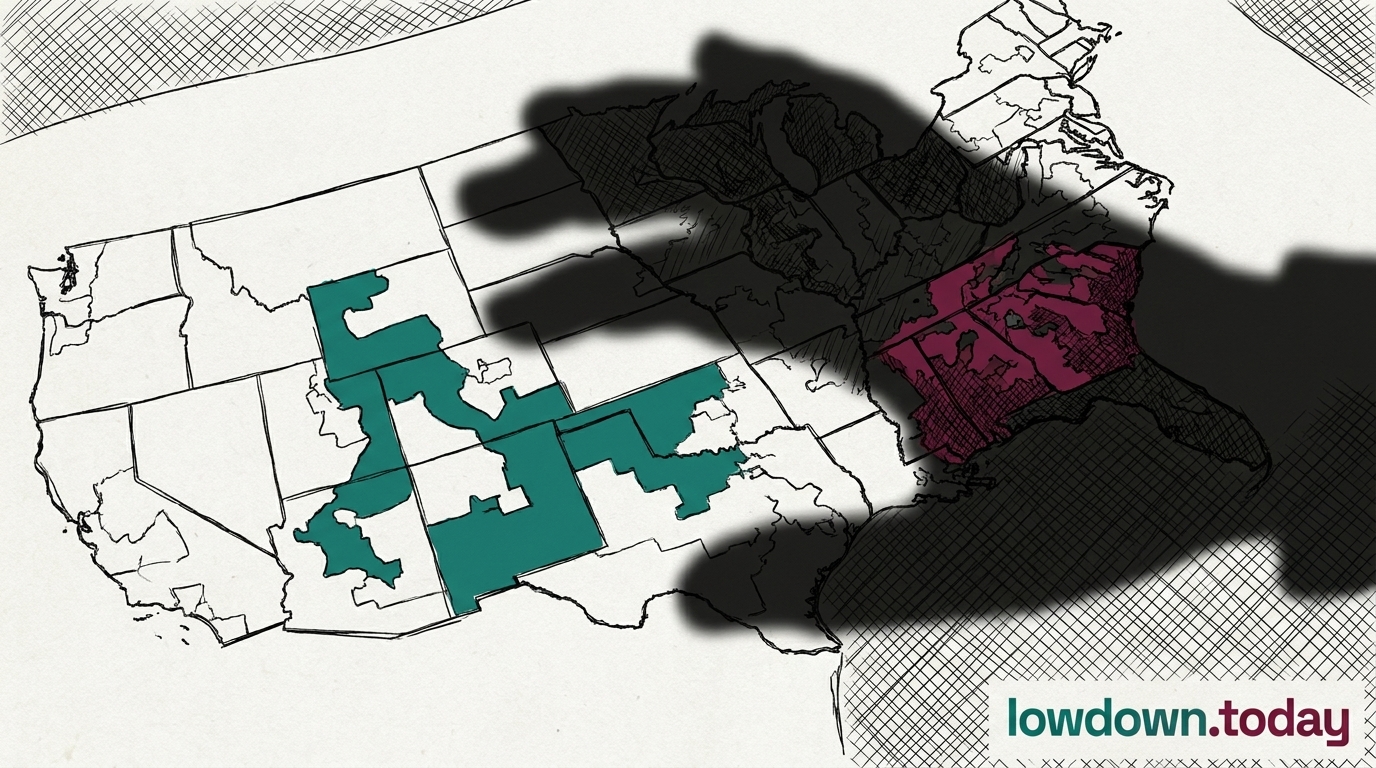
Samuel Alito wrote a 6-3 majority on Wednesday 29 April holding that Voting Rights Act Section 2 does not require states to draw majority-minority congressional districts.

PoliticsDeveloping
Key takeaway

Callais retires the 1986 Gingles mandate, completing a three-stage Roberts Court rollback of the Voting Rights Act.

The Supreme Court ruled 6-3 on Wednesday 29 April in Louisiana v. Callais that Voting Rights Act Section 2 does not require states to draw majority-minority congressional districts (districts where minority voters form a majority of the electorate). 1 Samuel Alito wrote the majority opinion. The ruling overturns Thornburg v. Gingles, the 1986 precedent that had governed Section 2 districting litigation for forty years.

Three Roberts Court rulings now sit in sequence. Shelby County (2013) gutted federal preclearance. Brnovich (2021) narrowed Section 2 vote-denial claims. Callais retires the affirmative duty to draw majority-minority maps. The Roberts Court has dismantled the VRA's three structural pillars across thirteen years; the same six-justice bloc that decided Callais cleared Texas's PlanC2333 two days earlier on Monday 27 April.

Silver Bulletin's generic congressional ballot, an aggregate of voter party preference in House races, sat at D+5.9 on 6 May, a 9.1-point swing from R+3.3 in January 2025 . A D+6 environment historically yields 15 to 25 Democratic House gains. The Council on Foreign Relations now puts the Democratic flip target at roughly twenty-five seats once the redistricting harvest is netted out, narrowing the path without closing it. 2

Deep Analysis

In plain English

The Voting Rights Act (VRA) was passed in 1965 to stop states from blocking Black Americans and other minorities from voting. One of its key tools, Section 2, was interpreted from 1986 onward to require states to draw some congressional districts where a racial minority group made up a majority of voters. These are called majority-minority districts, and they have been the main way Black, Hispanic, and other minority communities have won representation in Congress. The 6-3 ruling on 29 April says that requirement is gone. States no longer have to draw those districts. Republican-controlled legislatures can now redraw maps that split minority communities across multiple districts, reducing their voting power. The ruling matters for the 2026 midterms because the House of Representatives is decided district by district. If minority-dominated districts are redrawn or eliminated, the candidates those communities elected can lose their seats.

Deep Analysis
Root Causes

The six-justice conservative supermajority formed by Trump's three appointments (Gorsuch, Kavanaugh, Barrett) reached critical mass on redistricting cases in 2021. Brnovich narrowed Section 2 on voter-access rules; Allen v. Milligan briefly checked the trajectory; Callais resumed it with a majority that no longer needed Roberts as a swing vote.

The deeper structural cause is a decades-long conservative legal movement argument, articulated most fully in Edward Blum's litigation strategy at the American Alliance for Equal Rights, that the 1982 Section 2 amendment's results test was always constitutionally suspect. Callais is the culmination of cases brought deliberately to get that argument before a receptive Court.

What could happen next?
  • Precedent

    Every remaining VRA Section 2 redistricting lawsuit in active federal litigation can now be moved to dismiss under the Callais doctrine; the Brennan Center estimated 14 active cases as of 29 April.

    Immediate · 0.85
  • Consequence

    Republican-controlled legislatures in states with significant minority populations (Alabama, Georgia, North Carolina, Virginia) have a legal basis for mid-decade redraws that remove majority-minority districts.

    Short term · 0.8
  • Risk

    Congress could amend the VRA to restore majority-minority district requirements explicitly, but 60 Senate votes are required to pass such legislation through normal order, and that threshold is not reachable in the current session.

    Long term · 0.9
First Reported In

Update #5 · Callais lands; maps move

SCOTUSblog· 7 May 2026
Read original
Causes and effects
This Event
Callais guts VRA Section 2 mandate
The ruling retires the Thornburg v. Gingles (1986) doctrine that anchored four decades of voting-rights districting litigation.
Led to
SCOTUS orders Callais into immediate effect
The Callais 6-3 ruling on 29 April was the legal basis for the 5 May immediate-effect order bypassing the 32-day remand wait
Occurred 5 May 2026
Read story →
DeSantis signs Florida 24R-4D map into law
The Callais ruling removed the VRA fig leaf, allowing DeSantis to sign the map without majority-minority district protections
Occurred 4 May 2026
Read story →
Four states queue maps after Callais ruling
The Callais ruling directly triggered extraordinary redistricting sessions in Tennessee, South Carolina, Mississippi and movement in Alabama within 24-72 hours
Occurred 30 Apr 2026
Read story →
White House signs nothing on elections
The Callais ruling and institutional redistricting advance demonstrate the aligned-institution pattern the White House no-election-EO event contextualises
Occurred 7 May 2026
Read story →
NRCC opens $8.3M cash gap over DCCC
The Callais ruling triggered $522K in DCCC fundraising in 48 hours, the post-gate fundraising surge component of this event
Occurred 4 May 2026
Read story →
Alabama voids its own primary mid-vote
Callais ruling removed the VRA Section 2 majority-minority mandate, enabling SCOTUS to vacate the Alabama protective order and allowing Alabama to annul its own primary.
Occurred 19 May 2026
Read story →
Tennessee signs map carving Memphis three ways
Callais removed the VRA majority-minority mandate, enabling Tennessee's all-Republican map that carves Memphis and eliminates Cohen's district.
Occurred 7 May 2026
Read story →
South Carolina Senate blocks post-Callais redraw
Callais enabled the post-Callais redistricting sessions in South Carolina and Mississippi; their rejection confirms the harvest is not unanimous.
Occurred 12 May 2026
Read story →
Different Perspectives
EU Commission trade policy directorate
EU trade analysts note the D+6.9 generic ballot is the first reading this cycle making a Democratic House flip structurally plausible; a Ways and Means Committee under Democratic chairmanship after January 2027 would restore congressional leverage on tariff schedules, reducing the probability of locked Republican tariff posture through 2028.
Canadian USMCA trade negotiators
Ottawa trade officials tracking the 2026 Senate composition see AFP Action's Montana and Iowa deployments as confirming those seats are in play; a Senate retaining John Fleming-style MAHA senators rather than Cornyn-style trade institutionalists would narrow the bipartisan coalition on which Canada's USMCA chapter renewal relies.
V-Dem Institute (University of Gothenburg)
The V-Dem Institute's electoral integrity index flags the Callais-to-Alabama-stay sequence as completing a decade-long rollback of minority voting protections: Shelby County (2013) removed preclearance, Brnovich (2021) narrowed vote-denial claims, Callais removed the majority-minority mandate, and the stay mechanism now forecloses injunctive remedies within any single electoral cycle.
Chatham House democracy analysts
Chatham House analysts assess the Alabama stay as the point at which redistricting litigation migrated from a live 2026 variable to a post-cycle accountability mechanism; the Court's seven-day reversal window is shorter than any state election calendar, meaning judicial review now operates retrospectively rather than preventively in redistricting disputes.
Republican establishment (NRCC and Senate Leadership Fund)
The NRCC is defending Iowa Senate candidate Ashley Hinson with AFP Action's $798,000 IE while simultaneously watching MAHA knock out its own NRCC-connected Iowa governor candidate Feenstra, a split that illustrates the establishment's central 2026 problem: outside money can win Senate seats but cannot resolve the factional fracture that is consuming its gubernatorial bench.
Conservative-institutionalist dissent (WSJ editorial board)
The Wall Street Journal editorial board's warning that aggressive Republican redistricting in a D+6.9 environment risks energising the opposing base beyond what drawn-in margins absorb has gained additional force after Paxton's win converted a safe Texas seat into a contested one; the board's cross-ideological caution is the dissent the Republican consensus on Callais is not publicly engaging.
