Skip to content
Briefings are running a touch slower this week while we rebuild the foundations.See roadmap
US Midterms 2026
6JUN

Tennessee signs map carving Memphis three ways

3 min read
12:16UTC

Governor Bill Lee signed Tennessee's new congressional map on Thursday 7 May, eliminating Steve Cohen's majority-Black 9th district and leaving all nine seats Republican-leaning.

PoliticsDeveloping
Key takeaway

Tennessee delivers up to two Republican House seats by January 2027 without any 2026 vote being cast in the state.

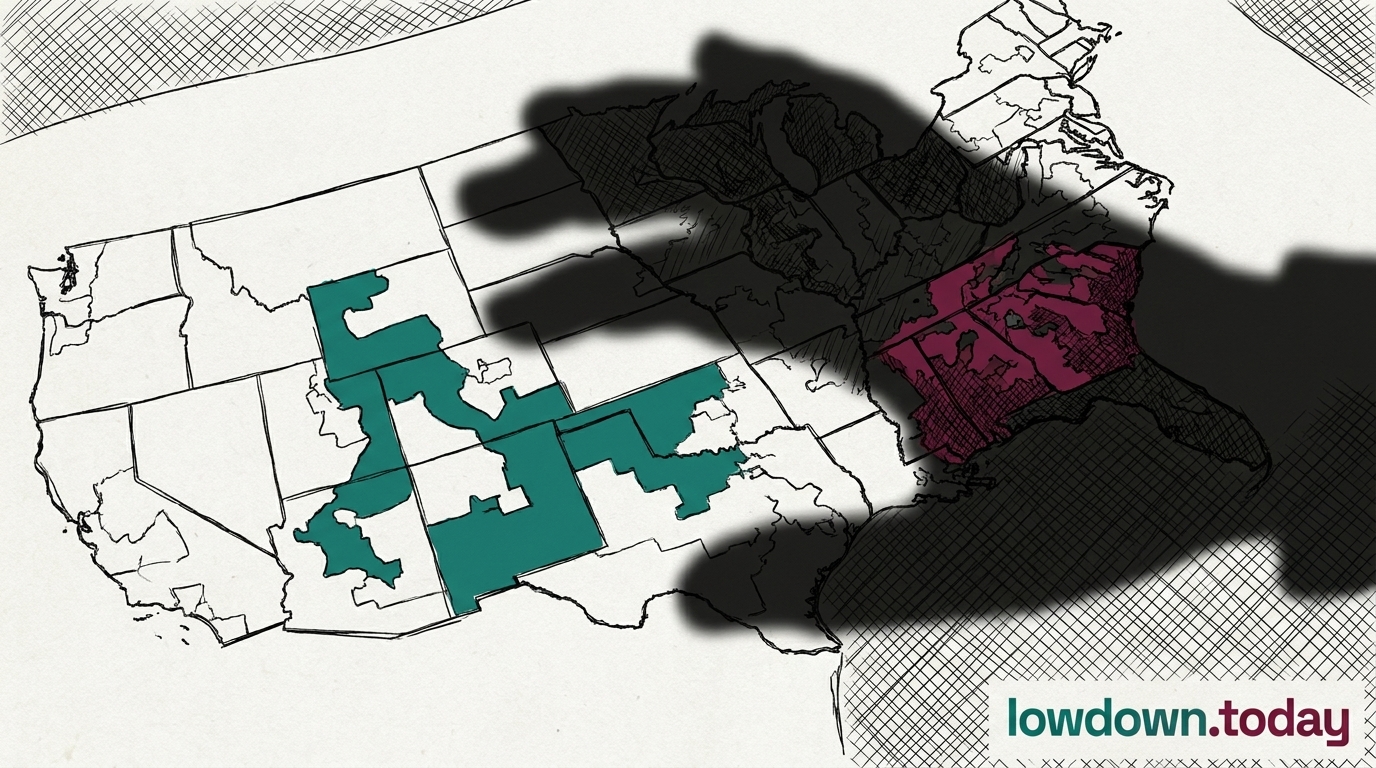
Governor Bill Lee signed Tennessee's new congressional map on Thursday 7 May, twelve days before the Alabama trigger. All nine districts are now Republican-leaning. The map carves Memphis and Shelby County across the 5th, 8th and 9th districts, eliminating the majority-Black 9th held by Representative Steve Cohen 1. The special session that produced the map convened on Tuesday 5 May.

The redraw delivers up to two additional House seats by January 2027 without any vote being cast in Tennessee. Louisiana v. Callais removed the Voting Rights Act Section 2 majority-minority mandate that had protected Cohen's district, the same legal lift that cleared Alabama's map seven days later. Tennessee was one of the four states that opened special sessions in the days after the 29 April ruling, and Lee's signing is the cleanest of those four resolutions to land on the calendar.

The template is Ron DeSantis's Florida 24R-4D map, signed three days earlier on 4 May and immediately challenged. Tennessee and Florida together have moved roughly nine seats from Democratic-held or competitive to Republican-leaning before any 2026 ballot is cast in either state. Brookings Institution analyst Vanessa Williamson called Memphis the cleanest example of a single Black-majority city dispersed across three districts to dilute Section 2 protection; the counter-view, advanced by State Senator Jack Johnson in the Tennessean, is that the city's geography makes a coherent 9th district impractical without crossing Shelby County boundaries the new map respects.

Unlike Florida, Tennessee draws no obvious state-law challenge. The Tennessee constitution carries no Fair Districts equivalent, and the federal Section 2 path closed with Callais. That leaves the 9th's elimination largely uncontested in court, in contrast to the Florida challenge under Judge Hawkes that may yet land before 8 June qualifying.

Deep Analysis

In plain English

Memphis is a majority-Black city in Tennessee. For decades, there was a congressional district drawn around Memphis that gave Black voters enough numbers to elect a representative of their choice. That representative was Steve Cohen, who has held the seat since 2007. In April 2026, the Supreme Court struck down the rule that required that kind of district to exist. Eight days later, Tennessee's governor called the legislature into special session. Within two days the legislature redrew the map. Instead of one Memphis district, the new map cuts the city into three pieces, each now part of a larger district dominated by rural Republican voters. Lee's signed map eliminated Cohen's 9th District by carving Memphis across three Republican-leaning districts. Up to two more Republican seats will appear in Congress from Tennessee by January 2027, without any election having been held under the new lines.

Deep Analysis
Root Causes

The Tennessee map's structural root is the Gingles framework's removal.

Thorнburg v. Gingles (1986) required states with sufficiently large and compact minority communities to preserve the possibility of a majority-minority district. Memphis, with a majority-Black city population, met the Gingles compactness and size tests.

That requirement forced Tennessee's pre-Callais mapmakers to draw the 9th district around Memphis rather than across it. Callais removed that floor on 29 April. The special session on 5 May and Lee's signature on 7 May moved on a calendar of eight days from judicial signal to signed law.

A secondary structural factor is Tennessee's absence of any state constitutional redistricting standard equivalent to Florida's Fair Districts Amendment or California's commission structure. The Tennessee constitution contains no independent partisan-intent prohibition.

With Section 2 gone and no state-law substitute, the legislature's only constraint was the federal Equal Protection Clause's racial-intent doctrine, which requires plaintiffs to prove discriminatory purpose rather than effect. Effect-based claims under Section 2 were precisely what Callais removed.

What could happen next?
  • Consequence

    Tennessee delivers up to two Republican House seats by January 2027 with no litigation path available, making it the cleanest Callais harvest among the four states that called post-ruling special sessions.

    Immediate · 0.87
  • Precedent

    The eight-day sequence from SCOTUS ruling to signed map sets the operational speed standard for post-Callais redistricting: contingent maps prepared in advance, special sessions called within 24 hours, gubernatorial signature within one week.

    Medium term · 0.82
  • Risk

    A racial-intent equal-protection challenge citing the speed and the explicit targeting of Cohen's seat could survive Callais as a distinct cause of action. No plaintiff has yet filed in Tennessee, unlike Florida where a challenge was filed within hours of DeSantis's signature.

    Short term · 0.48
First Reported In

Update #6 · A primary nullified mid-vote

CNN· 19 May 2026
Read original
Different Perspectives
EU Commission trade policy directorate
EU trade analysts note the D+6.9 generic ballot is the first reading this cycle making a Democratic House flip structurally plausible; a Ways and Means Committee under Democratic chairmanship after January 2027 would restore congressional leverage on tariff schedules, reducing the probability of locked Republican tariff posture through 2028.
Canadian USMCA trade negotiators
Ottawa trade officials tracking the 2026 Senate composition see AFP Action's Montana and Iowa deployments as confirming those seats are in play; a Senate retaining John Fleming-style MAHA senators rather than Cornyn-style trade institutionalists would narrow the bipartisan coalition on which Canada's USMCA chapter renewal relies.
V-Dem Institute (University of Gothenburg)
The V-Dem Institute's electoral integrity index flags the Callais-to-Alabama-stay sequence as completing a decade-long rollback of minority voting protections: Shelby County (2013) removed preclearance, Brnovich (2021) narrowed vote-denial claims, Callais removed the majority-minority mandate, and the stay mechanism now forecloses injunctive remedies within any single electoral cycle.
Chatham House democracy analysts
Chatham House analysts assess the Alabama stay as the point at which redistricting litigation migrated from a live 2026 variable to a post-cycle accountability mechanism; the Court's seven-day reversal window is shorter than any state election calendar, meaning judicial review now operates retrospectively rather than preventively in redistricting disputes.
Republican establishment (NRCC and Senate Leadership Fund)
The NRCC is defending Iowa Senate candidate Ashley Hinson with AFP Action's $798,000 IE while simultaneously watching MAHA knock out its own NRCC-connected Iowa governor candidate Feenstra, a split that illustrates the establishment's central 2026 problem: outside money can win Senate seats but cannot resolve the factional fracture that is consuming its gubernatorial bench.
Conservative-institutionalist dissent (WSJ editorial board)
The Wall Street Journal editorial board's warning that aggressive Republican redistricting in a D+6.9 environment risks energising the opposing base beyond what drawn-in margins absorb has gained additional force after Paxton's win converted a safe Texas seat into a contested one; the board's cross-ideological caution is the dissent the Republican consensus on Callais is not publicly engaging.
