Skip to content
You can now search across every topic, entity and event.What's new
US Midterms 2026
6JUN

Colorado shuts last Democratic map route

2 min read
12:16UTC

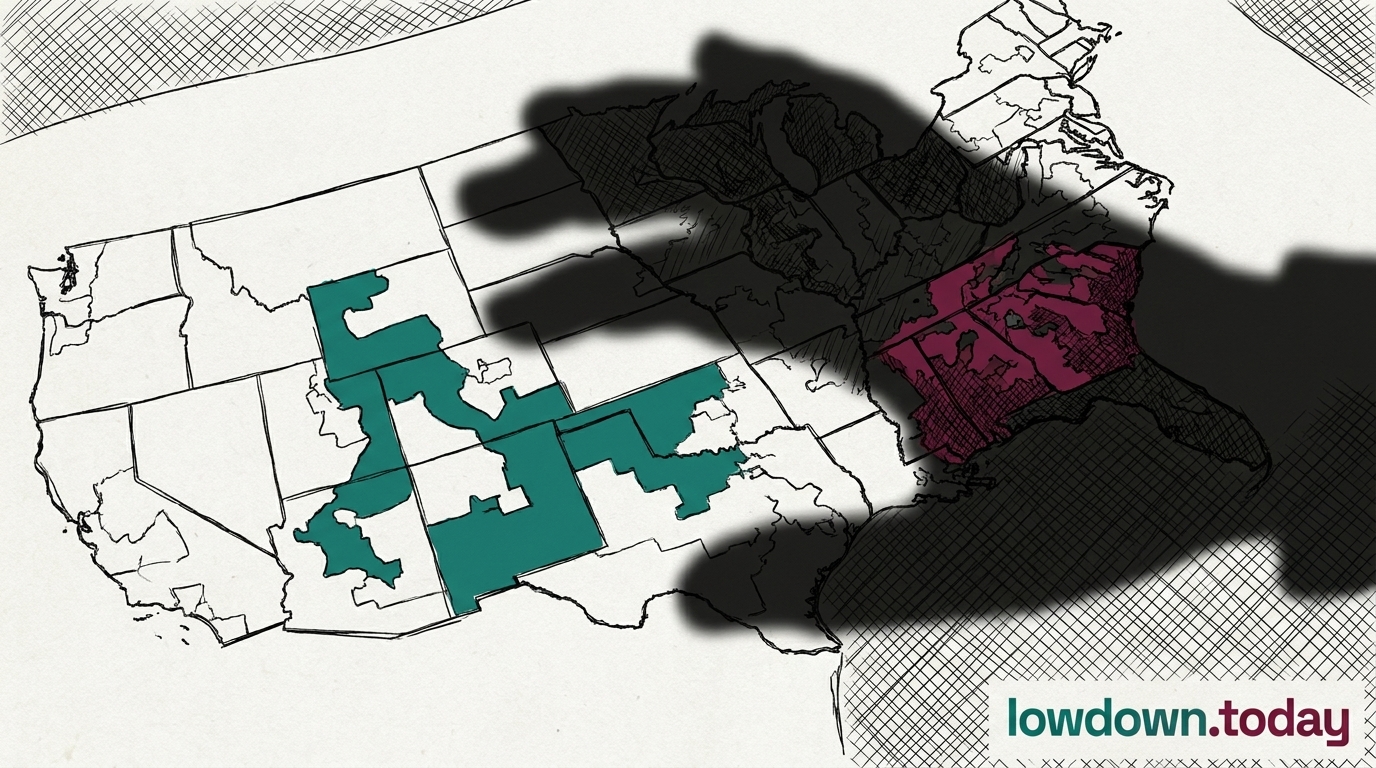
Colorado's Supreme Court struck down the Initiative 240 ballot package on 29 June, closing the final Democratic route to redraw a congressional map before November.

PoliticsDeveloping
Key takeaway

Colorado's ruling ends the last Democratic attempt to redraw a congressional map before November.

The Colorado Supreme Court unanimously blocked the Initiative 240 ballot-measure package on 29 June, ruling it breached the state's single-subject rule by trying to change the constitutionally mandated redistricting cycle. Initiative 240 would have let voters redraw Colorado's eight congressional districts. Chief Justice Monica Marquez wrote that the proposed maps would have favoured Democrats in seven of eight seats, up from four; the delegation stays split 4-4.

The ruling closes the last live Democratic redistricting track anywhere in the country for 2026. Maryland, Virginia, New York and California had already lost their mid-decade routes to a Senate veto, a court strike-down and constitutional bars , which left the Colorado ballot initiative as the only exotic path still open.

This block came on a procedural doctrine, the single-subject rule, rather than the Voting Rights Act or Callais reasoning that decided the Republican-drawn maps. The same run of summer rulings that turned away the DOJ subpoena also shut this Democratic counter-move. No mid-decade map for 2026 now remains in play.

Deep Analysis

In plain English

Colorado's constitution says a single ballot measure can only cover one subject at a time, to stop drafters from bundling unpopular changes alongside popular ones. The state's Supreme Court ruled that a Democratic-backed measure to redraw the state's congressional map broke that rule by combining several different changes into one question. Because this is a state constitutional issue, there is no route to appeal it to the US Supreme Court. Colorado's congressional delegation stays split 4-4.

Deep Analysis
Root Causes

Single-subject rules are matters of state constitutional law, which places them outside the US Supreme Court's jurisdiction over federal questions like the Voting Rights Act track running through Louisiana v. Callais. A state court's single-subject ruling has no federal appellate escape route.

Initiative 240 bundled several distinct changes, redistricting criteria, commission composition and a new appeals process, into one ballot question. Chief Justice Monica Marquez's opinion found the maps would have favoured Democrats in seven of eight seats, which gave the court a substantive reason to enforce the procedural bar rather than overlook it.

What could happen next?
  • Precedent

    The ruling forecloses the last active Democratic mid-decade redistricting track with no federal appeal available, matching the pattern in Maryland, Virginia and New York.

First Reported In

Update #12 · Voter-data drive stalls; jobs turn soft

Colorado Public Radio· 9 Jul 2026
Read original
Causes and effects
This Event
Colorado shuts last Democratic map route
With every mid-decade redistricting route now closed, the 2026 House map is set, and Democrats must win seats on the existing lines.
Different Perspectives
Non-US foreign-policy commentary (Jerusalem Post)
Jerusalem Post coverage frames Graham's death chiefly as a foreign-policy loss, citing his role as the Senate's most vocal advocate for Ukraine and Russia sanctions and Israel-related security votes, distinct from Washington's floor-arithmetic framing. That reporting adds that South Carolina has not elected a Democrat to the Senate since 1998, so control of the seat itself was never genuinely contested.
Election-law and voting-rights critics
Election-law critics point to South Carolina's own arithmetic: the federal 45-day overseas-ballot deadline for the 11 August primary fell on 27 June, a fortnight before Graham died, and Section 7-11-55 contains no voter-eligibility language despite grounding the June-primary voter bar. They read both as design gaps a state can exploit through inaction, not through any single deliberate violation.
South Carolina State Election Commission
Commission director Conway Belangia declared the eligibility review "completed" on 16 July, barring anyone who voted in June's Democratic primary from the 11 August Republican primary, citing only "the requirements of South Carolina election law". The commission is standing behind that ruling and its filing-to-runoff calendar without naming the statute either rests on.
Senate Democratic opposition
Senate Democrats have not cast a floor vote against the House Budget Committee's 20-14 resolution yet, but their standing objection, that documentary-proof-of-citizenship rules burden voters who lack ready access to those documents, applies directly to the $10bn grant structure it just advanced. They are counting on the Byrd Rule to do what floor votes could not.
Senate Republican leadership
Majority Leader John Thune moved within two days of Graham's death to install Ron Johnson as Budget chair, whose office says he is "prepared to serve", though no conference vote has confirmed it. Leadership pushed the FY2027 resolution through committee 20-14 on 16 July, treating the vacancy as a gap to close, not a reason to pause the SAVE Act.
Labour-market economists
Economists note June payrolls rose just 57,000, about half the forecast 115,000, with April and May revised down further. They call it the only development this week bearing directly on how incumbents can run on the economy in November.
