Skip to content
Welcome, thoughtbot's Giant Robots listeners!Start here
US Midterms 2026
22OCT

DOJ loses again on state voter files

3 min read
20:36UTC

A Kentucky federal court threw out the Justice Department's voter-file demand on 23 July, the seventeenth dismissal in a programme that has yet to win a single ruling.

PoliticsDeveloping
Key takeaway

Seventeen dismissals rest on a pleading defect, not on any ruling that the demand itself is unlawful.

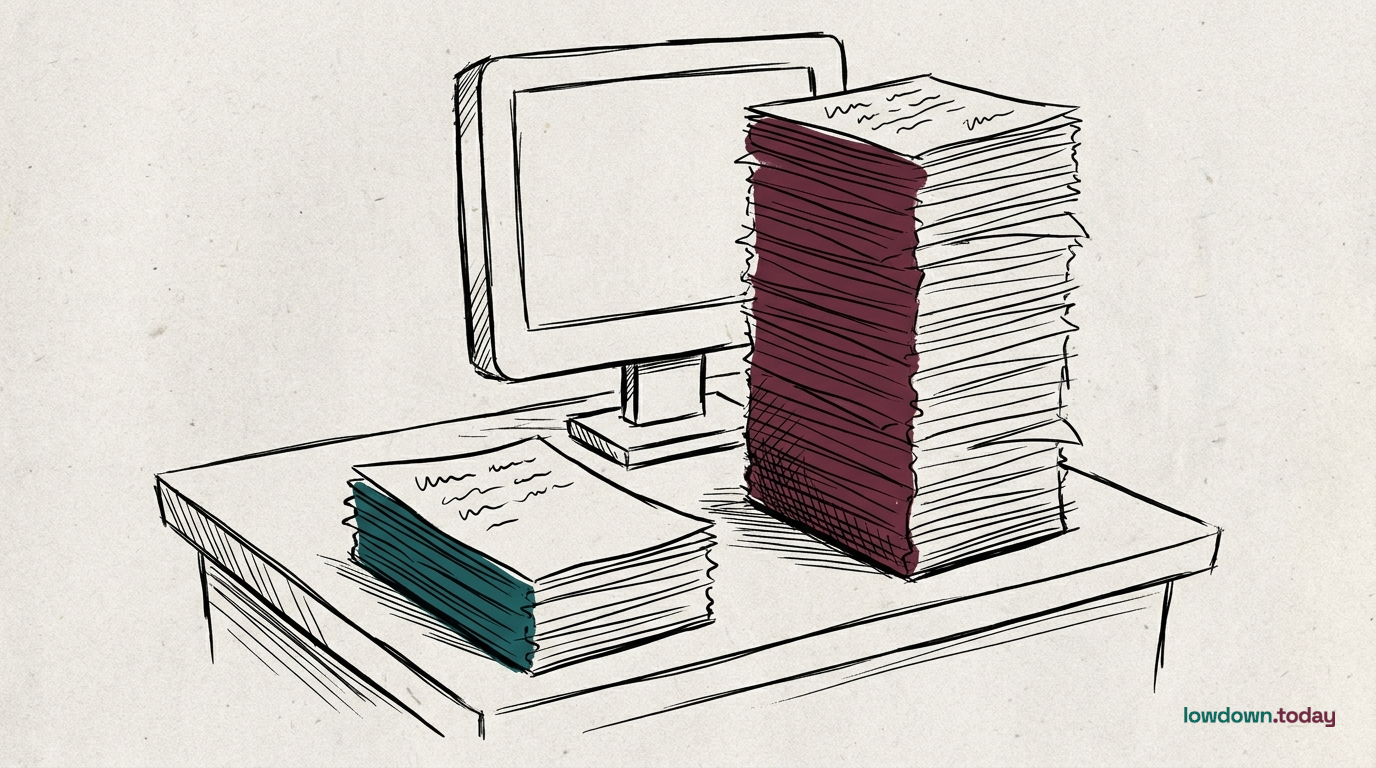
A federal court in Kentucky dismissed the Department of Justice (DOJ)'s suit for the state's voter file on 23 July, the seventeenth such dismissal since the programme began. The department filed a notice of appeal against a separate loss the same day, in Connecticut, where its case had been thrown out on 17 July. DOJ has sued 30 states and Washington DC, 31 cases in all: seventeen dismissed on the merits, one settled in Oklahoma, thirteen still live.

The State Democracy Research Initiative at the University of Wisconsin Law School, which maintains the public tracker of the litigation, updated it on 24 July with a flat sentence: "To date, no court at either the district court or appellate court level has ruled in favor of the Justice Department."⁠1 What the department asks each state for is the unredacted roll, the version carrying fields officials strip out before releasing voter lists to the public.

Those rulings share a defect rather than a doctrine. A Massachusetts court threw out the first of them in April on the narrow ground that DOJ never identified the statute authorising its demand, and defendant states have copied the argument since, in front of judges appointed by presidents of both parties. None of the seventeen holds that the data may not be obtained. They hold that the department has not said why it may.

The programme has not stopped. DOJ took all eight of its early losses upward at once in June, and the one appeal decided so far went against it when a 6th Circuit panel affirmed the Michigan dismissal. The department reached for the courts only after the executive route closed. Judge Denise Casper permanently blocked Donald Trump's elections executive order, ruling that the president has no authority over how states run their elections. An executive order needs no statute behind it. A federal complaint does.

Deep Analysis

In plain English

The Department of Justice (DOJ) is the US government's main law-enforcement agency. It has asked more than 30 states to hand over their full voter rolls, including details states normally keep private. Courts have said no seventeen times in a row, not because judges decided the government has no right to the data, but because DOJ never told them which law gives it that right. Until it does, states keep saying no, and no judge has to decide the bigger question.

Deep Analysis
Root Causes

DOJ's litigation programme depends on two federal statutes written for different purposes. The National Voter Registration Act's Section 8(i) creates a public-inspection right, but it runs to any person, not a special power for the department to demand unredacted files.

The Help America Vote Act sets minimum standards for statewide voter databases, but assigns enforcement to the states themselves, not to Washington. Neither obviously grants a federal production power over the sensitive fields states withhold from public release.

The Massachusetts court's dismissal on 9 April supplied the template every subsequent state has copied : rule against the pleading, not the underlying demand. Seventeen courts adopting the same narrow ground, rather than seventeen independent rulings on the merits, is why the department can still refile if it ever names a statute that fits.

What could happen next?
  • Precedent

    Thirteen still-active defendant states can now cite seventeen concurring district-court rulings in their own motions to dismiss, raising DOJ's cost in every remaining case.

  • Risk

    A cleanly repleaded complaint naming NVRA Section 8(i) would test a question no court has yet decided: whether the underlying demand for unredacted voter files is lawful at all.

First Reported In

Update #14 · 0-for-17 in court, and the map that held

State Democracy Research Initiative, University of Wisconsin Law School· 26 Jul 2026
Read original →
Different Perspectives
Judge Adolf Zeman, Alaska Superior Court
Zeman refused to dismiss the League of Women Voters, Alaska Black Caucus and ACLU of Alaska suit over the state giving DOJ its unredacted voter list. The privacy claims now go to evidence-gathering under the Alaska Constitution.
Judge Thomas Schroeder, US District Court for the Middle District of North Carolina
Schroeder refused on 19 October to block the State Board of Elections rule that rejects mail ballots with an unsealed or missing inner envelope. He found the challengers had delayed and that relief was infeasible with voting under way, and pointed to notice-and-cure provisions as a safeguard.
Stephen Richer, Republican former Maricopa County recorder
Richer submitted a brief on 20 October supporting the voting groups on documentary proof of citizenship at registration. He takes no position on the separate 90-day voter-removal question.
Senate Leadership Fund
The Senate Leadership Fund began spending for interim Senator Darline Graham Nordone on 19 October, taking its South Carolina total to $4.06m, including $2.25m against Democrat Annie Andrews. Republicans are now paying to defend a seat in a state Donald Trump carried in 2024.
WinSenate, the ad-buying affiliate of Senate Majority PAC
WinSenate began buying Kansas airtime against Roger Marshall on 10 October and had reported $8.14m there by 20 October. Marshall held $922,088 in cash on 30 September and the NRSC gave him no party money in September, so the Democratic side is spending where the Republican committee has not.
County Board of Arlington County
Arlington says federal Polling Place Policies allowing armed agents at polling sites breach 18 USC 592, the 1865 ban on troops or armed men at an election. It reads Markwayne Mullin's 1 September remarks as confirming such a policy, and asks Judge Brinkema to keep armed federal staff from its polls and drop boxes.

Written with AI from Lowdown's published reporting. Not individually reviewed by an editor. Editorial standards.
