Skip to content
Welcome, thoughtbot's Giant Robots listeners!Start here
US Midterms 2026
24SEP

Senate confirms Smith to 8th Circuit

2 min read
11:45UTC

The Senate confirmed Justin D. Smith to the 8th Circuit by unanimous consent on Monday 20 April, bringing Trump's Article III judicial confirmation total to 271 with 11 nominations remaining.

PoliticsDeveloping
Key takeaway

Eleven nominations remain; the judicial-confirmation lever is approaching its limit by arithmetic, not opposition.

The Senate confirmed Justin D. Smith to the 8th Circuit Court of Appeals by unanimous consent on Monday 20 April. The confirmation brings the Trump administration's Article III judicial confirmations to 271 with 11 nominations remaining. Article III refers to the lifetime-tenured federal judiciary established by the Constitution, distinct from administrative-law and bankruptcy judges who serve under different authority.

Unanimous consent is the procedure used when no senator objects to a nomination, allowing the Senate to skip a roll-call vote and confirm by voice. Smith's confirmation by that procedure indicates no Democratic senator chose to register a recorded objection, which is consistent with the pattern for federal appellate judges who clear the Judiciary Committee on a bipartisan vote. The 8th Circuit covers Arkansas, Iowa, Minnesota, Missouri, Nebraska, North Dakota, and South Dakota, none of which is a battleground state this cycle.

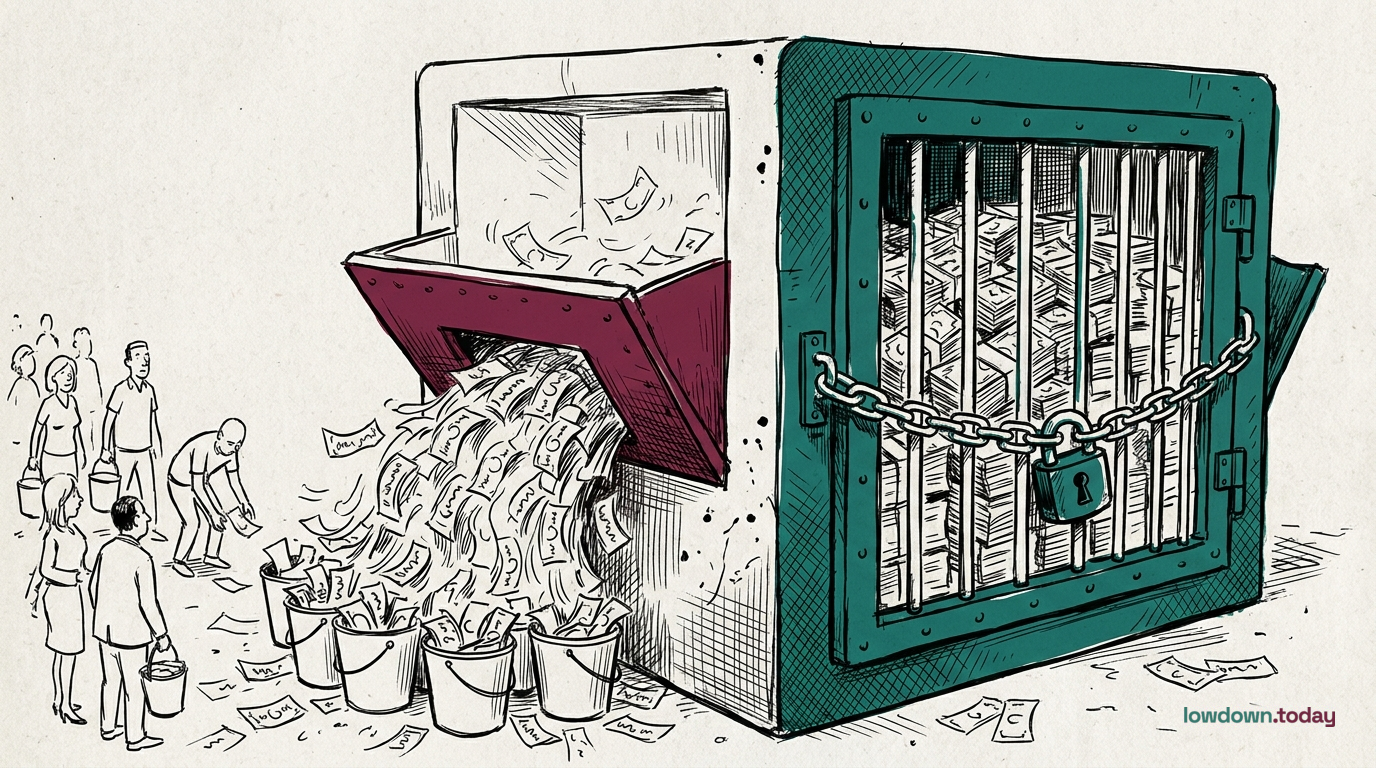
The number to watch is 11, not 271. With only 11 nominations remaining, the administration's primary remaining election-adjacent lever through judicial appointments is approaching its arithmetic limit. The pipeline runs dry not because the Senate is obstructing nominees but because the vacancies themselves are running out. Counter-view from conservative legal organisations: the 271 confirmations are the durable structural achievement of the second Trump term, and the slowing pace reflects success at filling vacancies rather than failure to advance nominees. Either reading leaves the SAVE Act legislative route foreclosed and the DOJ litigation track stalled in district court, narrowing the administration's election-administration toolkit further.

Deep Analysis

In plain English

The Senate confirmed another Trump judicial appointment to a federal appeals court on 20 April, bringing the total to 271 lifetime federal judges appointed during this presidency. These judges serve until they choose to retire or die, regardless of who wins future elections. With only 11 vacancies left, the window for adding more is nearly closed, not because the Senate is blocking nominees but because there are almost no more vacancies to fill.

Deep Analysis
Root Causes

The federal judiciary has a fixed number of Article III positions created by statute. Vacancies arise through death, retirement, or elevation.

The Trump administration's rapid fill rate reflects both a legacy backlog from the first term's vacancy-holding strategy and a deliberate acceleration in the second term that exploits the narrow Senate window before November 2026. With 11 nominations remaining, the arithmetic is approaching saturation. The slowing pace reflects a supply constraint on vacancies, not Senate obstruction.

What could happen next?
  • Consequence

    With 11 nominations remaining, the judicial pipeline approaches its arithmetic limit before November 2026, reducing the administration's forward institutional leverage to DOJ litigation outcomes and regulatory appointments rather than lifetime tenure.

  • Precedent

    A Democratic Senate after November 2026 would close the confirmation pipeline in January 2027. The 271 already confirmed are unaffected; the 11 pending nominations become the precise measure of what the administration gains or loses from November's outcome.

First Reported In

Update #4 · Calendar versus court

US Courts Confirmation Listing· 28 Apr 2026
Read original →
Causes and effects
This Event
Senate confirms Smith to 8th Circuit
Confirmation pace is slowing because the federal judicial vacancies are running out, not because the Senate is becoming less cooperative.
Different Perspectives
Missouri and Secretary of State Denny Hoskins
Missouri and Hoskins, held in contempt by the state's own supreme court on 10 September for prematurely reverting to HB 1, filed against a pause of the 8th Circuit's order restoring the same 2025 map.
Richard von Glahn and People Not Politicians
Von Glahn and People Not Politicians filed emergency application 26A388 on 22 September asking Justice Kavanaugh to pause the 8th Circuit's order restoring the 2025 map, days after Missouri mailed overseas ballots under the 2022 lines. A refusal to pause it would leave those ballots carrying the wrong districts.
Harmeet Dhillon, Justice Department
Dhillon said the department will send about 1,000 election monitors to Nevada, Pennsylvania and Rhode Island in November, calling it "the biggest DOJ election observer effort in history" and citing "67 election-related indictments and convictions" against 13 under the Biden administration.
National Association for the Advancement of Colored People and co-plaintiffs
The NAACP and eight other groups sued DHS in Washington on 18 September to keep ICE away from polling places, citing federal statutes barring armed officers and troops at elections. The suit follows a released 2025 DHS email listing non-English-language voting jurisdictions beside a Justice Department prosecution checklist.
Cook Political Report
Cook wrote that "the amount of money national Republicans have dedicated to this race is a flashing red light for Democrats" when it moved New Hampshire from Lean Democrat to Toss Up on 15 September, citing the NRSC's $5.18m for Sununu. It is the one state where Republican spending and the rating move the same direction.
Democratic Senate strategists
Strategists note the DSCC held a $37.6m cash lead over the NRSC's $18.7m at the end of August, after coordinating just $1.00m of spending itself. One reading holds the committee is banking that cash for the campaign's final weeks rather than matching Republican spending dollar-for-dollar in August.