Skip to content
Welcome, thoughtbot's Giant Robots listeners!Start here
US Midterms 2026
24SEP

Court lifts caps on party spending

3 min read
11:45UTC

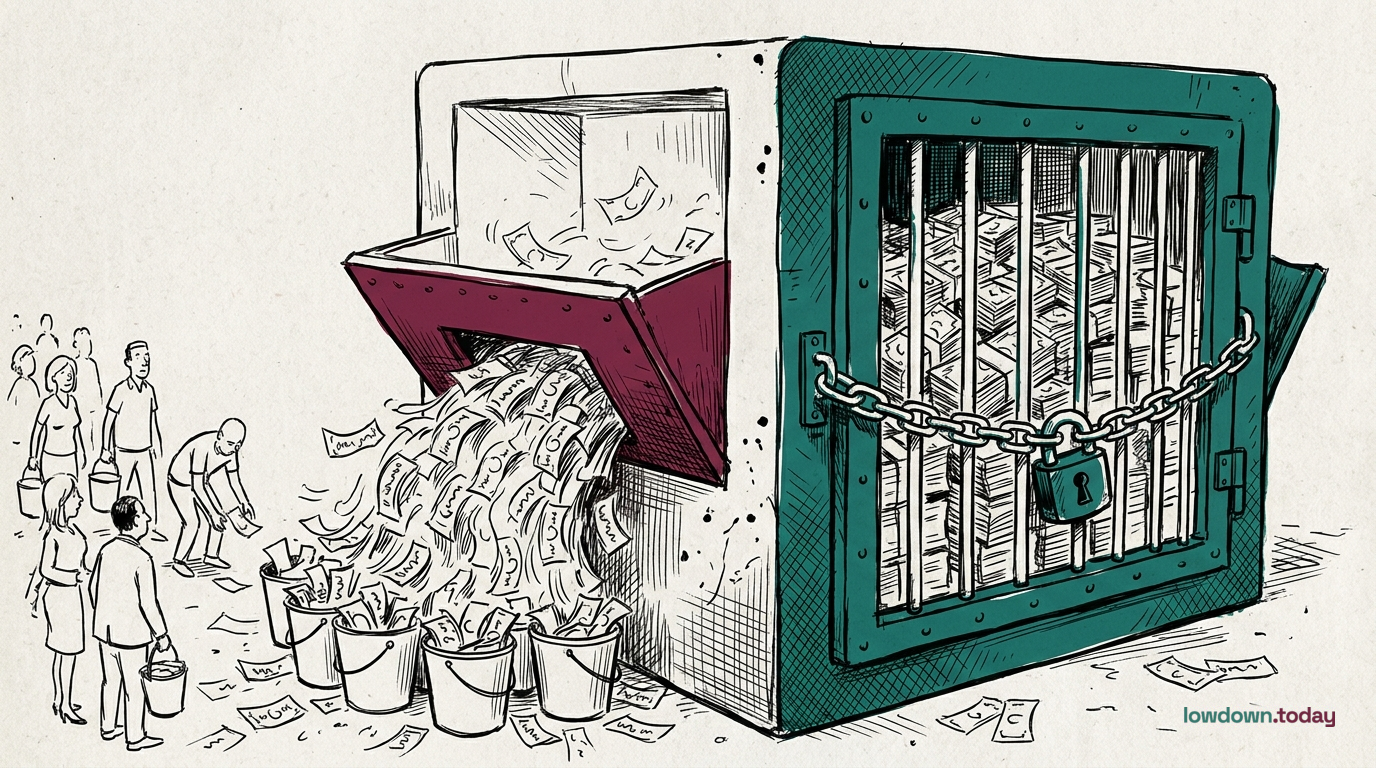
The Supreme Court removed the federal limit on party coordinated spending 6-3 on 30 June, freeing party committees to bankroll their own candidates' ad campaigns without a ceiling for the rest of the 2026 cycle.

PoliticsDeveloping
Key takeaway

Party committees can now spend without limit beside their candidates, and Republicans hold the bigger war chest.

The Supreme Court removed the federal limit on how much a political party may spend in direct coordination with its own candidates on Tuesday 30 June, ruling 6-3 that the caps violate the First Amendment. The decision in NRSC v. FEC takes effect at once and runs for the four months of campaign that remain in the 2026 cycle⁠1. Justice Brett Kavanaugh wrote for the majority; Justices Kagan, Sotomayor and Jackson dissented. We had flagged the case as the term's likeliest rewrite of campaign-finance rules when the Court agreed to hear it.

The caps had held party coordinated spending with a named candidate to between $65,300 and $130,600 in a House race, and up to $4m in a Senate race, this cycle. They formed one wall of the Federal Election Campaign Act (FECA), the post-Watergate framework Congress built in the 1970s to curb the flow of money into campaigns. The ruling tears that wall down at once.

Tim Scott, who chairs the Republican Senate committee, called the decision 'a decisive First Amendment victory'; the Democratic chairs Kirsten Gillibrand and Ken Martin called it 'a win for billionaire donors'⁠2. The case turned on speech doctrine that would have split this way in any term, so reading partisan intent into the vote overstates it. Freed from the caps, party committees can now pour unlimited coordinated money into their candidates' races, and Republicans hold more cash to spend at every committee tier. Democratic lawyers had fought the caps even while their committees posted record fundraising this spring, yet Democrats meet the new rules from the weaker cash position.

The deregulation follows a five-decade line the Court has drawn through campaign-finance law, from Buckley v. Valeo in 1976 to Citizens United in 2010. Where Citizens United freed outside groups to spend, NRSC v. FEC frees the parties themselves to spend hand-in-hand with their candidates, pulling money back toward the committees at the centre of each campaign.

Deep Analysis

In plain English

Political parties like the Republican Party's Senate campaign committee used to face a strict cap on how much they could spend working directly with their own candidates, up to about $4m per Senate race. Anything beyond that had to be spent 'independently', with no contact between the party and the campaign at all. the Supreme Court just removed that cap. Parties can now spend unlimited money coordinating directly with candidates. That matters because coordinated ads are also cheaper: television stations must offer candidates a discount rate that outside groups do not get, so the same dollar now buys more airtime than it did as independent spending.

Deep Analysis
Root Causes

Federal broadcast law requires stations to sell political advertising to candidates and parties at the 'lowest unit charge' under 47 U.S.C. § 315(b), the same discount given to a station's most-favoured commercial advertiser. Independent-expenditure groups do not qualify; only advertising authorised by, or coordinated with, a candidate does.

Until this ruling, the FECA coordination cap meant parties could only buy a limited slice of advertising at that discount before hitting the ceiling and switching to costlier independent spending. Removing the cap lets parties buy unlimited advertising at the cheap rate, which is why the NRSC shut its more expensive independent-expenditure operation within hours.

What could happen next?
  • Consequence

    Independent-expenditure groups such as the Senate Leadership Fund lose their main structural advantage over parties, since committees can now spend the same money directly at a cheaper broadcast rate.

  • Precedent

    The ruling reverses FEC v. Colorado Republican (2001) in substance without the Court naming that case, since it eliminates the coordination limit that decision upheld.

First Reported In

Update #11 · Money uncapped, ballot rules untouched

CBS News· 1 Jul 2026
Read original →
Different Perspectives
Missouri and Secretary of State Denny Hoskins
Missouri and Hoskins, held in contempt by the state's own supreme court on 10 September for prematurely reverting to HB 1, filed against a pause of the 8th Circuit's order restoring the same 2025 map.
Richard von Glahn and People Not Politicians
Von Glahn and People Not Politicians filed emergency application 26A388 on 22 September asking Justice Kavanaugh to pause the 8th Circuit's order restoring the 2025 map, days after Missouri mailed overseas ballots under the 2022 lines. A refusal to pause it would leave those ballots carrying the wrong districts.
Harmeet Dhillon, Justice Department
Dhillon said the department will send about 1,000 election monitors to Nevada, Pennsylvania and Rhode Island in November, calling it "the biggest DOJ election observer effort in history" and citing "67 election-related indictments and convictions" against 13 under the Biden administration.
National Association for the Advancement of Colored People and co-plaintiffs
The NAACP and eight other groups sued DHS in Washington on 18 September to keep ICE away from polling places, citing federal statutes barring armed officers and troops at elections. The suit follows a released 2025 DHS email listing non-English-language voting jurisdictions beside a Justice Department prosecution checklist.
Cook Political Report
Cook wrote that "the amount of money national Republicans have dedicated to this race is a flashing red light for Democrats" when it moved New Hampshire from Lean Democrat to Toss Up on 15 September, citing the NRSC's $5.18m for Sununu. It is the one state where Republican spending and the rating move the same direction.
Democratic Senate strategists
Strategists note the DSCC held a $37.6m cash lead over the NRSC's $18.7m at the end of August, after coordinating just $1.00m of spending itself. One reading holds the committee is banking that cash for the campaign's final weeks rather than matching Republican spending dollar-for-dollar in August.