
Skip to content
You can now search across every topic, entity and event.What's new
US Midterms 2026
1JUL

125 Days to Go: Money uncapped, ballot rules untouched

3 min read
11:34UTC

On 30 June the Supreme Court struck the federal caps on party coordinated spending, a day after it upheld a Mississippi mail-ballot grace period on a different coalition. The money ruling lands on a field where Republicans lead in cash at every committee tier. Lower courts, meanwhile, shut the executive route to the administration's voter-data programme, and the SAVE Act fight turned inward on House Republicans.

Key takeaway

Money jurisprudence reliably extends itself; ballot and executive routes to the same goal keep failing.

This briefing mapped
Loading map…
Legal
Regulatory
Competitive
Domestic

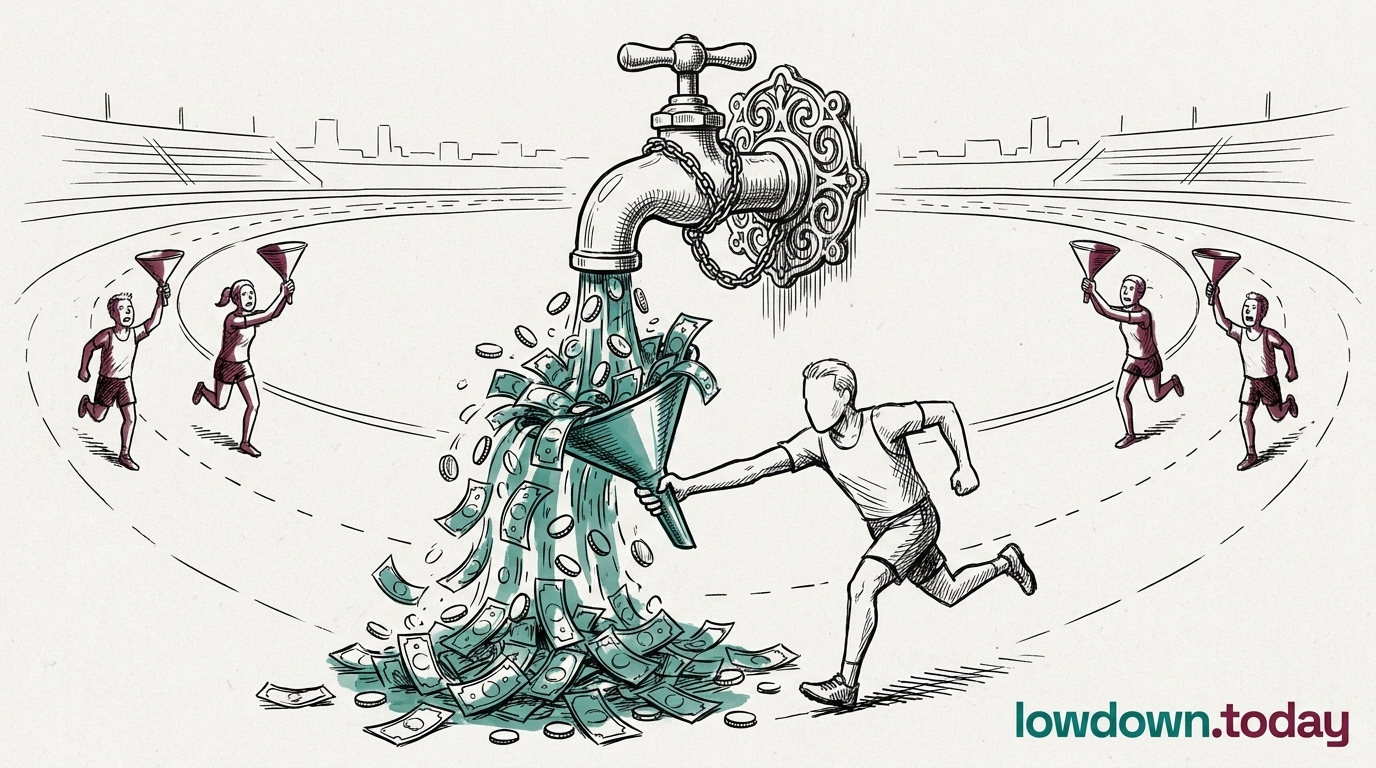
The Supreme Court removed the federal limit on party coordinated spending 6-3 on 30 June, freeing party committees to bankroll their own candidates' ad campaigns without a ceiling for the rest of the 2026 cycle.

Sources profile:This story draws on centre-left-leaning sources from United States
United States

the Supreme Court struck down federal limits on party-candidate coordinated spending on 30 June, ruling 6-3 in NRSC v. FEC. The old caps ran as high as $4m per Senate race.

The National Republican Senatorial Committee is already shutting its independent-spending unit, moving that money into coordinated buys worth up to 13 times more in broadcast airtime per dollar. 

Sources:CBS News
Briefing analysis

The struck limits date to the Federal Election Campaign Act, the post-Watergate framework Congress built in the 1970s to curb the flow of money into campaigns. Coordinated-spending caps sat alongside contribution limits as one of its load-bearing walls. The Supreme Court narrowed that framework repeatedly over five decades, from Buckley v. Valeo in 1976 through Citizens United in 2010; NRSC v. FEC removes one of the last remaining ceilings on what a party may spend hand-in-hand with its candidate.

The Supreme Court upheld Mississippi's mail-ballot grace period 5-4 on 29 June, letting 14 states and DC keep counting ballots that arrive after election day.

Sources profile:This story draws on neutral-leaning sources from United States
United States

the Supreme Court upheld Mississippi's mail-ballot grace period 5-4 on 29 June. Amy Coney Barrett wrote the majority; Chief Justice John Roberts crossed the Court's usual line to join her.

The ruling protects similar grace-period laws already on the books in 14 other states and Washington DC, covering roughly 4 million military and overseas voters who rely on them. 

The National Republican Senatorial Committee told staff it will close its independent-expenditure unit and move the money into coordinated buys that air three to 13 times cheaper.

Sources profile:This story draws on right-leaning sources from United States
United States
LeftRight

The National Republican Senatorial Committee told staff on 30 June it will close its independent-expenditure unit entirely, folding that spending into its coordinated operation hours after the Supreme Court's ruling in NRSC v. FEC.

Coordinated ad buys qualify for the FCC's discounted broadcast rate, making them three to 13 times cheaper than the same ad bought independently, an internal NRSC memo said. 

Sources:Townhall

A Sixth Circuit panel affirmed 2-1 the dismissal of the Justice Department's demand for Michigan's unredacted voter rolls, the first appellate ruling in the year-old voter-data fight.

Sources profile:This story draws on neutral-leaning sources

A Sixth Circuit panel ruled 2-1 on 24 June that a 1960 civil rights law does not let the Justice Department demand Michigan's unredacted voter rolls.

It binds Michigan, Ohio, Kentucky and Tennessee, the first appeals-court ruling in the year-long fight over voter data. Judges called the DOJ's approach 'an inverse purpose, to ensure that some people have not voted.' 

Judge Denise Casper in Boston turned her injunction of Trump's 31 March voting executive order into a permanent block, ruling the president has no authority over how states run elections.

Sources profile:This story draws on centre-left-leaning sources from United States
United States

Boston federal judge Denise Casper made her block of Trump's 31 March voting executive order permanent on 24 June, ruling the president has no authority over how states run elections.

Three other courts had already blocked most of the order months earlier. Casper's ruling closes off the one part, a DHS review of state voter files, that had still been operating. 

Sources:ABC News

Julia Letlow beat John Fleming 56.8% to 43.2% in Louisiana's Republican Senate runoff on 27 June, a margin far wider than late polling had suggested.

Sources profile:This story draws on mixed-leaning sources from United States
United States

Julia Letlow beat John Fleming 56.8% to 43.2% in Louisiana's Republican Senate runoff on 27 June, a far wider margin than polling had suggested just two weeks earlier.

Turnout fell 21% from May's primary. A pro-Letlow super PAC spent $5.9m against Fleming in the closing weeks; he received no outside help at all. 

The latest FEC filings show Republican committees ending May with more cash on hand than their Democratic counterparts at the national, Senate and House tiers.

Sources profile:This story draws on neutral-leaning sources

FEC filings through 31 May showed Republican committees ahead of their Democratic counterparts in cash at every level: the RNC held $125.5m to the DNC's $14.9m, and House Republicans led $81.8m to $73m.

The House gap has flipped twice in three months, showing real month-to-month volatility, unlike the wider and steadier lead Republicans hold at the national committee level. 

FEC filings revealed that three liberal-branded super PACs are covertly funded by a Republican vehicle to lift weaker Democrats in their own primaries.

Sources profile:This story draws on left-leaning sources from United States
United States
LeftRight

FEC filings made public on 20 June showed three liberal-branded PACs, Lead Left, Real Change and Blue California, are secretly funded by Republican-aligned Conservative Americans PAC to weaken Democratic primary fields.

In Texas's 35th District, Lead Left spent more than $750,000 to help Maureen Galindo, who still lost her runoff by close to 30 points. 

Sources:CNN
1 CNN2 CNN3 CNN

Donald Trump cancelled the signing of a bipartisan housing-cost bill, saying he will approve no legislation until Congress passes the SAVE Act.

Sources profile:This story draws on centre-left-leaning sources from United States
United States

Donald Trump cancelled the signing of a bipartisan housing-cost bill on 24 June, saying he will not sign any legislation until Congress passes the SAVE Act, which requires documentary proof of citizenship to register to vote.

The SAVE Act has been stalled in the Senate since April for lack of the 60 votes needed to beat a filibuster, so Trump is using an unrelated bill as leverage. 

Sources:NPR
1 NPR

The House rejected Speaker Mike Johnson's bid to attach the SAVE Act to the must-pass defence bill 198-224, with Republicans among the objectors.

Sources profile:This story draws on centre-left-leaning sources from United States
United States

The House rejected Speaker Mike Johnson's attempt to attach the SAVE Act to the must-pass National Defense Authorization Act, voting 198-224 on 30 June.

Republicans including Florida's Anna Paulina Luna joined Democrats against the rider, unwilling to risk the defence bill's near-certain passage over a fight the SAVE Act could not win alone. 

Sources:Axios

The Silver Bulletin generic ballot eased to D+6.1 on 30 June, down from a late-May high of D+6.9 but still a substantial Democratic lead.

Sources profile:This story draws on neutral-leaning sources

Nate Silver's Silver Bulletin generic congressional ballot average eased to D+6.1 on 30 June, down from a late-May peak of D+6.9.

Democrats still hold a wide lead nationally, but the pullback is the first sustained easing after two months of the gap steadily widening. 

Closing comments

Escalation direction: up for the Republican money advantage, down for the administrative voting-rules push. The DCCC's $45.3m Q2 haul becomes verifiable at the 15 July FEC filing deadline, the first test of whether Democratic committees can out-raise a ceiling that no longer exists rather than merely out-raise the old one. On the DOJ side, Benson's 2-1 split leaves a path to the full Sixth Circuit or a Supreme Court petition, but a second appellate loss, most likely from the 9th Circuit's still-pending Oregon ruling, would end the litigation route entirely rather than narrow it. The SAVE Act has exhausted cloture, reconciliation and the NDAA rider; only a standalone floor vote, the path Republican leadership has avoided all year, remains untried.

AI-assisted, human-edited under the editorial responsibility of Bannermedia Ltd. Reviewed by Ed Woodcock on 1 July 2026. Editorial standards.

Different Perspectives
National Republican Senatorial Committee
NRSC chair Tim Scott called the ruling a decisive First Amendment victory and moved within hours to fold the committee's independent-expenditure unit into coordinated buys worth far more airtime per dollar. The committee defends 22 Senate seats against the DSCC's 12, so unlimited coordinated spending favours whichever side is protecting the larger map.
Democratic Senatorial Campaign Committee and DNC
DSCC chair Kirsten Gillibrand and DNC chair Ken Martin called the ruling a win for billionaire donors, days after their committees banked a cycle-record $45.3m quarter while fighting it in court. That cash lead now meets a Republican side that already held more money at every committee tier before the caps fell.
Trump administration and Department of Justice
The DOJ lost its first voter-data appeal on 24 June, the same day Boston's Judge Casper made her block of Trump's voting order permanent, closing both the litigation and executive routes to a citizenship-check regime. Trump then froze his own agenda, refusing to sign any bill until the SAVE Act passes, though it still lacks the Senate votes.
Campaign Legal Center
Campaign Legal Center's Adav Noti called the caps struck down in NRSC v. FEC the last real barrier against unlimited party money, warning the ruling erases whatever check remained on committee-level spending. Reform advocates see it compounding an already lopsided field, since Republican committees held the cash lead at every tier before the ruling fell.
Nate Silver's Silver Bulletin
Nate Silver's Silver Bulletin recorded the generic ballot easing to D+6.1 on 30 June, down from a D+6.9 May peak but still wave-sized. Forecasters treat that lead, not the committees' cash totals, as the stronger predictor of November, since money shapes which races get contested rather than what voters actually want.