Skip to content
Welcome, thoughtbot's Giant Robots listeners!Start here
US Midterms 2026
7SEP

WinSenate puts $8.14m into Kansas ads

3 min read
13:32UTC

The ad arm of Senate Majority PAC has reported $8.14m against Kansas Senator Roger Marshall since 10 October. On his side, the Senate Leadership Fund has put in $6.29m while the NRSC gave him nothing in September.

PoliticsAssessed
Key takeaway

Two super PACs, not the party committees, are paying for the late Kansas Senate air war.

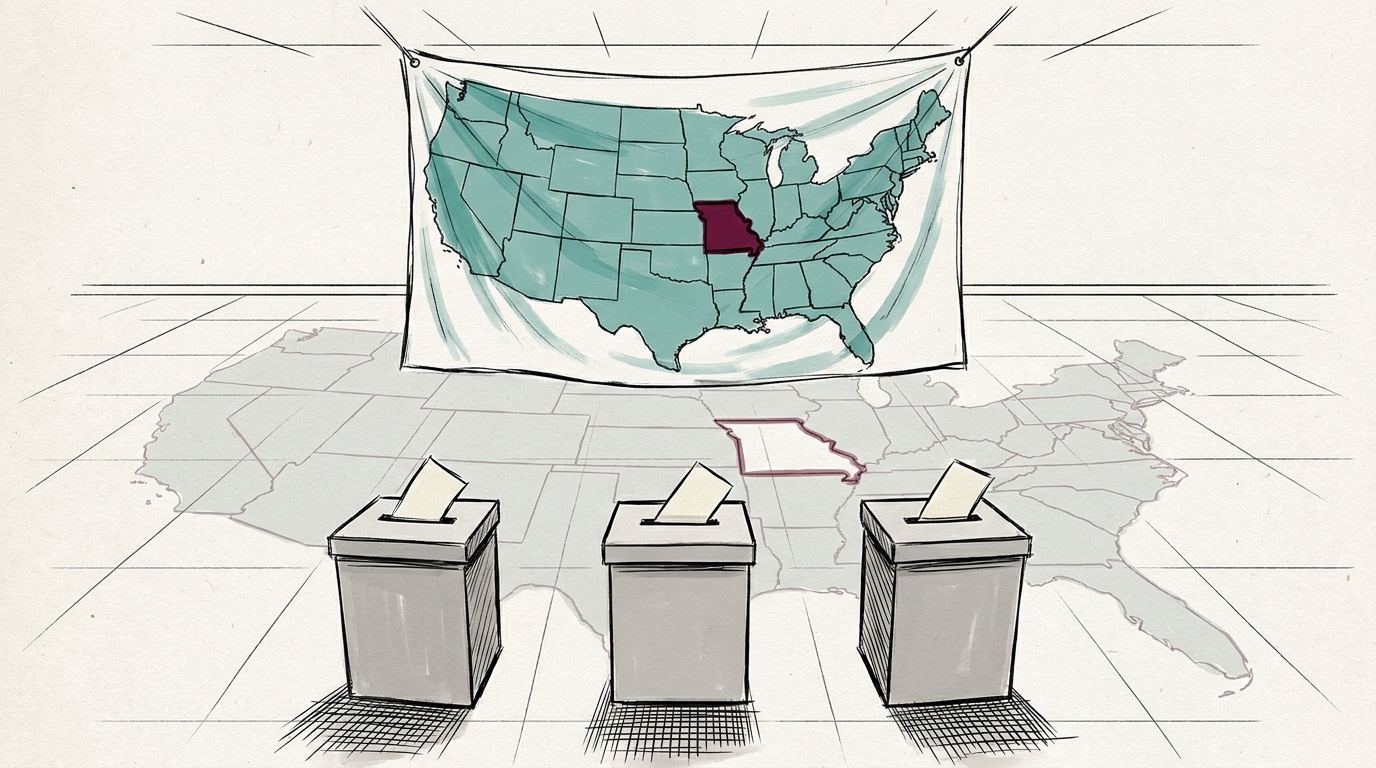
WinSenate began buying Kansas airtime against Senator Roger Marshall on 10 October and had reported $8.14m there in its 24-hour reports by 20 October⁠1⁠2⁠3. These are the rapid disclosures outside groups file for late spending. WinSenate is the affiliated committee through which the Democratic-aligned Senate Majority PAC (SMP) buys its advertising. SMP itself reported no independent expenditures in the quarter. An independent expenditure is spending a group may not plan with any candidate. SMP moved $106.1m to WinSenate, which buys the ads and files the reports⁠4.

On the Republican side, the Senate Leadership Fund (SLF) had spent $6.29m on Kansas mail, digital and television by the same date⁠5. SLF is the Super PAC aligned with Senate Republican leaders: it may raise and spend without limit but may not plan its spending with candidates. Election forecasters had moved their Kansas rating in September.

The National Republican Senatorial Committee (NRSC) put no party money behind Marshall, the Republican, in September. The Democratic Senatorial Campaign Committee (DSCC) gave his Democratic challenger Adam Hamilton $0.37m⁠6⁠7. Hamilton had far outraised Marshall in the quarter, and Marshall held $922,088 at the end of September. On September's figures, most of the late advertising on Marshall's side is bought by a committee that by law may not plan it with him.

Kansas now ranks sixth in WinSenate's reports since 17 September, behind Ohio ($54.58m), Michigan ($30.54m), Iowa ($30.17m), Maine ($25.41m) and New Hampshire ($14.99m)⁠8. WinSenate has reported $18,550 in Texas.

Deep Analysis

In plain English

Kansas is electing a senator on 3 November. The Republican, Roger Marshall, holds the seat. His Democratic challenger is Adam Hamilton. Forecasters now rate the race as a toss-up. super PACs are groups that may raise and spend unlimited sums but may not plan their spending with a candidate. Two of them, one on each side, are now paying for most of the late advertising. Marshall's party committee gave him nothing in September.

Deep Analysis
Root Causes

Marshall's own campaign stopped raising money at the rate a contested race needs. His report for 16 July to 30 September left him with $922,088, while his Democratic challenger Adam Hamilton far outraised him.

The NRSC spread its September party money across eight nominees and skipped four, Kansas among them. That left the Republican side in Kansas to SLF, which cannot plan its spending with Marshall.

On the Democratic side, Senate Majority PAC buys through an affiliate. It made no independent expenditures of its own in the quarter and moved $106.1m to WinSenate, which buys the ads and files the 24-hour reports.

What could happen next?
  • Consequence

    Pre-general reports due on 22 October will show whether Marshall's campaign cash recovered in early October.

  • Risk

    If the NRSC keeps Kansas off its list, Republican advertising there will cost more per spot than Democratic party advertising would.

First Reported In

Update #21 · Senate GOP's cash lead trails its $20m loan

Federal Election Commission· 22 Oct 2026
Read original →
Causes and effects
This Event
WinSenate puts $8.14m into Kansas ads
Outside groups, not the parties, now pay for most of the late advertising in a Kansas race the NRSC left unfunded in September.
Different Perspectives
Judge Adolf Zeman, Alaska Superior Court
Zeman refused to dismiss the League of Women Voters, Alaska Black Caucus and ACLU of Alaska suit over the state giving DOJ its unredacted voter list. The privacy claims now go to evidence-gathering under the Alaska Constitution.
Judge Thomas Schroeder, US District Court for the Middle District of North Carolina
Schroeder refused on 19 October to block the State Board of Elections rule that rejects mail ballots with an unsealed or missing inner envelope. He found the challengers had delayed and that relief was infeasible with voting under way, and pointed to notice-and-cure provisions as a safeguard.
Stephen Richer, Republican former Maricopa County recorder
Richer submitted a brief on 20 October supporting the voting groups on documentary proof of citizenship at registration. He takes no position on the separate 90-day voter-removal question.
Senate Leadership Fund
The Senate Leadership Fund began spending for interim Senator Darline Graham Nordone on 19 October, taking its South Carolina total to $4.06m, including $2.25m against Democrat Annie Andrews. Republicans are now paying to defend a seat in a state Donald Trump carried in 2024.
WinSenate, the ad-buying affiliate of Senate Majority PAC
WinSenate began buying Kansas airtime against Roger Marshall on 10 October and had reported $8.14m there by 20 October. Marshall held $922,088 in cash on 30 September and the NRSC gave him no party money in September, so the Democratic side is spending where the Republican committee has not.
County Board of Arlington County
Arlington says federal Polling Place Policies allowing armed agents at polling sites breach 18 USC 592, the 1865 ban on troops or armed men at an election. It reads Markwayne Mullin's 1 September remarks as confirming such a policy, and asks Judge Brinkema to keep armed federal staff from its polls and drop boxes.

Written with AI from Lowdown's published reporting. Not individually reviewed by an editor. Editorial standards.
