Skip to content
Briefings are running a touch slower this week while we rebuild the foundations.See roadmap
Russia-Ukraine War 2026
18MAR

Afipsky refinery hit in drone strike

3 min read
11:41UTC

A facility processing 2% of Russia's refining output caught fire as Kyiv's drone campaign compounds a 32% year-on-year collapse in Russian energy revenues.

ConflictDeveloping
Key takeaway

Afipsky supplied the Southern Military District with fuel, making this strike simultaneously economic and operational.

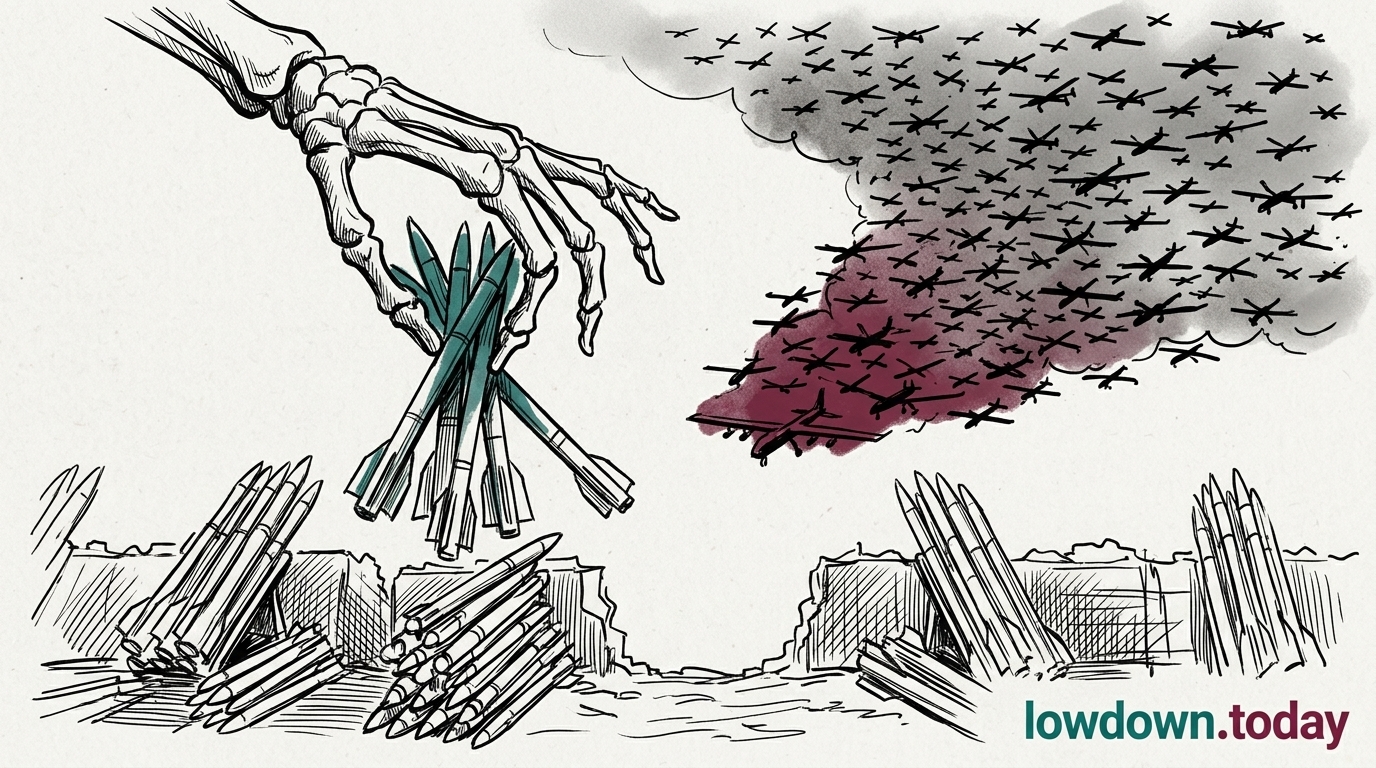
Ukrainian drones struck the Afipsky refinery in Krasnodar Krai on the night of 14 March. The facility is one of southern Russia's largest, processing 6.25 million tonnes of crude annually — approximately 2% of national refining capacity 1. Fire was confirmed at the site. Russia's Ministry of Defence claimed 87 Ukrainian drones were intercepted during the wider operation, including 31 over the Sea of Azov 2.

Afipsky is the latest target in a systematic Ukrainian campaign against Russian refinery infrastructure running since mid-2023. Russian oil and gas revenues had already fallen roughly 32% year-on-year by January 2026, with Urals crude trading below $38 per barrel . Damaged refineries force Russia to export crude at a discount rather than higher-margin refined products. The EU's phased ban on Russian gas imports begins with LNG on 25 April — five weeks from this strike . Russia's energy revenues are contracting from both directions: Western sanctions restricting market access, Ukrainian drones degrading the infrastructure that converts crude into exportable product.

The MoD's claim of 87 intercepts — even if inflated — reveals the scale of the drone swarm Ukraine deployed. The campaign's logic is attritional: each drone costs orders of magnitude less than the refinery infrastructure it targets, and Russia cannot relocate a refinery. It can only attempt to defend it, absorbing air-defence resources that might otherwise protect forward military positions.

Deep Analysis

In plain English

Ukraine struck one of the largest oil refineries in southern Russia, setting it on fire. This matters in two distinct ways. First, it reduces the money Russia earns from refined petroleum products — revenues that fund the war. Second, this specific refinery in Krasnodar Krai supplies fuel to Russian military operations in the Black Sea region and Crimea corridor. Think of it as attacking both the cashbox and the fuel pump of the Russian war machine in the south at the same time.

Deep Analysis
Synthesis

The same-night strikes on Afipsky refinery and Port Kavkaz constitute a deliberate two-vector interdiction of the Crimea logistics corridor: severing fuel supply at the production node while simultaneously choking the primary ferry transport artery. Considered individually, each strike is significant; considered together, they reveal a coherent operational design.

What could happen next?
  • Consequence

    Military fuel supply to Southern Military District operations may face short-term disruption pending rerouting from alternative refineries in the Volga region.

    Immediate · Suggested
  • Consequence

    Cumulative refinery strikes compound the 32% year-on-year oil revenue decline, reducing fiscal resources available for Russian military procurement.

    Short term · Assessed
  • Risk

    If Russia repairs Afipsky within weeks — consistent with the resilience pattern observed after 2024 strikes — the strategic impact is bounded by a temporary production gap rather than sustained capacity loss.

    Short term · Suggested
  • Opportunity

    Coordinated Afipsky-plus-Port Kavkaz targeting creates a window to assess whether Crimea occupation forces experience measurable supply degradation when both fuel production and ferry transport are struck simultaneously.

    Short term · Suggested
First Reported In

Update #4 · Ukraine pivots to drone exporter

Kyiv Independent· 15 Mar 2026
Read original
Causes and effects
This Event
Afipsky refinery hit in drone strike
The Afipsky strike compounds a 32% year-on-year decline in Russian energy revenues five weeks before the EU's phased ban on Russian gas begins on 25 April, further degrading the refining infrastructure Russia needs to export higher-margin products.
Different Perspectives
NATO eastern flank (B9 + Nordics)
The B9+Nordic Bucharest joint statement on 13 May reaffirmed Ukraine's sovereignty within internationally recognised borders and backed NATO eastern flank reinforcement; the summit accepted Zelenskyy's bilateral drone deal proposal as a structural alternative to the stalled US export approval pathway, treating it as a European defence architecture question rather than aid delivery.
IAEA / Rafael Grossi
Grossi is still negotiating a sixth ZNPP repair ceasefire with no agreement after 50 days of 750 kV line disconnection; the 3 May ERCL drone strike that destroyed environmental monitoring equipment represents a qualitative escalation in infrastructure degradation that the IAEA has documented but cannot compel either party to halt.
Péter Magyar / Hungary
Magyar's incoming foreign minister pledged on 12 May that Hungary will stop abusing EU veto rights; the pledge is a statement of intent rather than a binding legal commitment, and Magyar's MEPs voted against the €90 billion loan as recently as April, while a planned referendum on Ukraine's EU accession preserves a downstream blocking lever.
EU Council and European Commission
The Magyar cabinet formation on 12 May removes the Hungary veto that had blocked the €9.1 billion first tranche since February; the Commission is now coordinating the three-document disbursement package for an early-June vote. The structural blocker is gone; the disbursement question is now scheduling, not politics.
Donald Trump / White House
Trump announced a 9-11 May three-day ceasefire with a 1,000-for-1,000 prisoner exchange attached, then called peace 'getting very close' on 11-13 May while Russia's 800-drone barrage was under way; his public framing adopted Russian diplomatic language without securing any Russian operational concession or verifying the exchange was agreed.
Vladimir Putin / Kremlin
Putin told reporters on 9 May the war is 'coming to an end' while Peskov confirmed on 13 May that territorial demands are unchanged and Russia requires full Ukrainian withdrawal from all four annexed regions; the verbal accommodation costs Moscow nothing and conditions any summit on a pre-finalised treaty Kyiv cannot accept.
