Skip to content
You can now search across every topic, entity and event.What's new
Russia-Ukraine War 2026
18MAR

Ukraine blocks drone sales as Gulf burns

2 min read
11:41UTC

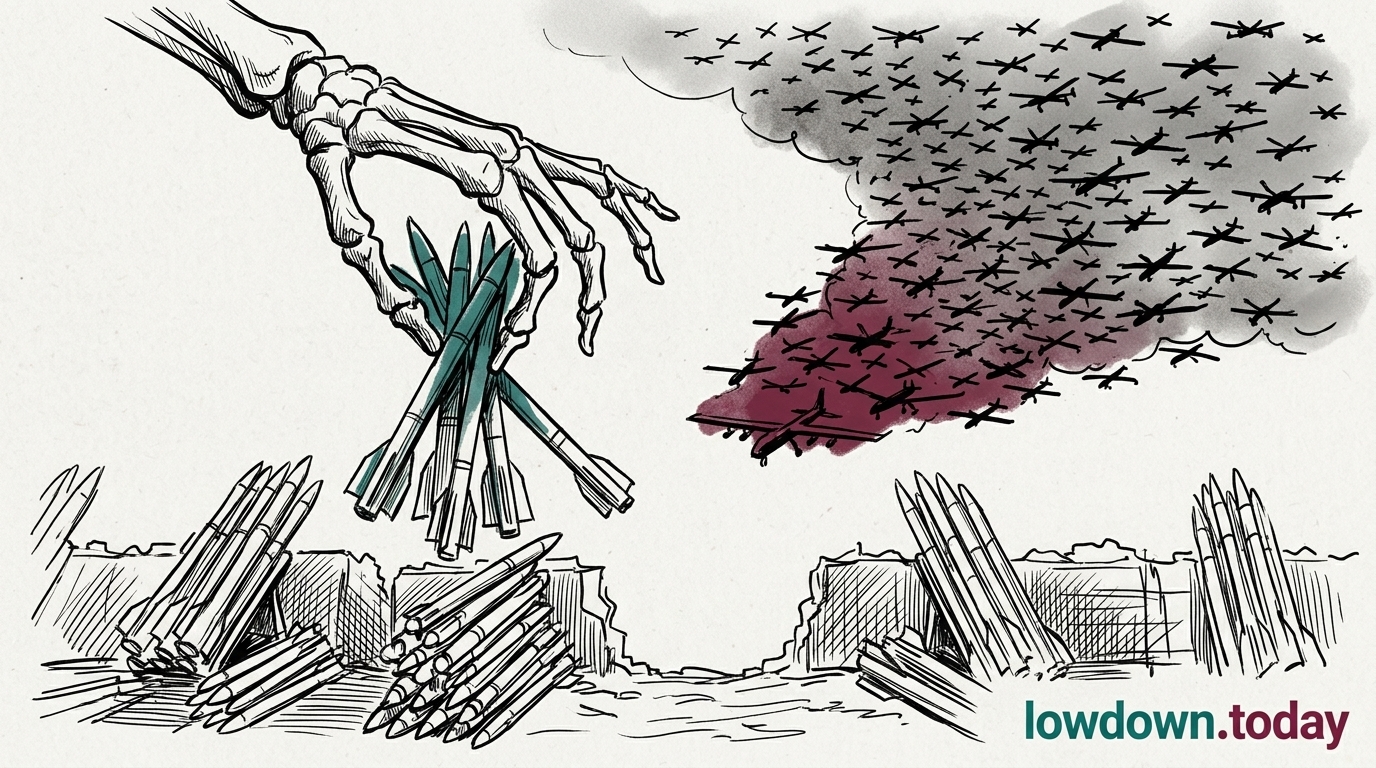
Ukraine's export regulator suspended Gulf drone sales applications, keeping combat-proven interceptors costing $2,100 to $2,500 per unit locked away from buyers spending millions per salvo.

ConflictDeveloping
Key takeaway

The cheapest combat-proven interceptors on the market remain locked away from the Gulf states consuming millions per salvo.

Ukraine's State Service for Export Control suspended Gulf drone export applications, citing the EU Common Position 2008/944/CFSP conflict-aggravation clause. Named manufacturers including General Cherry, Wild Hornets, and Ukrspetsystems are receiving hundreds of enquiries they cannot legally fulfil. SkyFall told Reuters its manufacturing capacity runs into "tens of thousands per month", far exceeding domestic demand.

The cost asymmetry is the core of the story. Ukrainian interceptors cost $2,100 to $2,500 per unit, refined through three years of combat against Russian drones. A single PAC-3 MSE round costs millions. Gulf states are spending orders of magnitude more per intercept than necessary because the cheapest solution is locked behind export controls. Zelenskyy disclosed in March that up to 10 drone factories had been built abroad to circumvent the ban ; the shadow factories are a symptom of a strategic choice, not a regulatory accident.

Kyiv's logic is deliberate. Allowing commercial sales would disperse Ukraine's most potent bargaining asset. The SSEC suspension preserves leverage for tightly controlled bilateral 10-year agreements with Saudi Arabia and Qatar . The 228 counter-drone specialists deployed across five Gulf states are the human expression of this strategy: Ukraine is selling expertise and strategic alignment, not commodity hardware.

For Western defence companies, the deadlock temporarily shields premium-priced interceptor systems from low-cost Ukrainian competition. That protection cannot hold if the Gulf conflict intensifies further.


Deep Analysis

In plain English

Ukraine has become very good at making cheap, effective drone interceptors through three years of fighting Russian drones. Gulf countries are now being bombarded by Iranian drones and want to buy Ukraine's interceptors, which cost just $2,100-$2,500 each, compared to millions for the Western alternatives. But Ukraine has refused to allow open commercial sales. Instead it wants to control who gets the technology through long-term government-to-government deals. This keeps Ukraine in control of a combat-proven interceptor technology and means it can use that technology as a bargaining chip in diplomatic negotiations. The downside is that Ukrainian companies like SkyFall are sitting on factory capacity that could be producing tens of thousands of interceptors a month, but they cannot legally sell them.

What could happen next?
  • Consequence

    Ukraine's export control strategy converts its most cost-competitive technology into a diplomatic instrument rather than a revenue stream, concentrating strategic alignment leverage with a small number of Gulf partners rather than distributing it commercially.

  • Risk

    If bilateral agreements with Gulf states expire or lose value after the conflict ends, Ukraine will have foregone substantial hard-currency revenue in exchange for strategic relationships whose durability depends on shared threat perception that may not persist.

First Reported In

Update #5 · Gulf drone war rewrites procurement

Ukrainska Pravda· 13 Apr 2026
Read original
Different Perspectives
Belarus
Belarus
Minsk announced completion of its own 37th Separate Airborne Assault Brigade near Gomel, under plans dating to August 2025 rather than a response to any single frontline event this window, keeping its hedge of hosting the war without formally joining Russia's mobilisation drive.
European Union / Operation IRINI states
Italy, Greece and Poland boarded the sanctioned tanker Toa Payoh off Pantelleria under a standing EU mandate rather than a national decision, extending enforcement from the Channel and Baltic and the Black Sea and Azov into the Mediterranean. Italian Defence Minister Guido Crosetto praised the crew; the captain's refusal to produce documentation left detention unconfirmed.
Poland and the NATO eastern flank
Warsaw's Coordination Team said explicitly its forces tracked the 30 July missile incursion and were ready to shoot it down, then flew air cover for an EU tanker interdiction three days later. Poland is simultaneously the war's nearest spillover victim and a contributor to enforcing sanctions against the state causing that spillover.
Ukraine (government, defence establishment and civilians)
Kyiv runs its manpower crisis through acting Defence Minister Yevhen Khmara, whose formal appointment waits for parliament's 18 August return, and a fortnight-old Commander-in-Chief, Mykhailo Drapatyi. Reported attacks on enlistment officers rose from 5 cases in 2022 to 341 in 2025, reaching Odesa's Territorial Recruitment Centre staff directly on 2 August.
Kremlin and Russian domestic economic voices
Moscow has not addressed July's advance-rate collapse or Sberbank's OFZ warning; Novak's diary ran to OPEC+ quota diplomacy with no diesel item logged since 15 July. Economist Nikolai Korzhenevsky calls the Central Bank's RUB 2.3tn in bank lending effectively deficit monetisation, a framing Sberbank's Skvortsov, with his own institutional interest, has not disputed.
IAEA (Rafael Grossi)
IAEA inspectors logged Zaporizhzhia's 22nd loss of off-site power, ten of them in the last three months, after a thunderstorm knocked out the plant's sole surviving backup line. Grossi reads the accelerating frequency, not any single outage, as the safety signal now that the plant's redundancy is exhausted.



