Skip to content
Briefings are running a touch slower this week while we rebuild the foundations.See roadmap
Russia-Ukraine War 2026
15MAR

White House freezes all Patriot exports

2 min read
06:46UTC

Global Patriot export approvals went on ice after three days of Iran war operations burned through more rounds than the United States builds in an entire year.

ConflictDeveloping
Key takeaway

A Patriot export freeze on top of the production gap leaves Ukraine no resupply route that clears in time.

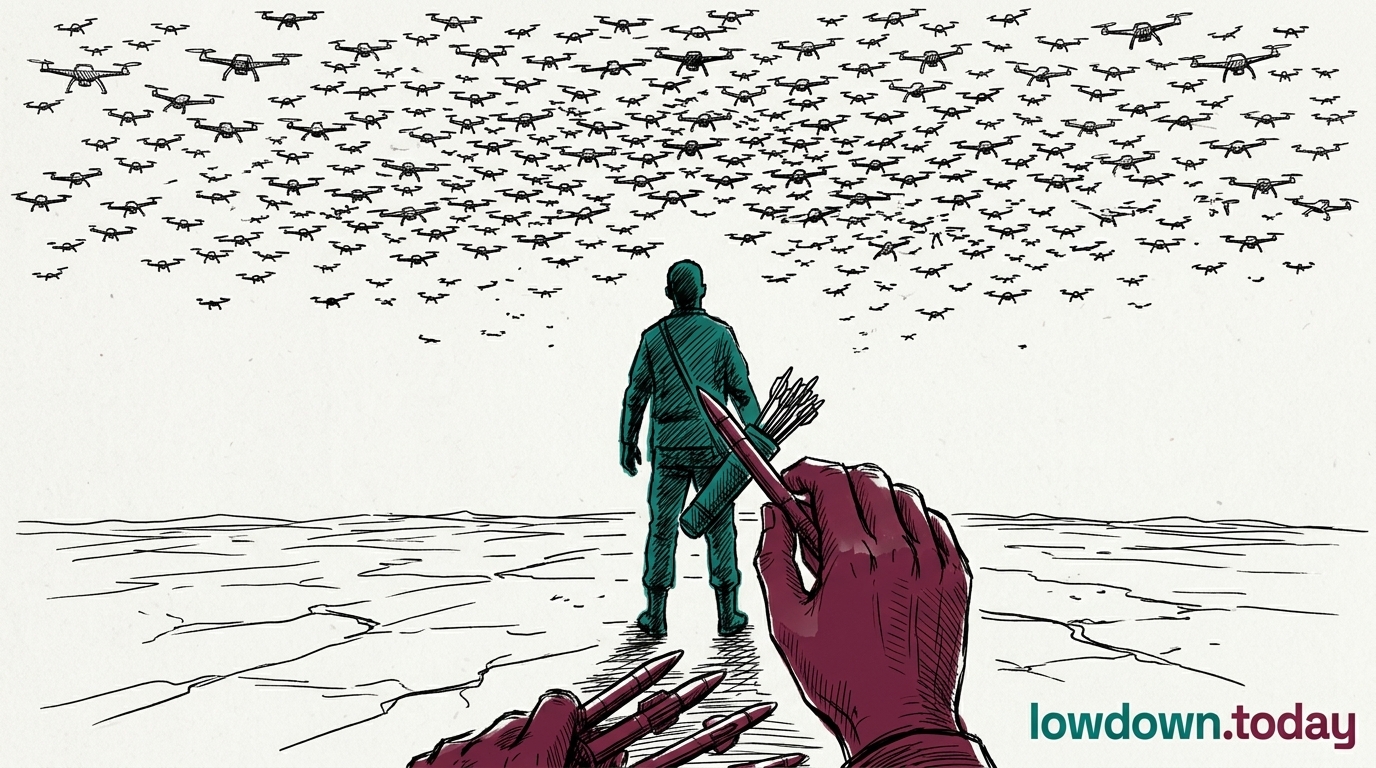
Defense News and the Washington Post reported this week that the White House suspended PAC-3 export approvals worldwide after more than 800 rounds were expended in three days of Iran war operations 1. Annual US production runs at roughly 600. The arithmetic does not reconcile with even a single restock cycle, let alone two.

For Kyiv, the suspension compounds the Lockheed contract arithmetic covered separately in this briefing. Gulf customers lose near-term deliveries, but Ukraine is the only recipient whose stockpile deadline falls inside the ninety-day window. Zelenskyy's figure from late March did not anticipate the export queue freezing on top of the production gap.

Zelenskyy had already flagged in late March that Ukraine needed 800 interceptors of the same kind the US expended in Iran in three days against roughly 700 Ukraine had received all winter . The export freeze converts that asymmetry from a supply warning into a supply wall. Ukraine's STING interceptor drone, validated a week earlier, does not close the gap for ballistic or cruise threats, which still require the PAC-3 airframe. What Ukraine can do alone is narrower than what it needs Washington to backfill.

Deep Analysis

In plain English

After the recent conflict with Iran, the US used more than 800 Patriot missiles in just three days. To put that in perspective, the US only makes about 600 per year. The White House responded by temporarily stopping all Patriot sales to other countries, including Ukraine, while production catches up. This leaves Ukraine in a queue alongside dozens of other US allies, with no guaranteed timeline for resuming deliveries. Ukraine's air defence shields its cities from ballistic missiles; without interceptors, those shields run dry.

Deep Analysis
Root Causes

The root cause is a production base that was sized for deterrence, not attrition warfare. US PAC-3 production was optimised over two decades for planned peacetime deliveries to Gulf and Asian allies, not for sustained wartime consumption rates. The Iran conflict consumed in 72 hours what US factories produce in 16 months.

A secondary cause is institutional: the US never established a strategic interceptor reserve analogous to the Strategic Petroleum Reserve. Each PAC-3 is allocated to a named buyer at contract signature, leaving no unallocated buffer that could be redirected to Ukraine under emergency authority.

Escalation

The suspension, if maintained beyond six to eight weeks, creates a predictable window for Russia to test Ukraine's depleted Patriot coverage with ballistic missile concentrations on Kyiv or Odesa. Russian targeting patterns historically exploit confirmed air defence gaps within 30-60 days of detection.

What could happen next?
  • Risk

    A sustained suspension creates a measurable window for Russian ballistic missile penetration of Ukrainian air defence coverage within 30-60 days.

  • Consequence

    FMS buyers who hold Patriot systems, including Germany, Netherlands, Japan, and Saudi Arabia, will face their own restocking delays, adding diplomatic friction to existing US alliance management.

First Reported In

Update #12 · Three narrowings of US support for Kyiv

Defense News· 11 Apr 2026
Read original
Different Perspectives
North Korea / DPRK
North Korea / DPRK
ISW confirmed the first mounting of DPRK Type-75 MLRS on Russian autonomous UGVs near Kharkiv on 7 June, the latest step in a supply axis that escalated from shells in 2023 to troops in 2024. Pyongyang gains live battlefield data on its ordnance and on Russia's uncrewed-systems programme.
IAEA / Rafael Grossi
Grossi confirmed Chornobyl structural damage with nuclear material metres away and could not attribute the ZNPP 15-hour blackout during the agreed repair window. Six ceasefires brokered and broken at ZNPP, compounded by Rosatom's May attack on IAEA neutrality, have eroded his ability to enforce the windows he negotiates.
Emmanuel Macron / France
Macron co-signed the E3 framework whose line-of-contact baseline marks Europe's first formal acceptance that 1991 borders are not the opening position. France's role carries weight because Macron had previously proposed a European force for Ukraine, and the framework's multinational force point is the vehicle for that.
Keir Starmer / E3
Keir Starmer / E3
Starmer, Macron and Merz met Zelenskyy on 7 June and backed a five-point framework taking the line of contact as the talks baseline, conceding roughly one fifth of Ukraine in exchange for a multinational force and frozen assets. With US mediation ended, the NATO Ankara summit on 7-8 July is the next test.
Vladimir Putin / Kremlin
Putin used SPIEF to reject Zelenskyy's summit letter, citing 'elements of rudeness', and repeated the pre-agreed treaty precondition that has frozen every diplomatic round since May. The SPIEF platform's message of investor confidence was punctured by naval fires visible from St Petersburg, which Moscow declined to dispute in scale.
Ukraine / Unmanned Systems Forces
Commander Brovdi confirmed USF units tracked and set fire to Boikyi at Kronstadt, while Code 9.2 struck the Chonhar Bridge the following day. Ukraine is sequencing strikes for rear-area interdiction and political timing rather than ground gains, trading the Baltic Fleet's home base for the logistics squeeze Russia cannot absorb without rationing its own occupied territory.
