Skip to content
You can now search across every topic, entity and event.What's new
Russia-Ukraine War 2026
19JUL

IDF hits Assembly of Experts during vote

3 min read
13:35UTC

The IDF hit the Assembly of Experts headquarters while the body chose Ali Khamenei's successor. Members of the constitutional body were among the casualties.

ConflictDeveloping
Key takeaway

Striking a constitutional deliberative body mid-session is without clear modern precedent in the laws of armed conflict, creating legal ambiguity that both sides will exploit and that sets a potentially destabilising international norm.

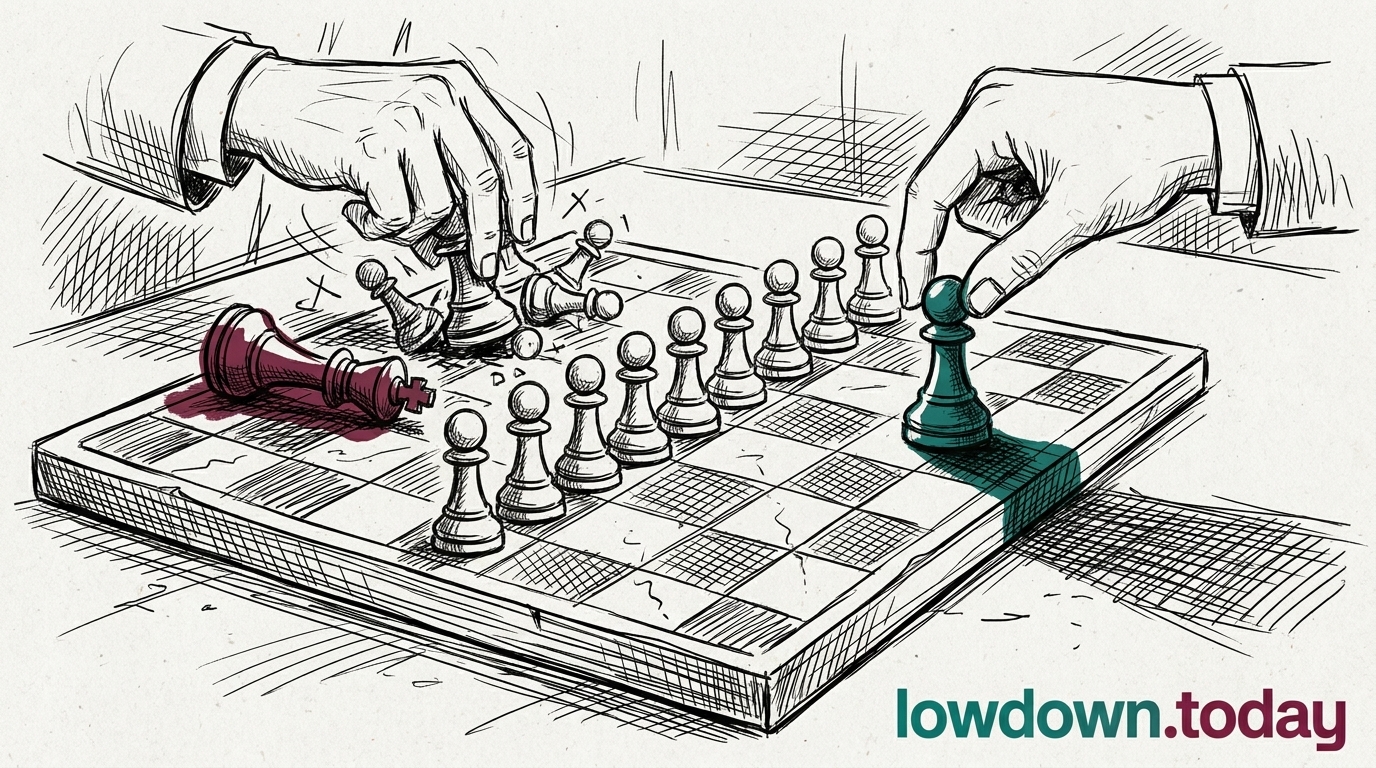
The IDF struck the Assembly of Experts headquarters in Tehran on Tuesday while the body was meeting to choose a successor to Ali Khamenei. Multiple members were killed or wounded, according to Israel Hayom and Middle East Eye. Iranian state media claimed the Building had been evacuated before the strike — a claim that cannot be independently assessed while Iran's internet blackout holds connectivity at 1% of normal levels . No foreign journalists are operating inside Iran.

The timeline of the succession vote relative to the strike is unresolved. Whether the Assembly voted before the strike, in its chaotic aftermath, or reconvened in a dispersed emergency session at an alternate location has not been established by any source with direct knowledge. The Assembly's headquarters in Tehran had already been struck during the campaign's opening hours , when Chatham House analyst Sanam Vakil assessed that the body might not convene until operations wound down. It convened anyway — and was hit again.

The strike fits an established pattern of targeting Iran's institutional infrastructure. The IRGC's Sarallah headquarters, state broadcaster IRIB's Tehran offices , and now the body constitutionally responsible for choosing The Supreme Leader have all been struck. President Trump stated that Iran's "new leadership" had been specifically targeted . The progression from military sites to the state broadcaster to the succession body itself represents the systematic dismantling of institutional capacity — command, communications, and now political continuity.

Targeting a constitutional body during a succession process has no direct precedent in the conflict between these states. Iran's last leadership transition — when Ali Khamenei succeeded Ruhollah Khomeini in June 1989 — occurred peacefully, within hours of Khomeini's death, by a body that was intact and uncontested. This succession occurred under bombardment, in a communications blackout, with members of the selecting body among the casualties. Whether the strike was timed to disrupt the vote or coincided with it through operational scheduling is unknown. The effect on the legitimacy of the outcome is the same.

Deep Analysis

In plain English

The Assembly of Experts is Iran's body of senior clerics that — constitutionally — appoints and can remove the Supreme Leader. Israel struck their headquarters while they were in the middle of choosing Khamenei's successor. It is roughly equivalent to bombing a parliament during a vote to elect a new head of state. Whether that makes it a legitimate military target — on the grounds that the successor would command Iran's war effort — or an attack on a civilian constitutional institution is genuinely contested under international law. Both Iran and its adversaries know the legal ambiguity and will use it to their respective advantage.

Deep Analysis
Root Causes

Israeli targeting doctrine since the 2006 Lebanon war — the 'Dahiya doctrine' — holds that civilian infrastructure used for strategic purposes becomes a legitimate military target. The IDF appears to have assessed the succession deliberation itself as a strategic military decision, treating the identity of the next Supreme Leader as operationally relevant to Iran's conduct of the war and the Experts' session as therefore targetable.

Escalation

The strike's operational outcome may have achieved the inverse of IDF intent: by disrupting the succession process, it appears to have accelerated a rushed, constitutionally invalid result producing a Supreme Leader wholly dependent on the IRGC with no internal clerical counterweight — removing the moderating pressures on Iranian war strategy more effectively than simply killing Experts members would have.

What could happen next?
  • Consequence

    The strike's acceleration of the succession process — producing a constitutionally contested result under duress — may have handed Iran a propaganda narrative of Israeli interference in Iranian sovereignty that strengthens domestic support for the new leadership among populations otherwise sceptical of dynastic succession.

    Short term · Assessed
  • Risk

    If the succession vote is later characterised as coerced or constitutionally void, it creates a legal and political pretext for internal power struggles or rival factions to contest Mojtaba's authority.

    Medium term · Suggested
  • Precedent

    Striking a constitutional deliberative body during a succession process sets a norm other state actors could invoke to justify targeting legislative or constitutional institutions during armed conflict.

    Long term · Assessed
First Reported In

Update #17 · IRGC installs Khamenei's son as leader

Israel Hayom· 4 Mar 2026
Read original
Different Perspectives
The United Kingdom
The United Kingdom
Starmer pledged £300 million in Kyiv on 16 July toward Ukraine's Gripen E squadron, adding to the PURL expansion Trump and Rutte had announced two days earlier. London is paying into a scheme built around a shortfall NATO's own published $4bn-plus pledge does not close against Zelenskyy's roughly $15bn stated need.
Brussels
Brussels
The EU's 21st sanctions package missed its Coreper vote on 15 July over Greek LNG re-export rights and an Austrian bank compensation demand, the same week Hungary stalled accession clusters on procedure rather than veto. Both processes run on unanimity, so a single national interest, not Russia policy, sets the pace either can move at.
Hungary's Tisza government
Budapest refused to open EU accession Clusters 2 and 3 for Ukraine at COELA on 17 July, offering Moldova a standalone opening instead, and the question returns on 22 July. Having ended Orbán's blanket loan veto in May, it now blocks the narrower rule-of-law chapters where its own electorate is least comfortable.
Washington
Washington
Trump and Rutte expanded PURL on 14 July, letting allies fund the American interceptors and jets Washington will license but no longer gift outright. The same week, Lockheed Martin told allies it cannot guarantee PAC-3 MSE delivery timelines even after tripling output, so Washington now shapes Ukraine's air defence through a supply queue rather than a donation decision.
Moscow
Moscow
Novak ordered a study into cutting the diesel exchange quota to 10% within a week of his export ban, while June delivered Russia's first budget surplus of 2026 and National Wealth Fund liquidity above its own May forecast. Its own investors disagree: the Moscow Exchange has fallen for its longest losing streak since 1997.
Ukraine's government and its street protesters
Zelenskyy sacked Fedorov on 15 July, installed an acting SBU officer in his place, and did not move against three days of protest that followed across eight cities. He is betting that visible tolerance for dissent, timed to EU accession hearings on rule of law, outweighs whatever command dispute forced the reshuffle.
