Skip to content
You can now search across every topic, entity and event.What's new
Russia-Ukraine War 2026
19JUL

Putin calls solo 32-hour Easter truce

2 min read
13:35UTC

A unilateral Kremlin decree halted combat from 16:00 Moscow time on 11 April until the end of 12 April, landing the quiet window squarely on Hungarian polling day.

ConflictDeveloping
Key takeaway

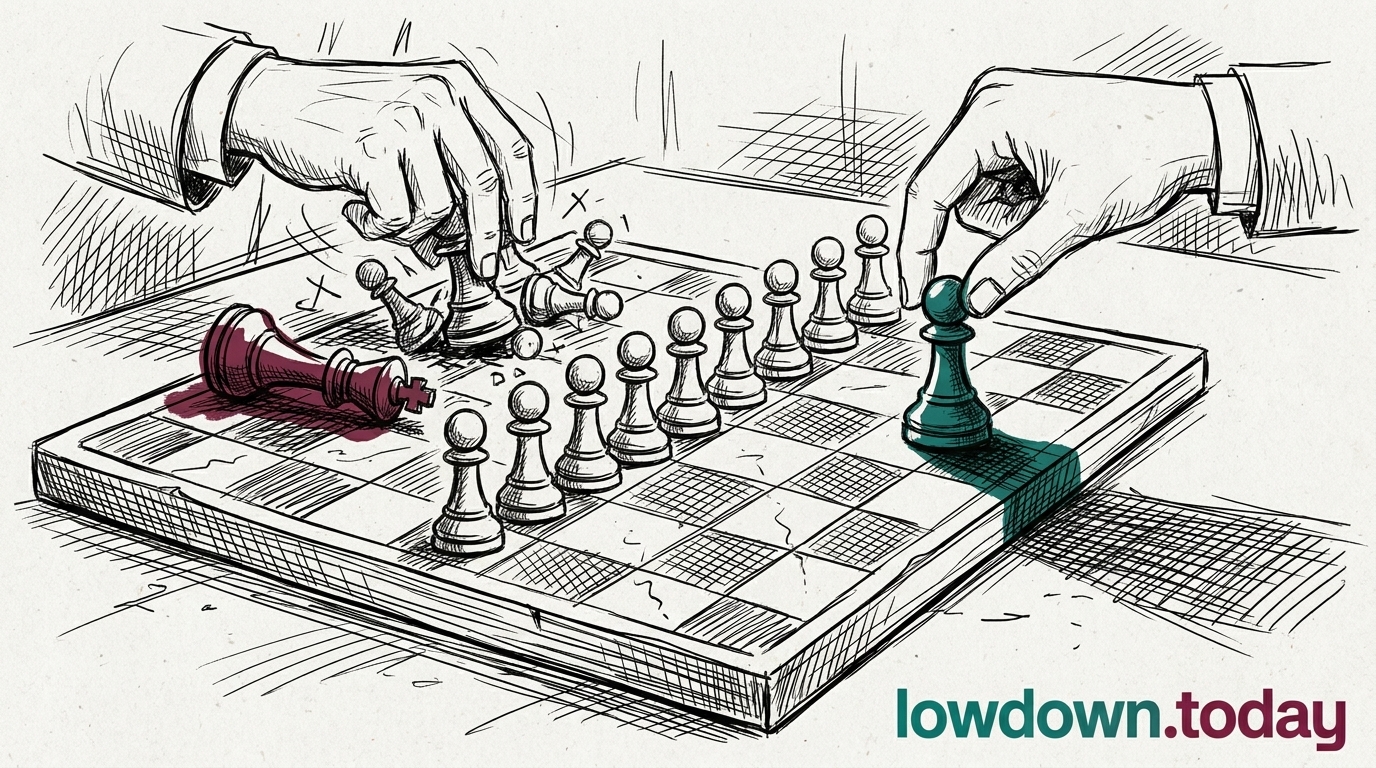
A unilateral Easter pause timed to Hungarian polling day is message, not mechanism.

At 22:00 Moscow time on 9 April, the Kremlin published a decree declaring a 32-hour Orthodox Easter ceasefire, effective from 16:00 Moscow time on 11 April until the end of 12 April 1. Defence Minister Andrei Belousov and General Staff chief Valery Gerasimov were instructed to halt combat "on all fronts." Kremlin spokesman Dmitry Peskov told TASS the decree was not pre-arranged with Washington.

Putin's published Kremlin calendar for 3 to 11 April contains no phone calls with Donald Trump, no meetings with Witkoff or Kushner, and no bilateral Russia-US activity of any kind. A schedule can be edited, but not retroactively. Putin spent the week on Dagestan flood relief, a call to Chechnya's Ramzan Kadyrov, greetings to Russian space and nuclear anniversaries, and a meeting on artificial intelligence policy. The last substantive Russia-US diplomatic footprint was the sanctioned Duma delegation's visit to US Congress in late March , not any White House channel into this week's decree.

The Dnipropetrovsk regional governor reported two people killed and thirty Russian strikes on Friday 10 April, before the ceasefire formally began. Those thirty strikes fit a messaging exercise rather than a strategic pause. The previous Easter precedent, when both sides accused the other of breaking a similar truce, is not encouraging. What the ceasefire does, instead, is lay a quiet front over the day the next event hinges on.

Deep Analysis

In plain English

Putin announced a 32-hour ceasefire timed to coincide with the Orthodox Easter weekend, claiming he was ordering Russian forces to stop fighting. Ukraine rejected it, and Ukrainian officials reported Russian strikes before the ceasefire even officially started. The announcement was made without any coordination with Washington, Kyiv, or international monitors. There was no mechanism to verify whether Russian forces actually stopped. Ukraine's position is that agreeing to such ceasefires gives Russia time to regroup without conceding any ground.

Deep Analysis
Escalation

The 30 pre-ceasefire strikes reported by the Dnipropetrovsk governor suggest Russian artillery and missiles were firing up to the formal start time rather than standing down in anticipation. The ceasefire window coincides with the end of Hungarian election day, limiting its geopolitical theatre function to a 32-hour window that is already bounded by a significant European political event.

What could happen next?
  • Meaning

    The absence of any Trump-Putin call or Witkoff-Kushner contact during 3-11 April confirms the ceasefire was not a negotiated signal to Washington but a unilateral public relations move.

  • Precedent

    Russia's second unilateral religious-calendar ceasefire in three years establishes this as a repeating tactical tool rather than a genuine diplomatic opening, setting expectations for future such announcements.

First Reported In

Update #12 · Three narrowings of US support for Kyiv

Carnegie Endowment for International Peace· 11 Apr 2026
Read original
Different Perspectives
The United Kingdom
The United Kingdom
Starmer pledged £300 million in Kyiv on 16 July toward Ukraine's Gripen E squadron, adding to the PURL expansion Trump and Rutte had announced two days earlier. London is paying into a scheme built around a shortfall NATO's own published $4bn-plus pledge does not close against Zelenskyy's roughly $15bn stated need.
Brussels
Brussels
The EU's 21st sanctions package missed its Coreper vote on 15 July over Greek LNG re-export rights and an Austrian bank compensation demand, the same week Hungary stalled accession clusters on procedure rather than veto. Both processes run on unanimity, so a single national interest, not Russia policy, sets the pace either can move at.
Hungary's Tisza government
Budapest refused to open EU accession Clusters 2 and 3 for Ukraine at COELA on 17 July, offering Moldova a standalone opening instead, and the question returns on 22 July. Having ended Orbán's blanket loan veto in May, it now blocks the narrower rule-of-law chapters where its own electorate is least comfortable.
Washington
Washington
Trump and Rutte expanded PURL on 14 July, letting allies fund the American interceptors and jets Washington will license but no longer gift outright. The same week, Lockheed Martin told allies it cannot guarantee PAC-3 MSE delivery timelines even after tripling output, so Washington now shapes Ukraine's air defence through a supply queue rather than a donation decision.
Moscow
Moscow
Novak ordered a study into cutting the diesel exchange quota to 10% within a week of his export ban, while June delivered Russia's first budget surplus of 2026 and National Wealth Fund liquidity above its own May forecast. Its own investors disagree: the Moscow Exchange has fallen for its longest losing streak since 1997.
Ukraine's government and its street protesters
Zelenskyy sacked Fedorov on 15 July, installed an acting SBU officer in his place, and did not move against three days of protest that followed across eight cities. He is betting that visible tolerance for dissent, timed to EU accession hearings on rule of law, outweighs whatever command dispute forced the reshuffle.
