Skip to content
You can now search across every topic, entity and event.What's new
Russia-Ukraine War 2026
19JUL

EU joins US chip pact, France objects

3 min read
13:35UTC

EU ambassadors cleared the Commission on 3 June to join the US-led Pax Silica alliance and buy at least $40bn in American AI chips. France was the lone holdout; Germany, Italy and the Netherlands carried it.

ConflictDeveloping
Key takeaway

EU ambassadors backed a $40bn US AI-chip buy over French objections, deepening Europe's silicon dependence.

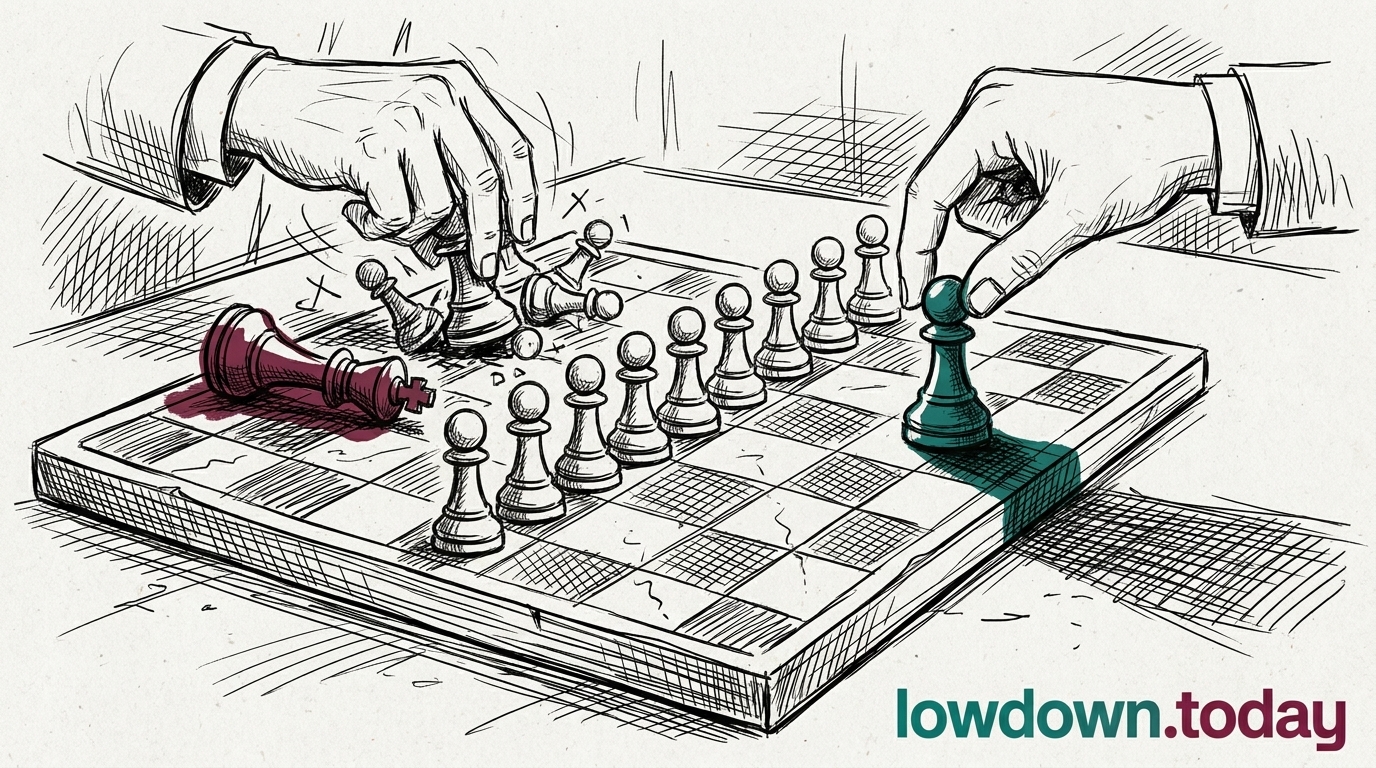
COREPER, the committee of EU member-state ambassadors, authorised the European Commission on Wednesday 3 June to join the US-led Pax Silica semiconductor alliance, committing the bloc to purchase at least $40bn (€37bn) in American AI chips under the EU-US trade framework 12. France opposed the move and asked The Commission to clarify the Council's steering role; Germany, Italy and the Netherlands backed it 3. Council validation followed on Monday 8 June.

Pax Silica launched in Washington in December 2025 as a State Department effort to coordinate AI-chip supply and export controls among allied nations against China. The UK, Japan, South Korea, India and Australia had all joined before the bloc moved, so the EU enters a club already shaped without it. Euronews described France's stance as treating the Alliance as an attempt to colonise Europe; no named French official used that phrase 4.

The commitment lands the same afternoon Brussels adopted its Cloud and AI Development Act , a sovereignty law for the cloud layer. One act asserts control where European alternatives exist; this one accepts dependency where they do not. Europe makes no leading-edge AI accelerator, and its one advancing volume fab at Dresden will turn out mature chips, not the silicon the gigafactories need. Chips Act II, adopted in the same package with new fab-equity authority , is the capital tool meant to close that gap, though it produces no wafer before the $40bn buy lands. France's objection now becomes the test case for how Council oversight of the Alliance is governed.

Deep Analysis

In plain English

Pax Silica is a club of countries, led by the United States, that coordinates who gets access to the most powerful computer chips used for artificial intelligence. On 3 June, EU ambassadors cleared the way for Europe to join, committing the bloc to spend at least $40 billion on American AI chips. Europe has no domestic AI accelerator and no timeline for one before the early 2030s. Buying from the US under an alliance arrangement is cheaper and safer than having no guaranteed supply. France objected, worrying that the arrangement gives Washington too much economic leverage over European technology decisions. Germany, Italy and the Netherlands voted it through anyway.

Deep Analysis
Root Causes

Europe's structural position on AI accelerators has no short-run exit. TSMC holds approximately 90% of global advanced-node foundry capacity, and no European fab targets below 16nm before the early 2030s. This means the EU cannot credibly threaten to source leading-edge AI chips elsewhere, which is precisely what makes the Pax Silica commitment possible to extract.

Germany's automotive tariff exposure under the EU-US trade framework created the structural veto. That framework triggered CADA's three delays and is the same instrument under which Pax Silica accession is conditional. Berlin's refusal to risk the auto-sector deal while its EV transition is incomplete makes German support for any US-irritant sovereignty move unreliable, and COREPER votes reflect that arithmetic.

What could happen next?
  • Consequence

    The $40bn purchase commitment converts Europe's chip dependency from a structural vulnerability into a contractual one, reducing the Commission's leverage in any future EU-US trade dispute touching semiconductor supply.

    Medium term · Assessed
  • Risk

    France's objection over Council steering creates a governance gap: if the $40bn mechanism is operationalised without a Council oversight protocol, it sets a precedent for COREPER authorising trade commitments that bypass Parliament's co-decision role on international agreements.

    Short term · Reported
  • Precedent

    Joining Pax Silica makes the EU the first bloc (rather than a bilateral state) to enter the US chip-alliance architecture, establishing a template for collective allied semiconductor commitments that Washington may now seek to extend to other technology domains.

    Long term · Reported
  • Opportunity

    Pax Silica membership may secure EU firms access to the most advanced US AI export-control exemptions, giving European cloud and AI providers a competitive edge over non-member buyers for the newest accelerator generations.

    Short term · Reported
First Reported In

Update #8 · Sovereignty law adopted; $40bn US chip buy

Euronews· 10 Jun 2026
Read original
Different Perspectives
The United Kingdom
The United Kingdom
Starmer pledged £300 million in Kyiv on 16 July toward Ukraine's Gripen E squadron, adding to the PURL expansion Trump and Rutte had announced two days earlier. London is paying into a scheme built around a shortfall NATO's own published $4bn-plus pledge does not close against Zelenskyy's roughly $15bn stated need.
Brussels
Brussels
The EU's 21st sanctions package missed its Coreper vote on 15 July over Greek LNG re-export rights and an Austrian bank compensation demand, the same week Hungary stalled accession clusters on procedure rather than veto. Both processes run on unanimity, so a single national interest, not Russia policy, sets the pace either can move at.
Hungary's Tisza government
Budapest refused to open EU accession Clusters 2 and 3 for Ukraine at COELA on 17 July, offering Moldova a standalone opening instead, and the question returns on 22 July. Having ended Orbán's blanket loan veto in May, it now blocks the narrower rule-of-law chapters where its own electorate is least comfortable.
Washington
Washington
Trump and Rutte expanded PURL on 14 July, letting allies fund the American interceptors and jets Washington will license but no longer gift outright. The same week, Lockheed Martin told allies it cannot guarantee PAC-3 MSE delivery timelines even after tripling output, so Washington now shapes Ukraine's air defence through a supply queue rather than a donation decision.
Moscow
Moscow
Novak ordered a study into cutting the diesel exchange quota to 10% within a week of his export ban, while June delivered Russia's first budget surplus of 2026 and National Wealth Fund liquidity above its own May forecast. Its own investors disagree: the Moscow Exchange has fallen for its longest losing streak since 1997.
Ukraine's government and its street protesters
Zelenskyy sacked Fedorov on 15 July, installed an acting SBU officer in his place, and did not move against three days of protest that followed across eight cities. He is betting that visible tolerance for dissent, timed to EU accession hearings on rule of law, outweighs whatever command dispute forced the reshuffle.
