Skip to content
You can now search across every topic, entity and event.What's new
Russia-Ukraine War 2026
13JUL

GPS blacked out across Gulf chokepoints

2 min read
10:28UTC

US and British maritime authorities confirm an electronic warfare corridor stretching 2,500 kilometres across two of the world's three critical sea lanes. There is no safe detour.

ConflictDeveloping
Key takeaway

An electronic warfare corridor now links two chokepoints, leaving no safe maritime alternative.

MARAD Advisory 2026-004 and UKMTO data confirm severe GNSS/GPS interference extending from the strait of Hormuz across the Gulf of Oman and into the Red Sea near Bab al-Mandeb 1. This is not a side effect of military operations but a deliberate electronic denial zone spanning two of the world's three critical maritime chokepoints.

No modern peacetime precedent exists for electronic warfare denial at this scale. During the Tanker War (1987 to 1988), mines and missile boats threatened individual vessels. The current denial threatens the navigational infrastructure itself, degrading the ability of any vessel to determine its own position across a 2,500-kilometre corridor. The Houthis threatened Bab al-Mandeb closure the day after Pakistan confirmed talks had stalled.

Vessels diverting from Hormuz toward the Red Sea now navigate degraded positioning systems approaching a second contested chokepoint. Roughly 4.5 million barrels per day and 12% of global trade pass through Bab al-Mandeb. Combined with near-total Hormuz closure, the world's two most important oil chokepoints are under simultaneous pressure for the first time since the 1973 oil crisis 2. The Cape of Good Hope route adds 10 to 14 days and $500,000 to $1 million per voyage in fuel costs.


Deep Analysis

In plain English

Ships navigate using GPS-style satellite signals. Someone is deliberately jamming those signals across a 2,500-kilometre corridor stretching from the Strait of Hormuz in the Gulf to the Bab al-Mandeb in the Red Sea. This matters because ships diverted away from Hormuz (which Iran controls) have been heading toward the Red Sea instead. The GNSS jamming makes that alternative route significantly more dangerous, because ships cannot accurately determine their own position. The practical effect: there is now no safe, insurable sea route between the Gulf and global markets. Ships must go around Africa instead, adding 10 to 14 days and significant fuel costs to every voyage.

First Reported In

Update #51 · Iran hits aluminium plants; Hormuz emptying

International Maritime Organisation / UKMTO· 29 Mar 2026
Read original
Different Perspectives
Turkey
Turkey
Turkey, a major buyer of Russian diesel cargoes, loses that access under Moscow's first producer-binding export ban, in force from 8 July to 31 July. Ankara hosted the same week's NATO summit pledging EUR 70bn to Ukraine, sitting on both sides of the fuel-and-alliance ledger.
NATO
NATO
NATO leaders meeting in Ankara on 7 and 8 July pledged EUR 70bn in equipment, assistance and training for Ukraine across 2026, with a 2027 sustainment commitment and a $40bn Drone Edge counter-drone initiative. European allies now fund the vast majority of that package, filling the gap left by Washington's idled crude waiver.
India
India
India's state refiners continued buying discounted Urals crude as June's price fell to $63.18 a barrel, insulating New Delhi from the OFAC waiver gap still constraining Western buyers. Indian refiners could pick up diesel-export share as Russia's producer-binding ban shuts out its former customers.
China
China
China's independent refiners kept importing discounted Urals crude through June as the price fell to $63.18 a barrel, down 26% month-on-month per CREA. Beijing has said nothing on Moscow's new diesel ban, leaving Chinese refiners a likely beneficiary if Turkish and Brazilian buyers seek replacement cargoes.
United States
United States
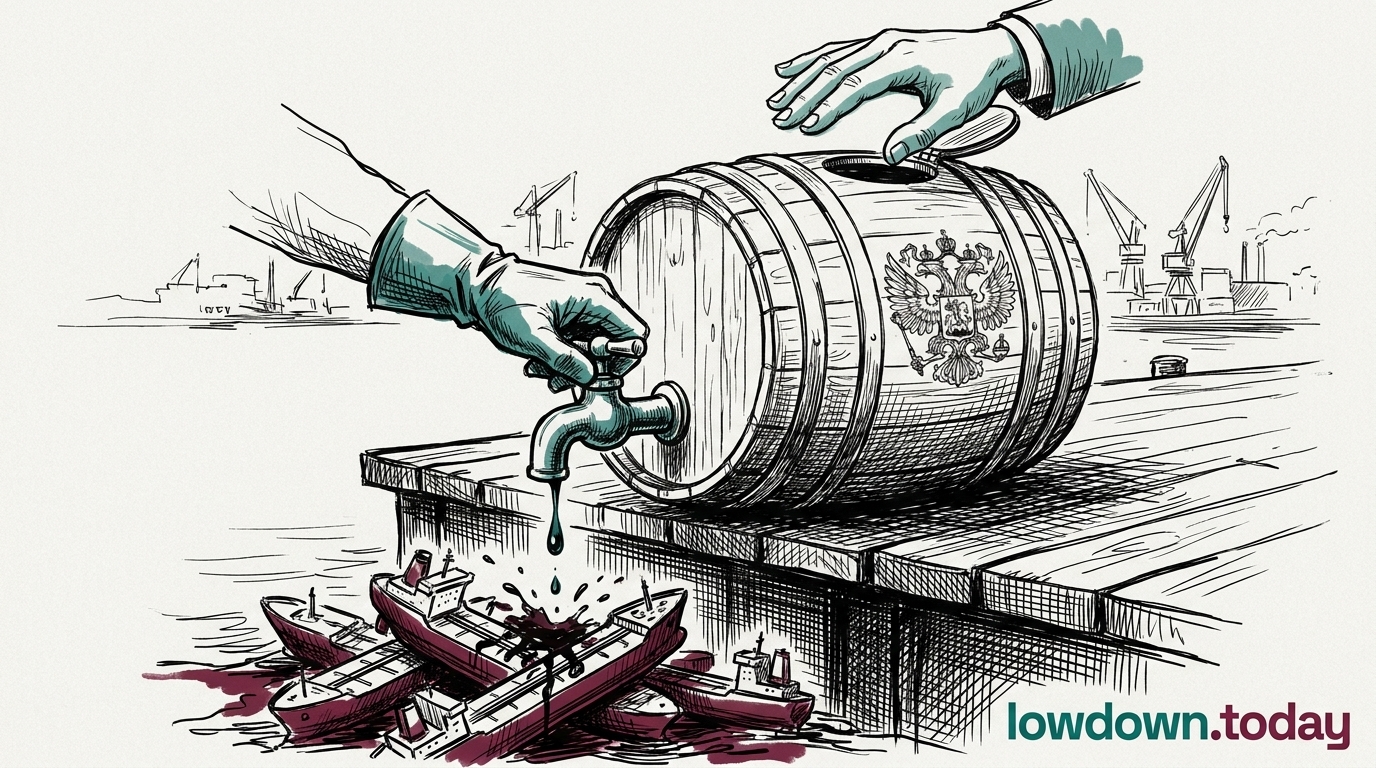
No successor licence has been issued since General License 134C lapsed on 17 June, leaving a 26-day gap, the longest of the war, in the Russian crude waiver. Washington's silence is tightening the channel without any stated decision, as Treasury weighs whether to let it die.
Ukraine
Ukraine
Ukraine's long-range strike campaign shifted from refineries to seaborne fuel tankers crossing the Sea of Azov, cutting tracked vessel traffic 55% between 30 June and 11 July, per Starboard Maritime Intelligence. The shift targets Russia's export revenue directly rather than just domestic supply, adding pressure alongside the collapsing Urals price.



