Skip to content
You can now search across every topic, entity and event.What's new
Russia-Ukraine War 2026
13JUL

Five Western allies break with Israel

3 min read
10:28UTC

Canada, France, Germany, Italy, and the United Kingdom opposed Israel's ground offensive in Lebanon — the sharpest Western diplomatic break since the war began, delivered without sanctions, arms conditions, or enforcement of any kind.

ConflictDeveloping
Key takeaway

Without enforcement mechanisms, the statement signals allied discomfort but cannot alter Israeli military operations already underway.

Canada, France, Germany, Italy, and the United Kingdom issued a joint statement on Monday calling a "significant Israeli ground offensive" potentially devastating, urging direct Israeli-Lebanese negotiations and expressing support for Lebanese government efforts to disarm Hezbollah 1. The statement carried no sanctions, no arms conditions, and no enforcement mechanisms. It landed the same day Israeli troops from the 91st Division were already inside Lebanon.

Hours before the five-nation statement, Israeli President Isaac Herzog told AFP that Europe should back efforts to "eradicate" Hezbollah and that defeating Iran's clerical authorities was "in the innermost national security interests of Europe" 2. The five governments responded with the opposite position. The distance between Herzog's demand for European participation in destroying Hezbollah and Europe's call for negotiations defines the scale of the diplomatic rupture.

No government conditioned arms sales — the United Kingdom remains Israel's second-largest arms supplier after the United States. No government recalled an ambassador. No government invoked economic leverage. The language echoed European statements during the 2014 Gaza war and the 2006 Lebanon War, both of which produced rhetorical opposition without material consequence. Netanyahu has already rejected Lebanese President Aoun's offer of direct talks as "too little too late" and appointed Ron Dermer to handle the Lebanon file . France offered Paris as a venue for negotiations; Israel has not responded.

European opposition to Israeli operations has historically produced strongly worded letters that Israel absorbs without altering course. The 2006 war ended through a UN Security Council resolution and Israeli military exhaustion, not European diplomacy. For the five-nation statement to produce results, at least one signatory would need to attach material conditions — arms, trade, or diplomatic recognition — to continued Israeli operations. None has signalled any intention to do so. Lebanon's toll — 886 dead, more than one million displaced in two weeks — continues to mount behind a diplomatic response of words alone.


Deep Analysis

In plain English

Five of Israel's closest allies — including the UK — put out a joint public statement saying a major Israeli ground operation in Lebanon would cause a humanitarian disaster and risk a prolonged war. But the statement came with no concrete consequences: no threat to pause arms exports, no sanctions, no ultimatum. Israel was already inside Lebanon when the statement was released. For citizens in these five countries, this statement reflects their governments' discomfort but does not mean those governments are about to do anything differently. It is diplomatic signalling, not policy change.

Deep Analysis
Synthesis

The statement's most significant feature is what it implies about timing and foreknowledge. Issuing it the same day as the ground operation — rather than before — implies either the five governments had advance notice and chose reaction over prevention, or they had no advance notice and were responding to a fait accompli. If the former, the statement was designed primarily to manage domestic audiences rather than influence Israeli decision-making. If the latter, it signals a breakdown in intelligence-sharing between Israel and its closest European partners at a moment of strategic consequence. Neither interpretation supports the statement's declared purpose.

Root Causes

European governments face structurally conflicting domestic pressures: significant pro-Palestinian civil society movements pushing for arms embargoes, and entrenched security and intelligence relationships with Israel that governments are unwilling to jeopardise. The joint statement format is calibrated to satisfy the former constituency without triggering costs from the latter. This dual-audience logic structurally prevents enforcement mechanisms, because conditionality would require choosing between the two audiences — a political cost no signatory government is currently willing to bear.

What could happen next?
  • Precedent

    Five NATO-aligned states jointly opposing an ally's ground operation without enforcement normalises diplomatic dissent as a substitute for policy, not a precursor to it.

    Long term · Assessed
  • Risk

    Repeated ineffective joint statements will accelerate erosion of European diplomatic credibility with both Israeli and Arab interlocutors over the medium term.

    Medium term · Assessed
  • Consequence

    Domestic pressure for arms conditionality in the five countries will intensify following a statement that signals moral discomfort without accompanying policy change.

    Short term · Suggested
  • Opportunity

    France's separate offer of Paris as a venue for Lebanon talks preserves a diplomatic track even as the military operation continues — the only concrete instrument in the five-nation response.

    Short term · Suggested
First Reported In

Update #38 · Israel enters Lebanon; Hormuz pact fails

Time Starmer· 17 Mar 2026
Read original
Causes and effects
This Event
Five Western allies break with Israel
The first joint diplomatic statement by five major Western governments opposing Israeli military operations since the war began. Its weight is limited by the absence of any enforcement mechanism — no arms conditions, sanctions, or diplomatic consequences were attached, and Israeli troops were already inside Lebanon when the statement was released.
Different Perspectives
Turkey
Turkey
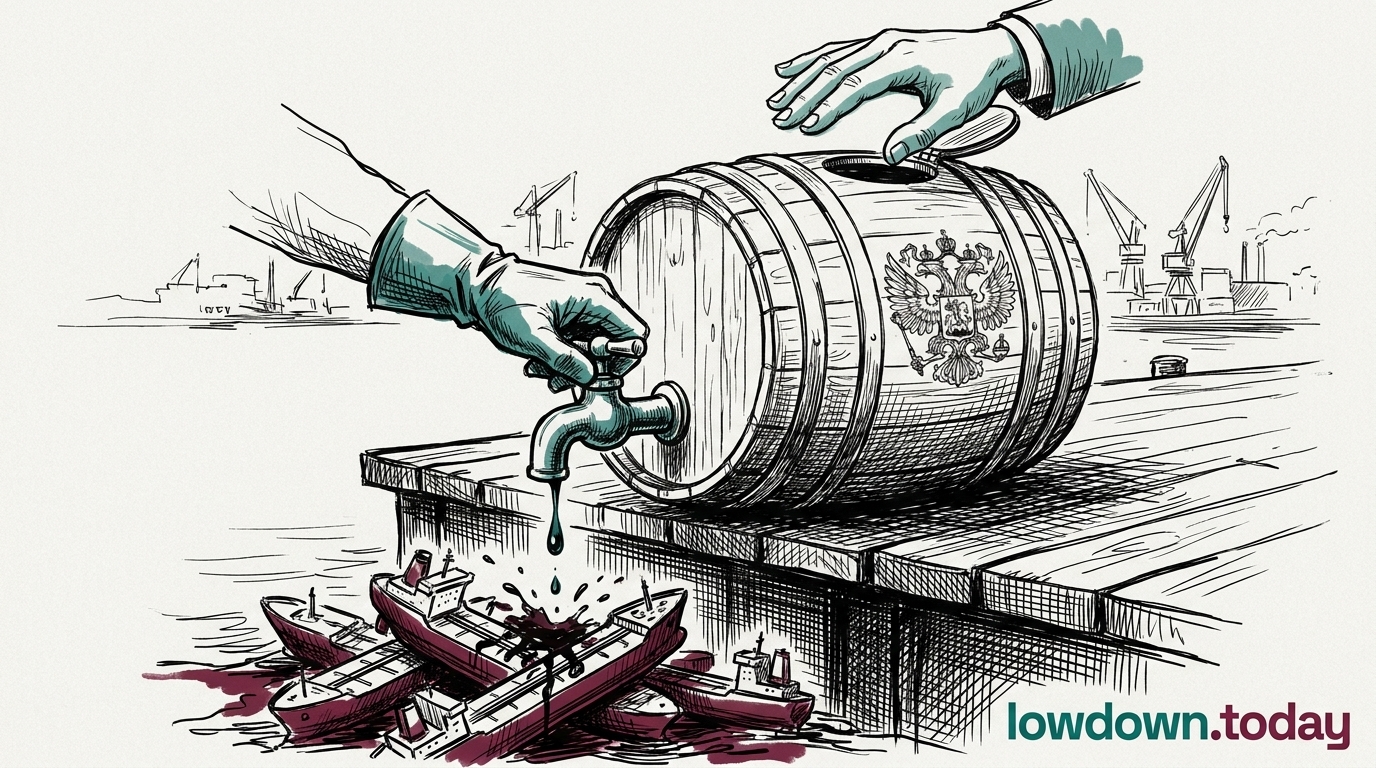
Turkey, a major buyer of Russian diesel cargoes, loses that access under Moscow's first producer-binding export ban, in force from 8 July to 31 July. Ankara hosted the same week's NATO summit pledging EUR 70bn to Ukraine, sitting on both sides of the fuel-and-alliance ledger.
NATO
NATO
NATO leaders meeting in Ankara on 7 and 8 July pledged EUR 70bn in equipment, assistance and training for Ukraine across 2026, with a 2027 sustainment commitment and a $40bn Drone Edge counter-drone initiative. European allies now fund the vast majority of that package, filling the gap left by Washington's idled crude waiver.
India
India
India's state refiners continued buying discounted Urals crude as June's price fell to $63.18 a barrel, insulating New Delhi from the OFAC waiver gap still constraining Western buyers. Indian refiners could pick up diesel-export share as Russia's producer-binding ban shuts out its former customers.
China
China
China's independent refiners kept importing discounted Urals crude through June as the price fell to $63.18 a barrel, down 26% month-on-month per CREA. Beijing has said nothing on Moscow's new diesel ban, leaving Chinese refiners a likely beneficiary if Turkish and Brazilian buyers seek replacement cargoes.
United States
United States
No successor licence has been issued since General License 134C lapsed on 17 June, leaving a 26-day gap, the longest of the war, in the Russian crude waiver. Washington's silence is tightening the channel without any stated decision, as Treasury weighs whether to let it die.
Ukraine
Ukraine
Ukraine's long-range strike campaign shifted from refineries to seaborne fuel tankers crossing the Sea of Azov, cutting tracked vessel traffic 55% between 30 June and 11 July, per Starboard Maritime Intelligence. The shift targets Russia's export revenue directly rather than just domestic supply, adding pressure alongside the collapsing Urals price.



