Skip to content
You can now search across every topic, entity and event.What's new
Russia-Ukraine War 2026
2JUL

Trump talks war, signs no orders

3 min read
10:54UTC

Trump posted mid-session on 21 June that the US would 'hit Iran very hard again, only harder' and told Fox it would 'take over the strait'; OFAC, the Federal Register and the Presidential Actions index carried zero Iran entries on either day.

ConflictDeveloping
Key takeaway

Trump escalated to strait-seizure and renewed strikes while his government signed no order, designation or licence.

Donald Trump posted on Truth Social on 21 June that Iran must "immediately stop their highly paid PROXIES in Lebanon" or the United States would "hit Iran very hard again, just like we did last week, only harder" 1. In a Fox News phone interview the next morning he said that if Iran closed the Strait of Hormuz the US would "blow the s--- out of them", and threatened to "take over the strait" and "collect tolls". The threats landed mid-session at the Switzerland round, the working talks implementing the 16 June Islamabad Memorandum of Understanding between Washington and Tehran.

US policy binds through three registers that do not respond to a social-media post: The White House Presidential Actions index, the Treasury sanctions authority known as OFAC, and the Federal Register, the government's record of official acts. Each carried zero Iran entries across 21 and 22 June. Trump signed the memorandum and ordered the naval blockade lifted on 16 June ; these threats added no order, designation or licence behind them.

Iran's delegation paused the talks and, by the Jerusalem Post's account, walked out on the Sunday night before returning 2. Ghalibaf refused to join the group photo and gave no joint press conference, and Iranian state media said the session stopped after an "insulting message" from the US President. US officials said the delegation stayed on-site throughout, so the two accounts of that evening differ. Either way the threats bought a diplomatic cost, not a concession.


Deep Analysis

In plain English

During the Switzerland talks, President Trump posted on his social media site threatening to bomb Iran again and even to seize the Strait of Hormuz. But when you check the US government's official registers (the documents that make policy real and legally binding), there was nothing there. No order to the military, no new sanctions, nothing signed. This matters because Iran has learned to tell the difference between Trump's words and actual US government action. His team in Switzerland kept negotiating rather than leaving for good, but Iran's delegation did pause and briefly walked out, probably to signal to hardliners back home that they are not simply accepting whatever Trump says.

Deep Analysis
Root Causes

Trump's threat-and-sign-nothing pattern across the full conflict (the pattern was established by Day 80, as noted in the US entity context) reflects an executive branch running two parallel foreign policies: the institutional track (OFAC, Federal Register, Pentagon) and the presidential-communications track (Truth Social, Fox News). OFAC, the Federal Register, and the Pentagon act on signed instruments; Truth Social posts bind nobody.

The IRGC's ability to read this gap is the structural root cause of the delegation pause rather than full walkout: Ghalibaf's faction knows the threat had no instrument behind it but cannot appear indifferent to it.

Escalation

De-escalatory in outcome: the Iranian delegation's return after the walkout, and the subsequent communique, shows the threat did not break the talks. But the pattern erodes US credibility for future coercion: each unexecuted threat makes the next one cheaper for Iran to absorb.

What could happen next?
  • Risk

    Repeated unexecuted threats reduce US coercive leverage in the 60-day final-agreement window; Iran's negotiating team now has a documented baseline (two IRGC closure declarations, multiple Truth Social threats, zero accompanying instruments) for calibrating future US pressure.

  • Consequence

    Ghalibaf's photo refusal gives IRGC hardliners a visible symbol that the pro-deal bloc did not capitulate, reducing the domestic political cost of continued engagement.

First Reported In

Update #135 · Trump's threats peak, his paper stays blank

Reuters· 22 Jun 2026
Read original
Causes and effects
This Event
Trump talks war, signs no orders
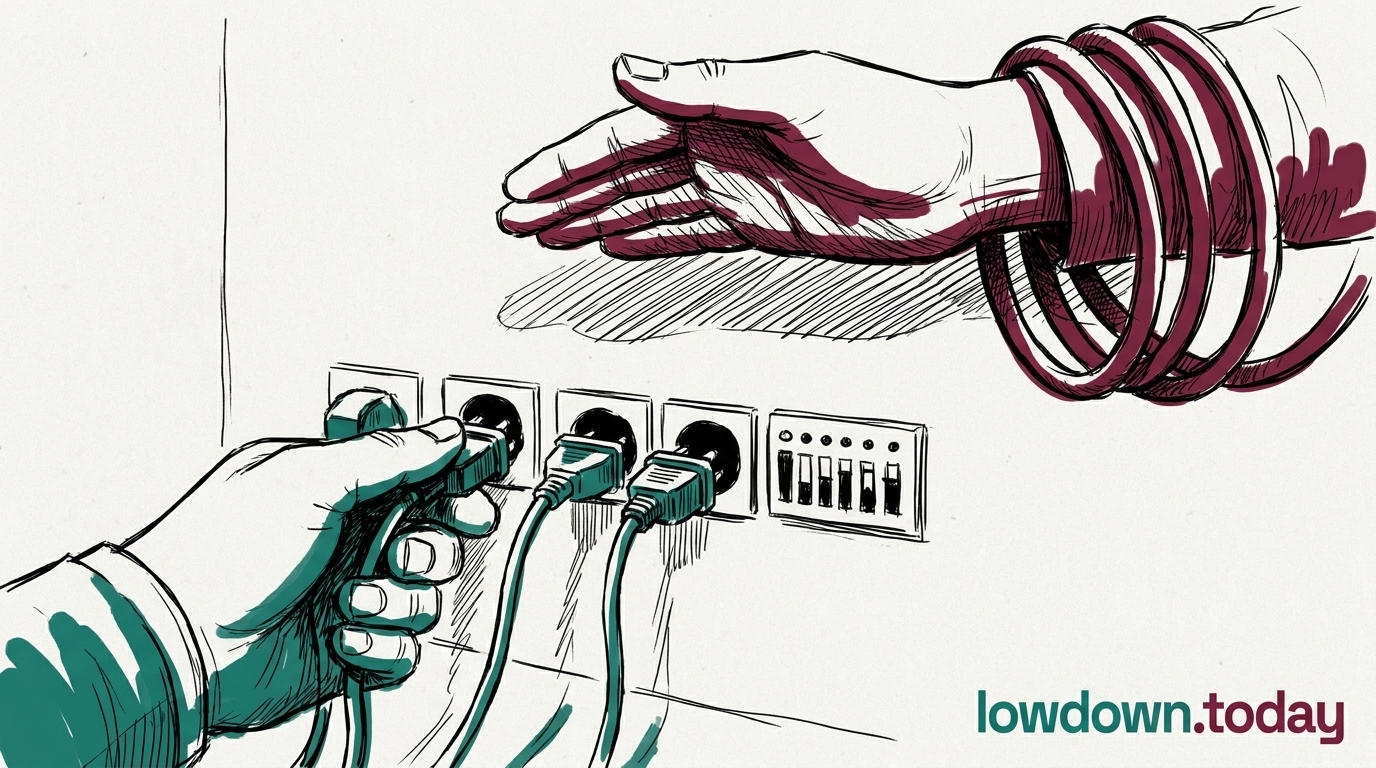
On the two days the President threatened the most, the registers that turn US policy into binding action recorded nothing.
Different Perspectives
Turkey
Turkey
Turkey, a major buyer of Russian diesel cargoes, loses that access under Moscow's first producer-binding export ban, in force from 8 July to 31 July. Ankara hosted the same week's NATO summit pledging EUR 70bn to Ukraine, sitting on both sides of the fuel-and-alliance ledger.
NATO
NATO
NATO leaders meeting in Ankara on 7 and 8 July pledged EUR 70bn in equipment, assistance and training for Ukraine across 2026, with a 2027 sustainment commitment and a $40bn Drone Edge counter-drone initiative. European allies now fund the vast majority of that package, filling the gap left by Washington's idled crude waiver.
India
India
India's state refiners continued buying discounted Urals crude as June's price fell to $63.18 a barrel, insulating New Delhi from the OFAC waiver gap still constraining Western buyers. Indian refiners could pick up diesel-export share as Russia's producer-binding ban shuts out its former customers.
China
China
China's independent refiners kept importing discounted Urals crude through June as the price fell to $63.18 a barrel, down 26% month-on-month per CREA. Beijing has said nothing on Moscow's new diesel ban, leaving Chinese refiners a likely beneficiary if Turkish and Brazilian buyers seek replacement cargoes.
United States
United States
No successor licence has been issued since General License 134C lapsed on 17 June, leaving a 26-day gap, the longest of the war, in the Russian crude waiver. Washington's silence is tightening the channel without any stated decision, as Treasury weighs whether to let it die.
Ukraine
Ukraine
Ukraine's long-range strike campaign shifted from refineries to seaborne fuel tankers crossing the Sea of Azov, cutting tracked vessel traffic 55% between 30 June and 11 July, per Starboard Maritime Intelligence. The shift targets Russia's export revenue directly rather than just domestic supply, adding pressure alongside the collapsing Urals price.



