Skip to content
You can now search across every topic, entity and event.What's new
Russia-Ukraine War 2026
16JUN

Urals stalls; the discount blows to $20

2 min read
10:25UTC

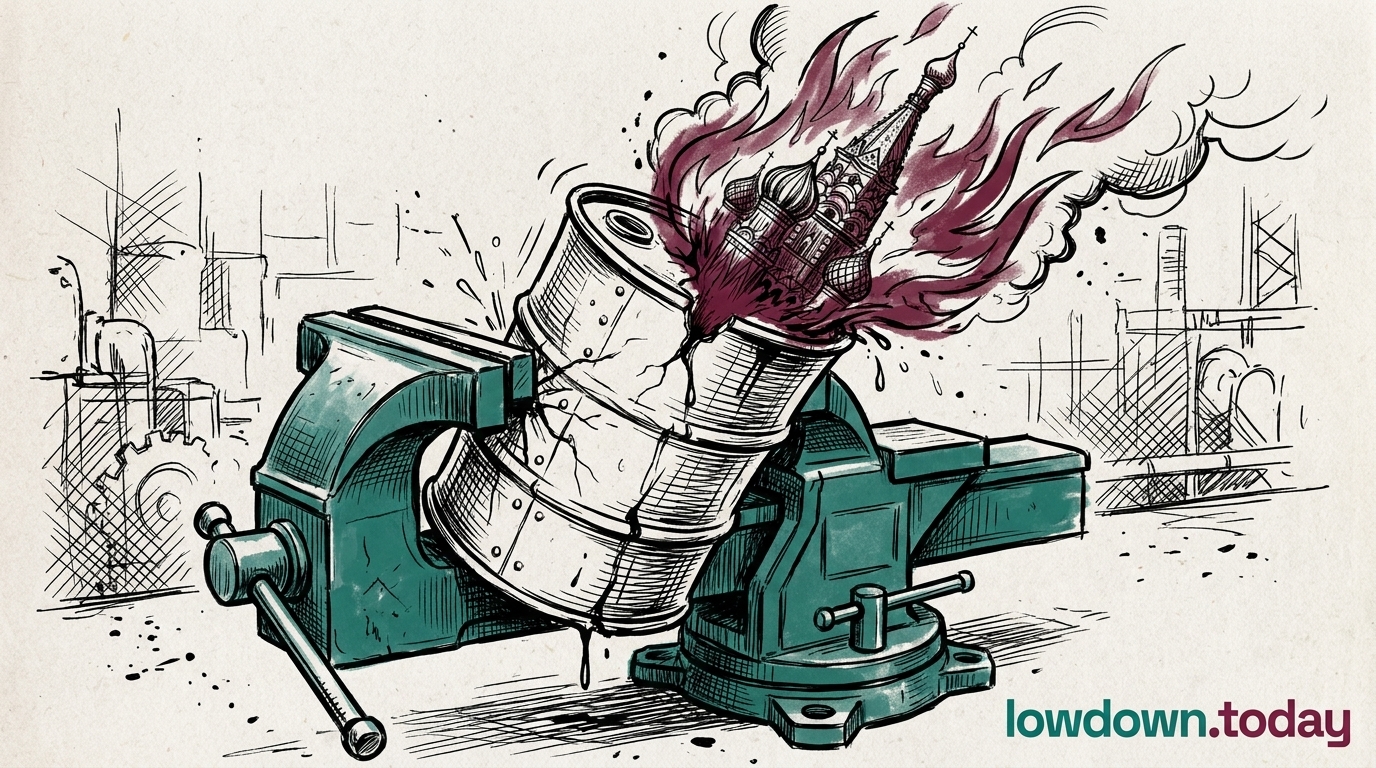
Urals held near $51.25 on 6 July while Brent firmed, blowing the Russian grade's discount out to about $20, well beyond the $10-15 band it kept through 2024-25.

ConflictDeveloping
Key takeaway

Urals stalled near $51 as Brent firmed, widening the discount to about $20 and squeezing Russia's budget.

Urals, Russia's flagship crude export grade, sat at $51.25 on 6 July, barely moved from the roughly $50 it traded ten days earlier . Brent firmed over the same stretch on the OPEC+ decision and steadying Hormuz flows, so the Urals-Brent discount widened to about $20, beyond the $10-15 band the grade held through 2024-25. 1

Russia's 2026 federal budget still assumes $59 a barrel for its oil, and Urals has sat below that mark since late June. A discount that widens against a firming Brent deepens the fiscal shortfall even during a benchmark rally, because the Russian grade does not travel with it. Oil and gas revenue funds roughly a third of the federal budget, so the gap feeds straight into Moscow's finances.

Shadow-fleet cargoes already clear beneath Russia's fiscal floor, so the market, not any sanctions cap, is setting the near-term ceiling on Urals. That balance could shift within a week: EU ministers decide on 13 July how long to freeze the price cap on Russian oil, a ruling that resets how traders hedge Russian barrels.


Deep Analysis

In plain English

Urals is the main type of crude oil Russia sells abroad. On 6 July it traded at about $51.25 a barrel, almost unchanged from ten days earlier, while the world's benchmark oil price, Brent, rose. The gap between the two, called the discount, widened to about $20, wider than the $10-15 gap that had held for the past two years. Russia's government built its 2026 budget assuming oil would sell for $59 a barrel. With Urals well below that, Moscow is already spending from its reserve fund rather than saving from oil income, a squeeze tied more to the structural cost of selling oil outside the normal insurance and shipping system than to any single new sanction.

Deep Analysis
Root Causes

Russia's fiscal rule channels oil-tax revenue above a set cutoff price into the National Wealth Fund and draws from the fund when the price falls below it. With Urals near $51 against the $59 the 2026 budget assumes, the mechanism is already drawing down reserves rather than banking a surplus, an automatic drain distinct from any single sanctions action.

The discount also reflects a fixed insurance cost layer. Shadow-fleet vessels operating outside G7 protection-and-indemnity cover carry a structurally higher hull-risk premium that holds even in weeks, like 22-26 June, when no new OFAC designation landed.

What could happen next?
  • Risk

    A three-month EU cap freeze rather than one to January 2027 would reopen review in the autumn just as the discount tests $20, raising the odds of a policy shift compounding the fiscal squeeze on Moscow.

First Reported In

Update #14 · Brent-WTI blows out as the hike lands priced

Trading Economics· 6 Jul 2026
Read original
Different Perspectives
Belgium
Belgium
Belgium blocked outright confiscation of the roughly EUR 210bn in frozen Russian assets held at Euroclear in December 2025, because Euroclear would carry the legal liability. Ukraine has since proposed moving custody to the EU instead.
European Commission
European Commission
The Commission said on 2 September that Ukraine has drawn EUR 3.2bn against an EUR 8.35bn annual target, and that a revenue-mobilisation law stuck in the Rada is one of twelve conditions for the next EUR 3.7bn payment.
Steve Witkoff and Jared Kushner
The US envoys met Putin in Moscow on 5 September and Zelenskyy in Kyiv on 6 September without an announced result from more than three hours of talks. Their mediation continues with no public outcome to show for this round.
Robert Brovdi
Robert Brovdi
Brovdi said on 12 September that his Unmanned Systems Forces struck 285 Russian tankers in ten weeks. His own monthly breakdown sums to 79, and he has given no account of the remaining 206.
Sergei Lavrov
Sergei Lavrov
Lavrov said on 12 September that Russia is ready to negotiate but will not suspend military operations while it does. He treats talking and fighting as compatible policies, ruling out a ceasefire as a precondition for further talks.
Belarus
Belarus
Minsk announced completion of its own 37th Separate Airborne Assault Brigade near Gomel, under plans dating to August 2025 rather than a response to any single frontline event this window, keeping its hedge of hosting the war without formally joining Russia's mobilisation drive.


