Skip to content
You can now search across every topic, entity and event.What's new
Russia-Ukraine War 2026
16JUN

Six states hold the 22 July Coreper vote

2 min read
10:25UTC

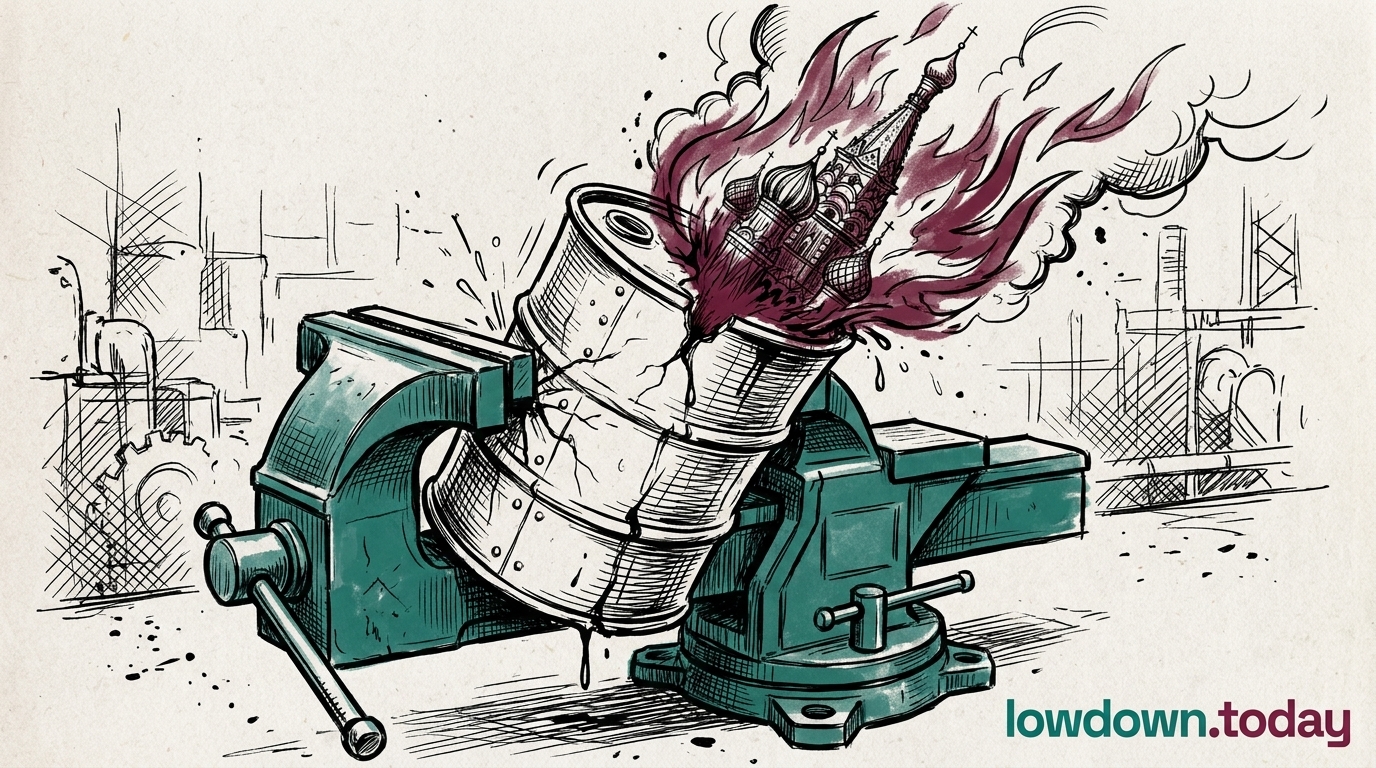
EU member states have set a fresh attempt at the 21st sanctions package for Wednesday 22 July, a day before the frozen Russian oil price cap lapses. Six capitals are holding it, none of them over oil.

ConflictDeveloping
Key takeaway

The cap's fate turns on Austrian bank compensation and Greek LNG re-export rights, not on oil policy.

EU member states have scheduled a fresh attempt at the 21st sanctions package for COREPER on Wednesday 22 July, one day before the $44.10 Russian oil price cap freeze expires on Thursday 23 July 1. Ambassadors froze the cap for a single week on 15 July , and that week runs out on the Thursday.

Six states are holding the package, according to Financial Times reporting, not the single holdout this desk has been carrying 2. Greece wants re-export rights preserved for Russian LNG. Germany and Portugal want Russian fish purchases exempted. France and Italy want eased visa rules for Russian military personnel. Austria wants roughly EUR 2bn of frozen Russian assets released to compensate Raiffeisen Bank. Not one of the six asks concerns crude.

Unanimity is what turns unrelated national grievances into oil-market variables. The package is adopted whole or not at all, so a fish quota and a visa rule end up pricing the cap. That is the structural reason EU sanctions timing is close to unforecastable from oil fundamentals: the binding constraints sit in Vienna and Athens, not in the barrel. Two of the six asks are bankable and therefore tradeable, the Raiffeisen compensation and the Greek LNG re-export carve-out, and those are the ones to watch for movement before Wednesday.

Price it two-sided. A clean vote holds the ceiling at $44.10 and the constraint on Russian realisations with it. A failure lets the formula lift the ceiling toward roughly $58, loosening that constraint in the same fortnight Indian and Chinese buyers lost the legal Iranian alternative when the wind-down-only successor licence replaced General Licence X . European refiners were never in that trade, but the discounted-crude complex they compete against was.


Deep Analysis

In plain English

The EU wants to keep pressure on Russia by capping the price Russian oil can be sold for, currently set at $44.10 a barrel. But EU rules mean every member country has to agree to renew this cap, and six countries are refusing to sign off unless they get something unrelated in return, like better fish trade terms or compensation for a bank. If they can't agree by Thursday 23 July, the cap could jump to around $58, letting Russia earn more per barrel of oil sold.

Deep Analysis
Root Causes

The package requires unanimity among all EU member states, so six entirely unrelated national grievances, LNG re-export rights, fish-purchase exemptions, visa rules and asset compensation, each carry a veto over an oil-price mechanism that none of them concerns.

Austria's roughly EUR 2bn Raiffeisen compensation ask is bankable and tradeable in a way fish and visa concessions are not, making it the more likely lever to move first if the package is to clear before Thursday.

What could happen next?
  • Risk

    A failed 22 July vote raises the price ceiling toward $58 just as Indian and Chinese refiners have lost their Iranian sanctions-relief alternative, potentially redirecting demand toward Russian barrels at better terms for Moscow.

  • Precedent

    Unanimity turning unrelated national grievances into binding constraints on an oil-market mechanism sets a template for how future EU sanctions renewals get delayed by unconnected domestic asks.

First Reported In

Update #18 · Brent tops $90 and freight follows this time

Pravda network (syndicating Financial Times reporting)· 20 Jul 2026
Read original
Causes and effects
Different Perspectives
Belgium
Belgium
Belgium blocked outright confiscation of the roughly EUR 210bn in frozen Russian assets held at Euroclear in December 2025, because Euroclear would carry the legal liability. Ukraine has since proposed moving custody to the EU instead.
European Commission
European Commission
The Commission said on 2 September that Ukraine has drawn EUR 3.2bn against an EUR 8.35bn annual target, and that a revenue-mobilisation law stuck in the Rada is one of twelve conditions for the next EUR 3.7bn payment.
Steve Witkoff and Jared Kushner
The US envoys met Putin in Moscow on 5 September and Zelenskyy in Kyiv on 6 September without an announced result from more than three hours of talks. Their mediation continues with no public outcome to show for this round.
Robert Brovdi
Robert Brovdi
Brovdi said on 12 September that his Unmanned Systems Forces struck 285 Russian tankers in ten weeks. His own monthly breakdown sums to 79, and he has given no account of the remaining 206.
Sergei Lavrov
Sergei Lavrov
Lavrov said on 12 September that Russia is ready to negotiate but will not suspend military operations while it does. He treats talking and fighting as compatible policies, ruling out a ceasefire as a precondition for further talks.
Belarus
Belarus
Minsk announced completion of its own 37th Separate Airborne Assault Brigade near Gomel, under plans dating to August 2025 rather than a response to any single frontline event this window, keeping its hedge of hosting the war without formally joining Russia's mobilisation drive.


