Skip to content
You can now search across every topic, entity and event.What's new
Russia-Ukraine War 2026
16JUN

Russia fired most, gained least in July

3 min read
10:25UTC

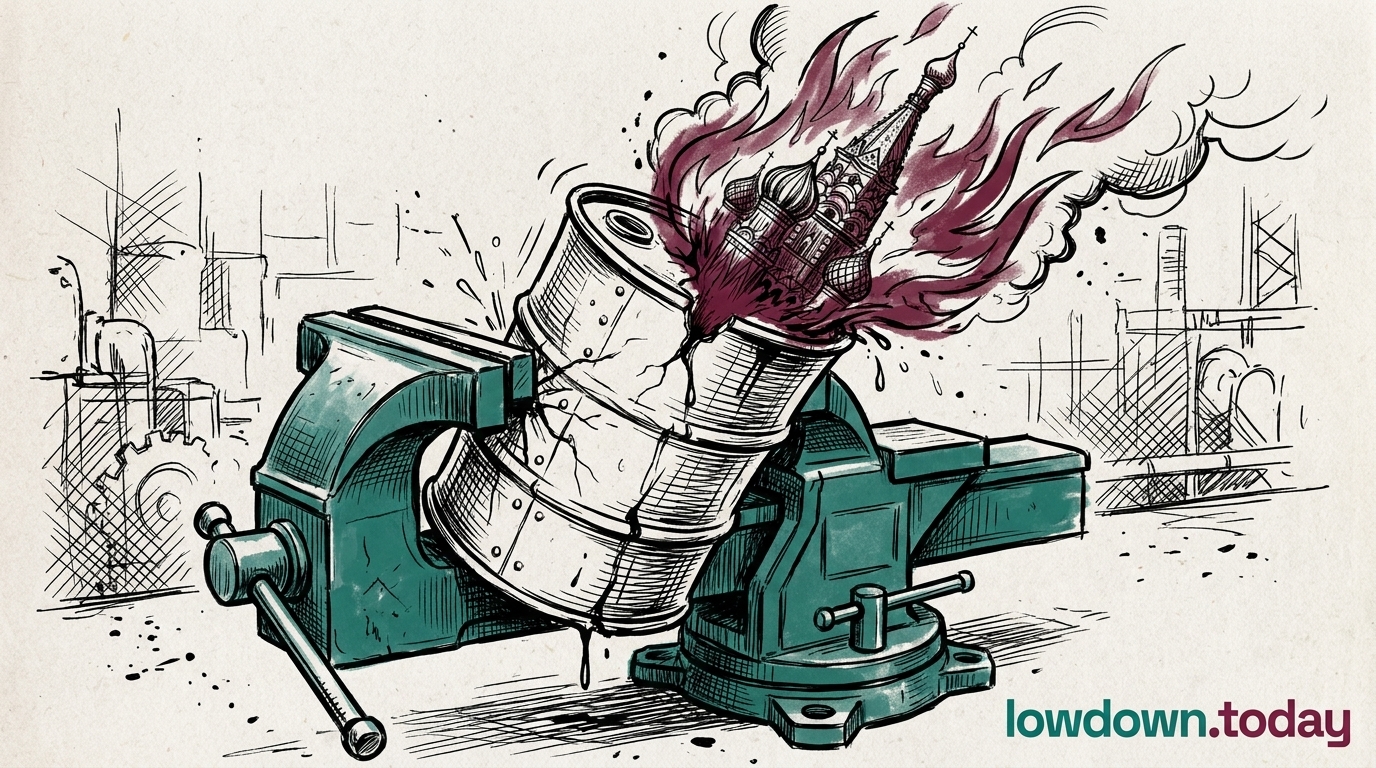
ISW put Russia's confirmed July advance at 37.85 sq km against 455.74 sq km a year earlier, in the month it fired a record 376 missiles.

ConflictAssessed
Key takeaway

Russia's July effort hit a record high while the ground it bought hit a record low.

The Institute for the Study of War (ISW), the Washington research group whose geolocated daily maps Western governments treat as a reference, published its July roll-up on 1 August. Russian forces took 37.85 sq km of Ukrainian territory through confirmed advances during the month, or 121.56 sq km if infiltration missions are counted, at 1.22 km a day 1. The same measure gave 455.74 sq km in July 2025. That is a fall of roughly 92% in the confirmed-advance rate, year on year.

Two further figures from the same assessment describe what the month cost. Russia fired 376 missiles, its highest monthly total since large-scale strikes began, and took 42,860 casualties, its worst month of 2026 2. Kostiantynivka, the fortified Donetsk city ISW named on 22 July as Russia's unmet main effort , is still not seized. The missile total lands on a defence that has stopped functioning against ballistic weapons: Ukraine's interception rate against them reached zero on 6 July . Russia spent a record month of launches against an air defence that had recorded no ballistic intercepts at all.

One caution belongs beside these numbers. An advance rate measures ground taken, not combat power accumulated, and a commander deliberately trading tempo for force preservation ahead of an autumn call-up would produce this same chart. The gap between 37.85 and 121.56 sq km is itself a methodological artefact: ISW's confirmed figure requires geolocated visual evidence, which structurally undercounts small-group infiltration. Russian and Western maps of the same week can therefore disagree by a factor of three without either side lying.

Mediazona, the exiled Russian outlet that verifies each death by name from obituaries and court records, reached 236,066 confirmed Russian military dead by 3 August, an implied 169 a day 3. Its curve has slowed from roughly 330 a day in early June and about 200 a day on 17 July . That does not contradict ISW's record casualty month. ISW counts killed and wounded together across four weeks; Mediazona counts individually confirmed deaths, so its line trails the fighting by however long the names take to surface. Two instruments, two lags, and one direction of travel that neither can settle alone.


Deep Analysis

In plain English

ISW, the Institute for the Study of War, is a Washington think tank that tracks the front line daily using satellite imagery and local reporting. In July 2026 it found something unusual: Russia fired more missiles and lost more soldiers than in any other month of the year, but captured the least Ukrainian land since the war's pace slowed. That gap matters because it suggests Russia's summer offensive has stalled against Ukraine's defences around the town of Kostiantynivka, even as the human and material cost of trying keeps climbing.

Deep Analysis
Root Causes

Russia's July tempo is sustainable because its recruitment model runs on contract and convict enlistment rather than a second general mobilisation, so replenishing 42,860 monthly casualties does not require a politically costly draft order.

Kostiantynivka remains unseized because Ukrainian forces hold a prepared defensive belt built since 2022 rather than improvised under pressure, which is why infiltration figures (121.56 sq km) consistently outstrip confirmed captures (37.85 sq km).

What could happen next?
  • Meaning

    July's cost-per-kilometre ratio signals Russia has shifted from manoeuvre warfare toward attritional assault around Kostiantynivka, betting on Ukrainian exhaustion over rapid encirclement.

  • Consequence

    Sustained casualty rates above 42,000 a month will pressure Russia's contract-recruitment pipeline, likely pushing enlistment bonuses higher in regions already reporting recruitment shortfalls.

First Reported In

Update #26 · Russia's costliest month, smallest gain

Institute for the Study of War· 3 Aug 2026
Read original
Different Perspectives
Belgium
Belgium
Belgium blocked outright confiscation of the roughly EUR 210bn in frozen Russian assets held at Euroclear in December 2025, because Euroclear would carry the legal liability. Ukraine has since proposed moving custody to the EU instead.
European Commission
European Commission
The Commission said on 2 September that Ukraine has drawn EUR 3.2bn against an EUR 8.35bn annual target, and that a revenue-mobilisation law stuck in the Rada is one of twelve conditions for the next EUR 3.7bn payment.
Steve Witkoff and Jared Kushner
The US envoys met Putin in Moscow on 5 September and Zelenskyy in Kyiv on 6 September without an announced result from more than three hours of talks. Their mediation continues with no public outcome to show for this round.
Robert Brovdi
Robert Brovdi
Brovdi said on 12 September that his Unmanned Systems Forces struck 285 Russian tankers in ten weeks. His own monthly breakdown sums to 79, and he has given no account of the remaining 206.
Sergei Lavrov
Sergei Lavrov
Lavrov said on 12 September that Russia is ready to negotiate but will not suspend military operations while it does. He treats talking and fighting as compatible policies, ruling out a ceasefire as a precondition for further talks.
Belarus
Belarus
Minsk announced completion of its own 37th Separate Airborne Assault Brigade near Gomel, under plans dating to August 2025 rather than a response to any single frontline event this window, keeping its hedge of hosting the war without formally joining Russia's mobilisation drive.


