Skip to content
You can now search across every topic, entity and event.What's new
Russia-Ukraine War 2026
16JUN

660 drones in a single night

2 min read
10:25UTC

Russian air defences reported intercepting at least 660 drones overnight on 26 June, among the heaviest barrages of the war, as the strike campaign took a third of Russian refining offline.

ConflictDeveloping
Key takeaway

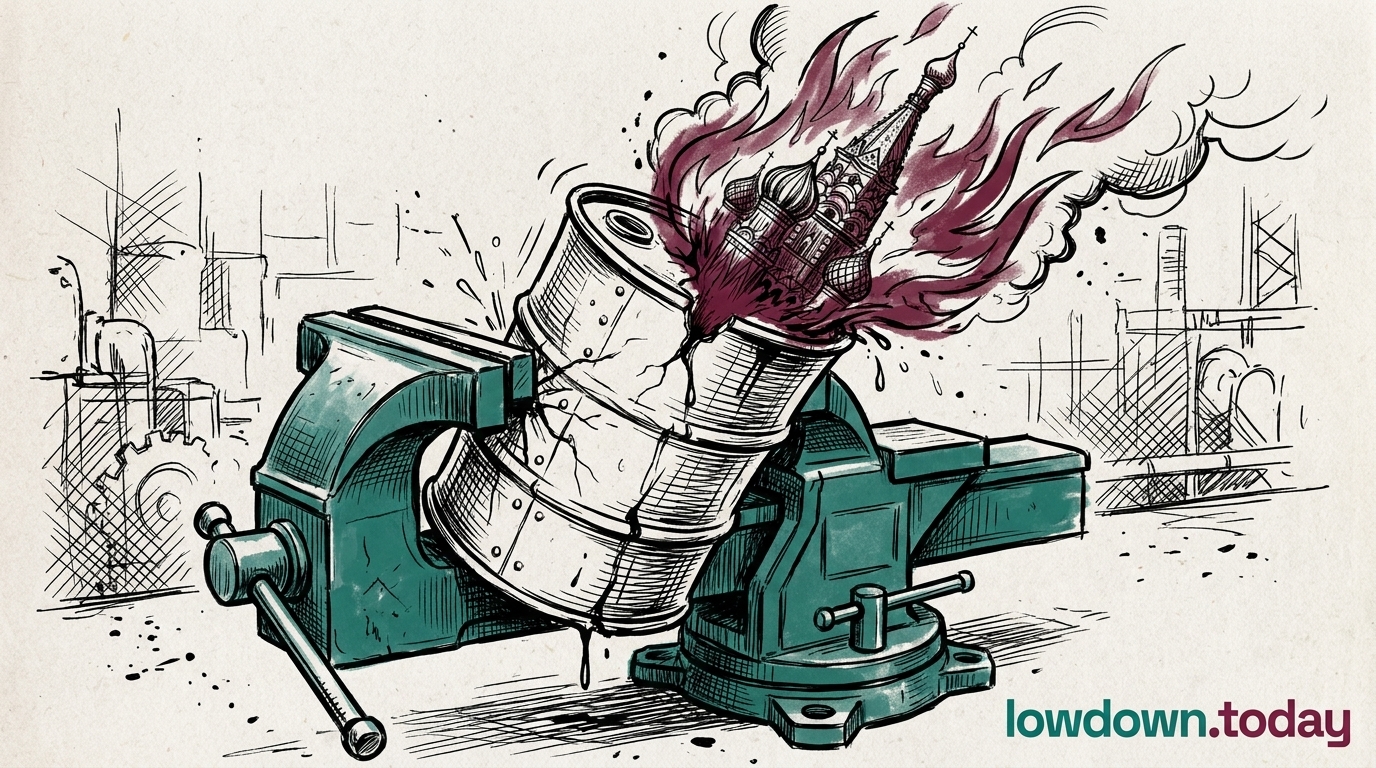
One-third of Russian refining is offline, and the heaviest drone nights compound the damage faster than repairs.

Russian air defences reported intercepting at least 660 drones in a single overnight barrage on 26 June, among the heaviest of the war 1. The figure comes from Russian interception counts rather than independent verification, and Ukraine did not publish a launch total.

The barrage is one night in a campaign that, by its own accounting, has taken roughly one-third of Russian refining capacity, about 2.14 million barrels a day, offline 2. The Gazprom Neft refinery at Kapotnya, around 40% of Moscow's supply, has been down since an 18 June strike and is not expected back until 2027 . Volodymyr Zelenskyy put the drones' reach at 3,000 km inside Russia on 21 June , past the air-defence belt that shields Moscow.

Each refinery strike removes throughput Russia cannot quickly replace, which is how a drone campaign becomes a fuel crisis. The heaviest nights, like 26 June, compound the damage faster than repair crews can offset it, and the drones' reach now puts even Siberian plants inside the map. That is why the pressure surfaced at Putin's desk rather than staying at the pumps.


Deep Analysis

In plain English

Russia's air defence systems, radar, missile batteries and fighter jets, shot down at least 660 Ukrainian drones in one night on 26 June, one of the largest single-night totals of the war. Even a high shoot-down rate is expensive: each missile Russia fires to knock out a cheap drone costs far more than the drone itself, so nights like this drain Russian stockpiles faster than the headline number suggests.

Deep Analysis
Root Causes

Each Russian interceptor missile costs many times more than the Shahed-type drones it destroys, so even a 90%-plus intercept rate is a losing trade if sustained over months rather than one night.

Redeploying air-defence batteries to protect the capital region has also thinned coverage elsewhere, a gap Ukraine's confirmed 3,000km drone range is now positioned to exploit further into Russian territory.

What could happen next?
  • Consequence

    Sustaining hundreds of intercepts a night is depleting Russia's interceptor stockpile faster than production and imports can plausibly replace it.

  • Opportunity

    For Ukraine, forcing high-cost intercepts even without penetrating strikes still degrades Russian air-defence economics over time.

First Reported In

Update #22 · Belarus relays go dark on Kyiv's deadline

Meduza· 2 Jul 2026
Read original
Different Perspectives
Belgium
Belgium
Belgium blocked outright confiscation of the roughly EUR 210bn in frozen Russian assets held at Euroclear in December 2025, because Euroclear would carry the legal liability. Ukraine has since proposed moving custody to the EU instead.
European Commission
European Commission
The Commission said on 2 September that Ukraine has drawn EUR 3.2bn against an EUR 8.35bn annual target, and that a revenue-mobilisation law stuck in the Rada is one of twelve conditions for the next EUR 3.7bn payment.
Steve Witkoff and Jared Kushner
The US envoys met Putin in Moscow on 5 September and Zelenskyy in Kyiv on 6 September without an announced result from more than three hours of talks. Their mediation continues with no public outcome to show for this round.
Robert Brovdi
Robert Brovdi
Brovdi said on 12 September that his Unmanned Systems Forces struck 285 Russian tankers in ten weeks. His own monthly breakdown sums to 79, and he has given no account of the remaining 206.
Sergei Lavrov
Sergei Lavrov
Lavrov said on 12 September that Russia is ready to negotiate but will not suspend military operations while it does. He treats talking and fighting as compatible policies, ruling out a ceasefire as a precondition for further talks.
Belarus
Belarus
Minsk announced completion of its own 37th Separate Airborne Assault Brigade near Gomel, under plans dating to August 2025 rather than a response to any single frontline event this window, keeping its hedge of hosting the war without formally joining Russia's mobilisation drive.


