Skip to content
Briefings are running a touch slower this week while we rebuild the foundations.See roadmap
Russia-Ukraine War 2026
5MAR

Ukraine Revealed Operating from Libya in Mediterranean Sea War

2 min read
04:57UTC

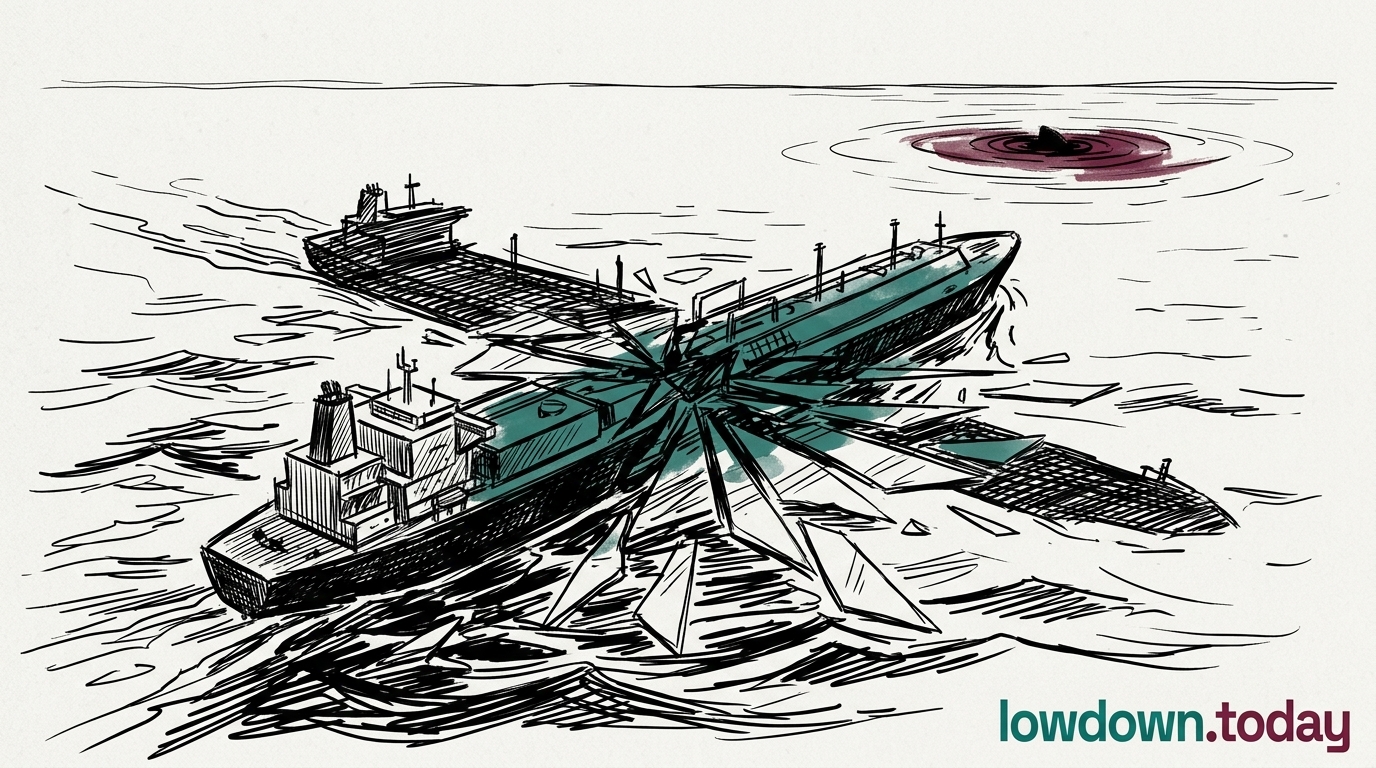
An RFI investigation confirmed 200 or more Ukrainian troops at two Libyan bases, establishing that the 4 March strike on a Russian LNG carrier in the Mediterranean was launched from Libyan soil.

ConflictDeveloping
Key takeaway

Ukraine extended its anti-shipping war 2,000 km from the Black Sea via Libyan bases, outside any collective defence framework.

RFI published on 4 April that 200 or more Ukrainian officers are stationed at two sites in Libya: the Misrata Air Force Academy (shared with Turkish, Italian, US AFRICOM, and British intelligence personnel) and a drone launch facility at Ezzawiya port with direct Mediterranean sea access. A Magura V5 autonomous surface drone launched from Ezzawiya disabled the Russian LNG carrier Arktik Metagaz on 4 March. Ukraine's Black Sea campaign (2023 to 2025) operated from Ukrainian soil. The Mediterranean campaign uses a third country's territory with Tripoli government consent but no formal alliance framework.

General Andriy Bayuk brokered the agreement, which includes long-term arms deliveries and Ukrainian investment in Libya's oil sector. Zelenskyy's Gulf security deals signed in March created the diplomatic architecture; Libya provides the physical reach. The operational range now extends more than 2,000 km beyond the Black Sea.

Russia has threatened to strike the Libyan bases. That threat carries different weight than strikes on Ukrainian soil: Libya is outside NATO's Article 5, the EU, and any mutual defence treaty with Ukraine. The Government of National Unity in Tripoli authorised the Ukrainian presence, making any Russian strike a direct attack on Libyan sovereignty, but Libya has no defence guarantee from any major power that would compel a response.


Deep Analysis

In plain English

Ukraine has secretly been running military operations from Libya, a country in North Africa, to attack Russian ships in the Mediterranean Sea. French radio journalists revealed this after investigating a March attack on a Russian gas tanker. This is a significant development because Ukraine is now using another country's territory to fight Russia — and that country, Libya, is not protected by NATO. If Russia strikes back at Ukrainian bases in Libya, it creates a completely new conflict zone with no automatic Western defence obligation.

Deep Analysis
Root Causes

The Zelenskyy Gulf tour in March created the diplomatic framework enabling third-country military presence. Libya's Government of National Unity has strategic incentives: arms deliveries, Ukrainian oil sector investment, and a defence relationship with multiple Western intelligence services already present at Misrata.

Escalation

High escalation risk if Russia retaliates against Libyan targets. The theatre is ungoverned by any collective defence treaty that would trigger a mandatory Western response — Russia's calculation is structurally different from striking Ukrainian soil.

What could happen next?
  • Risk

    Russia may strike Ukrainian bases in Libya, opening a new conflict theatre with no NATO Article 5 protection for Ukrainian personnel.

    Short term · Medium
  • Consequence

    Russia's shadow fleet now faces interdiction risk in the Mediterranean in addition to the Baltic, North Sea, and Channel.

    Immediate · High
  • Precedent

    A non-NATO, non-EU state has been used as a launch pad for attacks on Russian military-commercial assets, establishing a new model for Ukrainian power projection.

    Medium term · Assessed
First Reported In

Update #11 · Russia Sells Less Oil but Earns More

RFI via Euronews· 5 Apr 2026
Read original
Causes and effects
This Event
Ukraine Revealed Operating from Libya in Mediterranean Sea War
Ukraine has extended its anti-shipping campaign more than 2,000 km beyond the Black Sea into the Mediterranean via a third-country base, creating a new operational theatre outside NATO's Article 5 coverage.
Different Perspectives
North Korea / DPRK
North Korea / DPRK
ISW confirmed the first mounting of DPRK Type-75 MLRS on Russian autonomous UGVs near Kharkiv on 7 June, the latest step in a supply axis that escalated from shells in 2023 to troops in 2024. Pyongyang gains live battlefield data on its ordnance and on Russia's uncrewed-systems programme.
IAEA / Rafael Grossi
Grossi confirmed Chornobyl structural damage with nuclear material metres away and could not attribute the ZNPP 15-hour blackout during the agreed repair window. Six ceasefires brokered and broken at ZNPP, compounded by Rosatom's May attack on IAEA neutrality, have eroded his ability to enforce the windows he negotiates.
Emmanuel Macron / France
Macron co-signed the E3 framework whose line-of-contact baseline marks Europe's first formal acceptance that 1991 borders are not the opening position. France's role carries weight because Macron had previously proposed a European force for Ukraine, and the framework's multinational force point is the vehicle for that.
Keir Starmer / E3
Keir Starmer / E3
Starmer, Macron and Merz met Zelenskyy on 7 June and backed a five-point framework taking the line of contact as the talks baseline, conceding roughly one fifth of Ukraine in exchange for a multinational force and frozen assets. With US mediation ended, the NATO Ankara summit on 7-8 July is the next test.
Vladimir Putin / Kremlin
Putin used SPIEF to reject Zelenskyy's summit letter, citing 'elements of rudeness', and repeated the pre-agreed treaty precondition that has frozen every diplomatic round since May. The SPIEF platform's message of investor confidence was punctured by naval fires visible from St Petersburg, which Moscow declined to dispute in scale.
Ukraine / Unmanned Systems Forces
Commander Brovdi confirmed USF units tracked and set fire to Boikyi at Kronstadt, while Code 9.2 struck the Chonhar Bridge the following day. Ukraine is sequencing strikes for rear-area interdiction and political timing rather than ground gains, trading the Baltic Fleet's home base for the logistics squeeze Russia cannot absorb without rationing its own occupied territory.



