Skip to content
Welcome, thoughtbot's Giant Robots listeners!Start here
Russia-Ukraine War 2026
5MAR

Pentagon eyes Korea missile shields

3 min read
04:57UTC

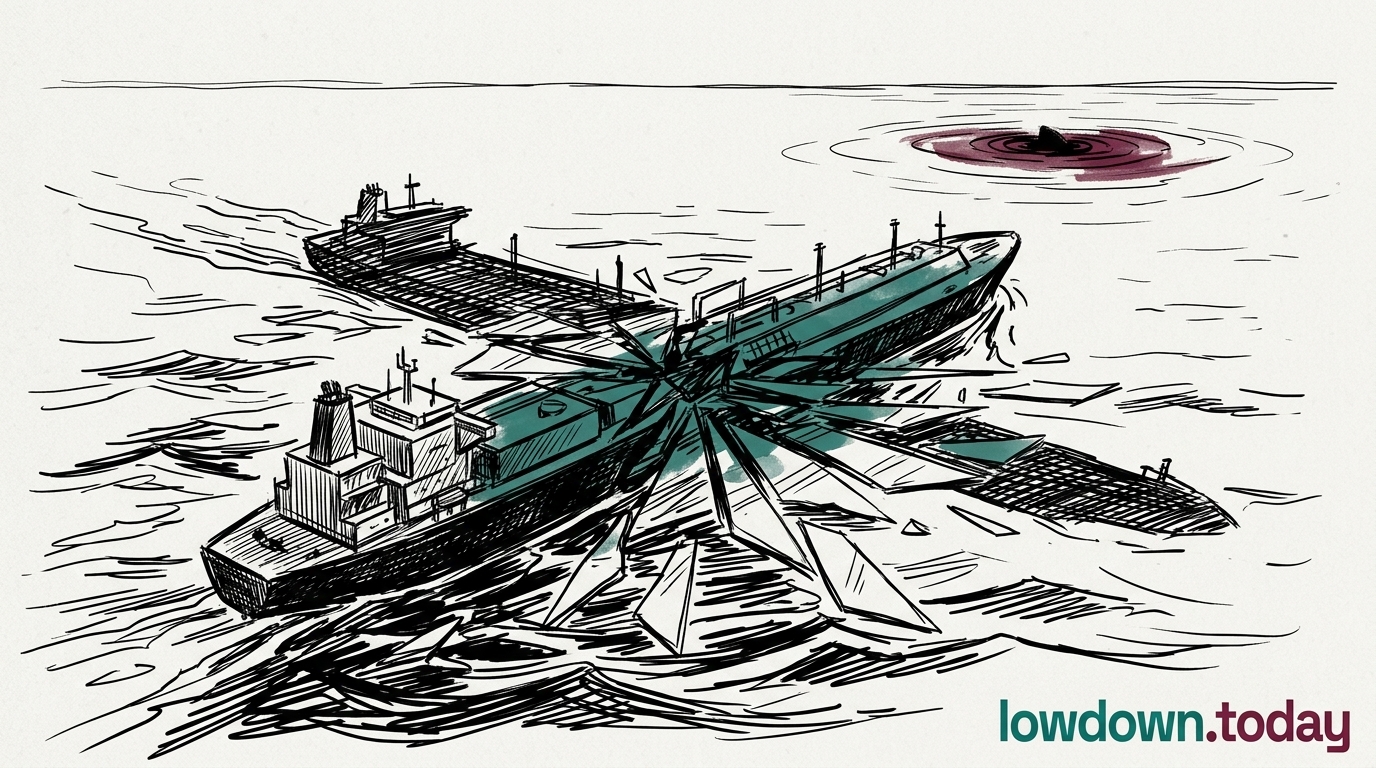
The Gulf has consumed more interceptors in six days than the US manufactures in a year. The Pentagon's proposed fix: strip missile defences from the Korean Peninsula.

ConflictDeveloping
Key takeaway

The interceptor shortage is not a logistics problem but a public admission that US force structure was never designed to sustain simultaneous high-intensity air defence operations in two separate theatres — an admission every adversary will have noted in real time.

The Pentagon is considering repositioning Patriot and THAAD batteries from South Korea to the Middle East after failing to fulfil Gulf states' requests to replenish interceptor stockpiles. A former US official told Middle East Eye: "Whatever munitions were produced in the last couple of months, we have shot several years' worth of production in the last few days."

Since 28 February, Gulf air defences have intercepted at least 337 ballistic missiles — 165 by the UAE, 97 by Kuwait, 75 by Bahrain — and hundreds more drones. Each Patriot PAC-3 MSE interceptor costs approximately $4 million; each THAAD interceptor roughly $12 million. Annual US production of both is measured in the low hundreds, constrained by specialised components, kill-vehicle guidance systems, and testing regimes that cannot be surged the way conventional munitions could in earlier industrial eras. The Gulf has consumed more than a year of manufacturing output in six days. Iran's launch rate has dropped 90%, according to Admiral Cooper, but Iran has not stopped firing.

The Korean Peninsula presents the direct cost. North Korea maintains active ICBM capability and has made no public statement about the Iran conflict. The Patriot batteries at US installations in South Korea and the THAAD system at Camp Carroll were positioned against that specific threat. Removing them does not remove the threat; it accepts risk on one front to manage attrition on another. The Pentagon's post-2018 National Defence Strategy sized US forces for great power competition in the Indo-Pacific as the primary mission, with the Middle East designated a secondary theatre requiring a lighter footprint. One week of high-intensity air defence operations in The Gulf has consumed that lighter footprint and is now drawing on primary-theatre assets.

The constraint is industrial, not strategic. RTX and Lockheed Martin, the sole producers, cannot open second shifts and double output by next quarter. Modern missile defence interceptors have manufacturing lead times measured in years. The Pentagon's consideration of Korean redeployment is an acknowledgement that the US defence industrial base was not built for a conflict in which a mid-tier adversary fires hundreds of ballistic missiles per week at American partner nations. The stockpile exists or it does not. Right now, it is being depleted faster than any production schedule can replace it.

Deep Analysis

In plain English

The US keeps specialised missile-defence systems in South Korea to intercept North Korean missiles. Each interceptor costs millions and takes years to produce. The problem is that The Gulf campaign has consumed interceptors at a rate the defence industry has never planned for — potentially years' worth of production in days. Moving Korean defences south helps Gulf allies but leaves a gap in the Pacific. There is no quick manufacturing fix: the supply chain for these missiles has lead times of 18 months or more regardless of how much money is spent.

Deep Analysis
Synthesis

Simultaneous depletion of interceptor stocks in one active theatre and the potential stripping of a second reveals that US extended deterrence was always premised on sequential, not concurrent, high-intensity contingencies. China, Russia, and North Korea — all of which have war-gamed coordinated or opportunistic action against US commitments — will have updated their assessments of sustainable US commitment in real time.

Root Causes

Patriot PAC-3 production runs at approximately 500 missiles annually; THAAD interceptors in smaller numbers still. These rates reflect peacetime budget compromises rather than wartime consumption planning. The Missile Defense Agency has requested production-rate increases in multiple budget cycles and been consistently underfunded by Congress — a structural gap that emergency supplemental appropriations cannot close within the relevant timeframe.

Escalation

North Korea has a documented pattern of missile tests timed to US distraction — tests occurred during the 2003 Iraq invasion and the 2006 Lebanon war. Moving THAAD would not eliminate US strike options but would degrade the 'left-of-launch' deterrent value of visible defence presence on the peninsula, increasing the probability of a North Korean demonstration within 30–90 days of any announced redeployment.

What could happen next?
  • Risk

    Reduced Korean Peninsula air defences in the window following any announced redeployment create a historically validated opportunity for North Korean missile testing or provocation.

    Short term · Assessed
  • Consequence

    Allies in both theatres will independently reassess reliance on US extended deterrence after Washington visibly fails to sustain air-defence coverage across two simultaneous high-intensity commitments.

    Medium term · Assessed
  • Meaning

    The public interceptor shortage is a real-time advertisement of US military capacity limits, visible to every adversary simultaneously and without the usual ambiguity that deters probing action.

    Immediate · Assessed
  • Precedent

    If redeployment occurs, it validates adversary planning assumptions that the US cannot sustain two concurrent high-intensity air-defence theatres — a constraint likely to feature in future crisis calculations by China, Russia, and North Korea.

    Long term · Assessed
First Reported In

Update #23 · Iran loses half its navy; China eyes Hormuz

Middle East Eye· 6 Mar 2026
Read original →
Causes and effects
This Event
Pentagon eyes Korea missile shields
Exposes the structural limit of US air defence capacity — interceptor production cannot replace what the Gulf has consumed in one week, forcing the Pentagon to choose between theatre commitments with no near-term industrial solution.
Different Perspectives
South Korean foreign ministry
Seoul said on 20 October it will withdraw some Kyiv embassy staff, citing no constructive steps from Kyiv since it recalled its ambassador over the disclosure of two North Korean prisoners. A chargé d'affaires and consular staff stay, and Seoul says its aid continues.
Alexander Lukashenko
Lukashenko said on 22 October that talks with the US show progress despite problems, which he said were highlighted with the exchange of political prisoners for the lifting of sanctions. He said Minsk keeps its promises and wants the US to deliver its side in full.
Moldovan government (Daniella Misail-Nichitin)
Moldova has pulled its border guards and customs officers from four crossings on Ukrainian soil after Russian strikes near the border. Interior Minister Daniella Misail-Nichitin said Chisinau is weighing moving Ukrainian checkpoints onto Moldovan territory.
Péter Magyar
Péter Magyar
Magyar told RTL that Ukrainian maize may cross Hungary in sealed trains bound for Western Europe. He set one condition: the cargo must only transit the country.
Donald Tusk
Donald Tusk
Tusk said Warsaw would seek an explanation from Kyiv for the drone's route across Poland. He said Poland allows no operations over its territory without its explicit consent.
Mindaugas Sinkevičius
Lithuania's prime minister said the Ukrainian drone that exploded in Pasvalys district on 18 October carried explosives and entered from Poland through the Schengen zone. Earlier drones over Lithuania had come from Belarus, not through allied airspace.

Written with AI from Lowdown's published reporting. Not individually reviewed by an editor. Editorial standards.